The Queen of Mystery:
How Agatha Christie Kept the World Guessing
Few authors have invited readers into so many drawing rooms, country houses, village parlours, railway carriages, and carefully arranged gatherings where something has gone terribly wrong.
For more than a century, Agatha Christie has challenged readers to look beyond appearances, question assumptions, and search for clues hidden in plain sight. Her mysteries have been translated into dozens of languages, adapted for stage and screen, and read by hundreds of millions of people around the world.
Yet Christie’s remarkable success cannot be explained by sales figures alone.
Readers do not return to Agatha Christie merely because her books are famous.
They return because her stories offer something timeless: the irresistible pleasure of trying to solve a mystery.
Long before the final revelation, Christie invites readers to become detectives themselves. Every conversation matters. Every clue has significance. Every suspect may be hiding something. The challenge is not simply to discover who committed the crime but to understand why the truth remained hidden for so long.
More than any other writer, Agatha Christie transformed detective fiction into a game between author and reader.
And remarkably, she usually won.
The Young Woman Who Never Planned to Become the Queen of Mystery
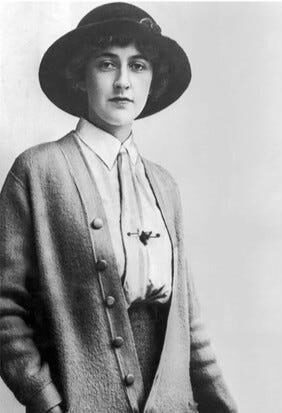
Agatha Mary Clarissa Miller was born in 1890 in the English seaside town of Torquay.
Her childhood was comfortable and imaginative. Unlike many children of her era, she was educated largely at home, where she developed a lifelong love of reading and storytelling. Books became companions, and the habit of inventing stories began early.
At first, however, there was little indication that she would become one of the most successful authors in literary history.
She enjoyed music and briefly considered a career as a concert pianist. She wrote poetry and short stories. Like many aspiring writers, she experienced rejection and uncertainty. Success did not arrive immediately.
The turning point came during the First World War.
While working as a nurse and later in a hospital dispensary, Christie became familiar with medicines, chemicals, and poisons. This knowledge would later become one of her greatest literary advantages. Few mystery writers possessed such practical understanding of toxic substances, and Christie would use that expertise to create some of the most ingenious murder methods in detective fiction.
At the same time, she accepted a challenge from her sister, who claimed she could not write a detective novel.
Agatha Christie decided to prove her wrong.
The result would change mystery fiction forever.
The Birth of Hercule Poirot
Published in 1920, The Mysterious Affair at Styles introduced readers to a detective unlike any they had encountered before.
Hercule Poirot was not physically imposing.
He did not chase criminals through dark alleys.
He rarely relied upon force.
Instead, Poirot solved mysteries through observation, psychology, and an unwavering belief in what he called “the little grey cells.”
The character was partly inspired by Belgian refugees Christie had encountered during the First World War. Yet Poirot quickly became something entirely his own.
Readers were fascinated.
His meticulous habits, distinctive appearance, and immense confidence made him unforgettable. More importantly, he represented a different kind of detective. While earlier investigators often relied upon dramatic discoveries or extraordinary deductions, Poirot emphasized understanding people.
He believed that human nature left clues just as surely as footprints.
This insight would become one of the defining characteristics of Christie’s work.
Again and again, her mysteries would demonstrate that crimes are rarely solved by physical evidence alone. To uncover the truth, one must understand motives, relationships, fears, ambitions, and secrets.
Poirot understood this better than anyone.
Why Christie’s Mysteries Felt Different
Many detective stories present readers with a crime and a solution.
Christie offered something far more engaging.
She offered participation.
Readers were not passive observers watching a brilliant detective solve an impossible puzzle. They were invited to compete with the detective, examining clues and forming theories while the mystery unfolded.
This approach helped create what became known as the “fair play” mystery.
The clues were there.
The information was available.
The solution could, in theory, be discovered before the final chapter.
Yet Christie possessed an extraordinary ability to direct attention away from what mattered most.
She understood how people think.
She understood how assumptions influence perception.
Most importantly, she understood that readers often see what they expect to see.
Again and again, Christie used this insight to extraordinary effect.
A suspicious character may be innocent.
An insignificant detail may prove crucial.
A trustworthy witness may unknowingly mislead.
An obvious explanation may conceal a far more surprising truth.
Readers learned to be cautious.
In an Agatha Christie novel, certainty was often the first step toward being wrong.
Related Novels



Murder, Secrets, and Human Nature
One reason Christie continues to attract new readers is that her mysteries are ultimately about people.
The crimes matter.
The puzzles matter.
But beneath every investigation lies a study of human behaviour.
Jealousy.
Greed.
Love.
Fear.
Pride.
Revenge.
These emotions drive Christie’s stories.
Her greatest mysteries rarely depend upon elaborate criminal conspiracies or sensational violence. Instead, they begin with recognizably human situations. Families argue. Friendships fracture. Financial pressures mount. Relationships become strained.
Then something happens.
A secret is revealed.
A conflict escalates.
A murder occurs.
The mystery becomes a way of exploring what ordinary people are capable of when pushed to their limits.
This focus on human nature helps explain why Christie’s novels remain fresh long after their original publication.
Human motivations change far less than technology or fashion.
The settings may belong to another era, but the emotions remain familiar.
Hercule Poirot and Miss Marple: Two Paths to the Truth
Most mystery writers are remembered for creating a single iconic detective.
Agatha Christie created two.
Hercule Poirot and Miss Marple remain among the most recognizable figures in detective fiction, yet they could hardly be more different.
Poirot approaches mysteries as a master strategist. He seeks order in chaos, logic in confusion, and meaning in human behaviour. To Poirot, every crime is a puzzle waiting to be solved through careful observation and disciplined reasoning.
His confidence is legendary.
He trusts his intellect.
He trusts his understanding of people.
Most importantly, he trusts that the truth can be discovered if one pays sufficient attention.
Miss Marple, by contrast, appears almost invisible.
An elderly woman living in the seemingly peaceful village of St. Mary Mead, she possesses none of Poirot’s theatrical presence. Yet beneath her gentle exterior lies one of the sharpest minds in detective fiction.
Miss Marple understands something many criminals overlook.
People rarely change.
The same flaws, ambitions, jealousies, and weaknesses that appear in village life appear everywhere else as well.
By observing the people around her, she develops an extraordinary understanding of human nature. This allows her to recognize patterns others miss and see through deception with remarkable accuracy.
Readers often find themselves choosing favourites.
Some prefer Poirot’s methodical brilliance.
Others prefer Miss Marple’s quiet wisdom.
The enduring popularity of both characters demonstrates Christie’s remarkable versatility as a writer. She understood that there is more than one path to the truth.
The Golden Age of Detective Fiction
The decades between the First and Second World Wars are often referred to as the Golden Age of Detective Fiction.
During this period, mystery writers developed many of the conventions readers still associate with classic detective stories.
Country houses.
Locked rooms.
Unexpected inheritances.
Closed circles of suspects.
Brilliant detectives.
Ingenious clues.
The mystery became a literary puzzle designed to challenge readers while entertaining them.
Many talented writers contributed to this tradition, but Agatha Christie became its defining figure.
Part of her success came from consistency. Readers knew they would receive a carefully constructed mystery with satisfying clues and a memorable solution.
Part of it came from imagination. Christie continually found new ways to surprise her audience without abandoning the fair-play principles that made her stories rewarding.
Most importantly, she understood that a mystery should never feel mechanical.
The puzzle mattered.
But so did the people.
The result was a body of work that appealed both to readers seeking intellectual challenges and to those looking for compelling human stories.
The Novels That Changed Mystery Fiction
Few authors can point to a single book that transformed their career.
Agatha Christie produced several.
The Mysterious Affair at Styles
Published in 1920, this novel introduced Hercule Poirot to the world.
What began as Christie’s attempt to write a detective story became the foundation of one of the most successful literary careers in history.
Readers immediately responded to Poirot’s distinctive personality and unconventional methods.
The novel also established many of the techniques Christie would continue refining throughout her career.
Murder at the Vicarage
With this novel, Christie introduced Miss Marple.
The setting appeared deceptively simple: an English village where everyone knows everyone else.
Yet Christie understood that familiarity often hides secrets.
The novel demonstrated that some of the most compelling mysteries arise not from strangers but from neighbours, friends, and family members whose lives are more complicated than they appear.
The Murder of Roger Ackroyd
Few mystery novels have generated as much discussion as this one.
Without revealing its secrets, it is enough to say that the novel challenged assumptions about what detective fiction could accomplish.
Readers believed they understood the rules.
Christie demonstrated that there were still ways to surprise them.
The novel remains one of the most influential mysteries ever written and continues to be discussed nearly a century after its publication.
Related Authors

How Christie Kept the World Guessing
The title “Queen of Mystery” was not earned through popularity alone.
It was earned through mastery.
Christie possessed an extraordinary understanding of misdirection.
She knew how to encourage readers to focus on the wrong details.
She understood that people naturally form assumptions and that those assumptions can be used against them.
Again and again, readers believed they had identified the culprit.
Again and again, Christie revealed that the truth was more complicated.
What makes her achievement remarkable is that the solutions rarely feel unfair.
The clues were present.
The information was available.
The reader simply interpreted it incorrectly.
This is one of the reasons Christie remains so rewarding to revisit. Knowing the ending does not diminish appreciation for the craftsmanship involved. Instead, readers gain a deeper understanding of how carefully the mystery was constructed.
Like a skilled magician, Christie never relied solely on the final reveal.
The true artistry lay in directing attention elsewhere while the answer remained visible all along.
Why Readers Still Love Agatha Christie
Literary tastes change.
Genres evolve.
Trends come and go.
Yet Agatha Christie continues to attract new readers.
Why?
Part of the answer lies in curiosity.
Human beings are naturally drawn to questions. We want explanations. We seek patterns. We enjoy solving problems.
Christie’s novels satisfy these instincts beautifully.
They invite participation.
Readers are not merely observers but active investigators.
There is another reason for her enduring appeal.
Many modern thrillers rely upon speed, violence, or spectacle.
Christie’s mysteries rely upon understanding.
The tension comes not from explosions or car chases but from uncertainty.
Who is telling the truth?
What is being concealed?
Which detail matters?
This approach gives her stories a timeless quality. They remain engaging because they focus on aspects of human nature that never become outdated.
The Best-Selling Mystery Writer in History
Few authors have reached as many readers as Agatha Christie.
Her novels have sold in the billions.
They have been translated into dozens of languages.
They have inspired films, television series, stage productions, and adaptations around the world.
Generations of readers who share little in common beyond a love of stories have found enjoyment in her mysteries.
Such success is extraordinary.
Yet numbers alone cannot explain her legacy.
Readers continue recommending Christie because her books deliver exactly what they promise: engaging mysteries, memorable characters, and the pleasure of discovering the truth.
That experience transcends language, culture, and time.
A Legacy Built on Curiosity
Nearly a century after Hercule Poirot first arranged suspects in a drawing room and Miss Marple first noticed the secrets hidden beneath village life, Agatha Christie remains the standard against which mystery writers are judged.
Her influence can be seen throughout modern detective fiction, yet few authors have managed to replicate the unique combination of ingenuity, fairness, and insight that made her work so beloved.
At the heart of every Christie novel lies a simple but powerful idea.
The truth exists.
It may be hidden.
It may be obscured by deception, misunderstanding, or fear.
But it can be found.
That belief continues to resonate because it speaks to something fundamental within us. We are curious. We ask questions. We seek answers.
Agatha Christie transformed that universal human instinct into stories that continue to captivate readers around the world.
And as long as people enjoy solving puzzles, uncovering secrets, and discovering truths hidden in plain sight, the Queen of Mystery will continue to keep the world guessing.