
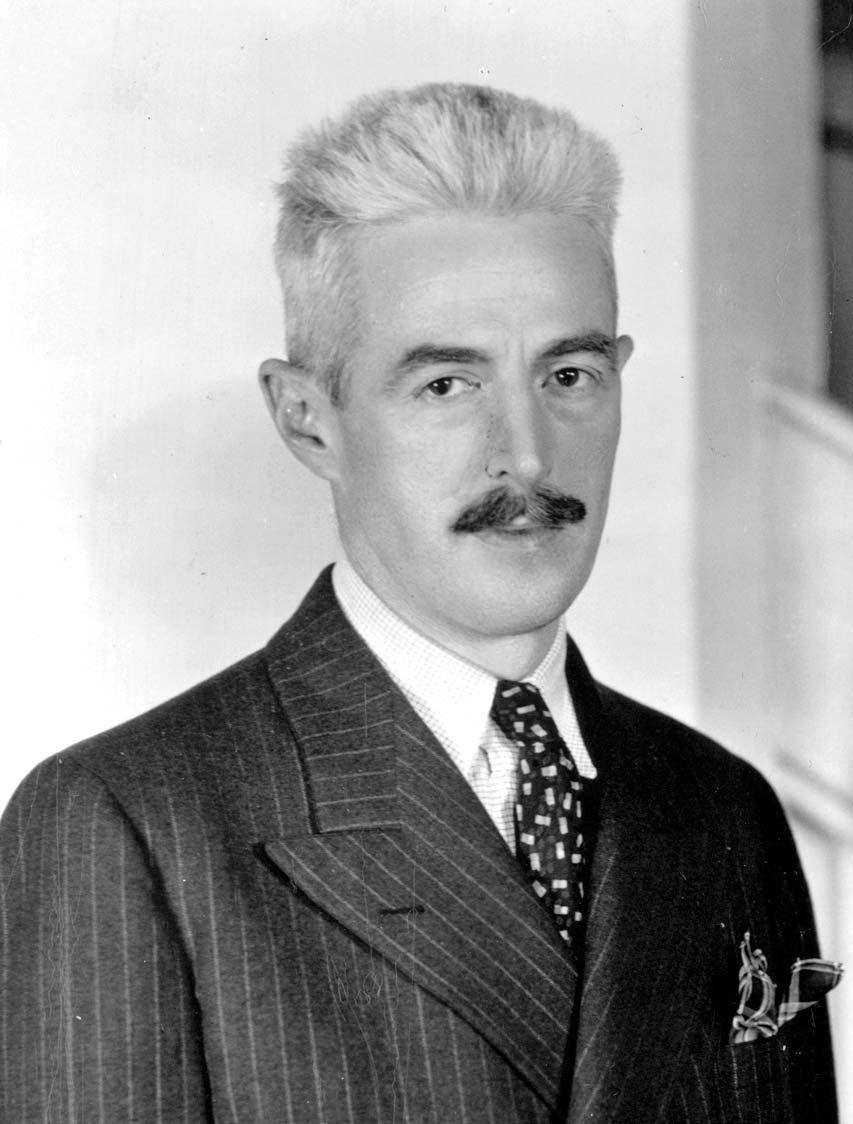
The Detective Who Changed Crime Fiction Forever: The Life and Legacy of Dashiell Hammett
Before he became one of the most influential crime writers of the twentieth century, Dashiell Hammett spent years working as a detective.
That simple fact helps explain why his novels feel so different from many of the detective stories that came before them.
While other writers imagined crime from a distance, Hammett had seen it firsthand. He had investigated cases, followed suspects, gathered information, and encountered the complicated realities of human behaviour that rarely fit neatly into the categories of heroes and villains. When he eventually turned to fiction, he brought that experience with him.
The result was a revolution in crime writing.
Hammett did more than create memorable detectives and compelling mysteries. He transformed an entire genre, helping to establish the hard-boiled detective story and laying the foundations for modern crime fiction. More than ninety years after the publication of The Maltese Falcon, his influence can still be seen in novels, films, television series, and detective stories around the world.
The Detective Before the Novelist
Samuel Dashiell Hammett was born in Maryland in 1894. Like many Americans of his era, he left school at a young age and worked a variety of jobs before eventually joining the Pinkerton National Detective Agency in 1915.
The Pinkertons were among the most famous private investigators in the United States. Their agents investigated crimes, tracked suspects, conducted surveillance, and gathered evidence. It was demanding work that exposed Hammett to the realities of crime and corruption in ways few future novelists would ever experience.
These years proved invaluable.
The detectives Hammett later created were not based on abstract ideas of investigation. They were shaped by practical experience. They understood that criminals were often intelligent, that witnesses frequently lied, and that truth could be difficult to uncover even when everyone involved believed they were telling it.
The world Hammett encountered as a detective was not clean, orderly, or predictable. Neither were the worlds he later created in fiction.
Crime Fiction Before Hammett
To understand Hammett’s achievement, it helps to understand the state of detective fiction before he arrived.
The genre already had famous heroes. Sherlock Holmes had become one of the most recognizable fictional characters in the world. Other detectives followed similar patterns. They were brilliant observers, masters of deduction, and often intellectually superior to everyone around them.
These stories remain entertaining and influential, but they tended to present crime as a puzzle to be solved.
The detective observed clues.
The detective explained the solution.
Order was restored.
Hammett admired many of these stories, but he wanted something different.
He wanted crime fiction to feel real.
He wanted detectives who could make mistakes, face danger, and navigate complicated moral situations. He wanted criminals who behaved like actual people rather than pieces on a chessboard.
Most importantly, he wanted stories that reflected the world as he knew it.
Related Novels






The Birth of the Hard-Boiled Detective
The term “hard-boiled” would eventually become synonymous with a particular style of crime fiction.
Hard-boiled detectives are practical rather than glamorous. They are often cynical, independent, and skeptical of authority. They operate in dangerous environments and frequently encounter corruption among criminals, politicians, business leaders, and even law enforcement.
These detectives do not solve crimes from comfortable drawing rooms.
They walk dangerous streets.
They confront violent people.
They put themselves at risk.
No writer was more important in establishing this tradition than Dashiell Hammett.
His stories brought a new realism to detective fiction, one that would influence generations of writers who followed.
The Continental Op
Before Sam Spade became famous, Hammett introduced readers to another detective known simply as the Continental Op.
Unlike many fictional investigators, the Op is not especially glamorous or mysterious. He is a professional investigator doing a difficult job. He relies on persistence, observation, and experience rather than extraordinary brilliance.
The character appeared in numerous short stories and several novels, helping Hammett develop the style that would later define his most famous work.
Readers responded to the realism.
The Continental Op felt like a working detective rather than a literary invention.
In many ways, he served as the bridge between traditional detective fiction and the hard-boiled stories that would dominate much of twentieth-century crime writing.
Red Harvest and a New Kind of Crime Novel
Published in 1929, Red Harvest remains one of Hammett’s most influential novels.
The story follows the Continental Op as he attempts to clean up a corrupt town controlled by criminals, political interests, and competing factions.
What made the novel remarkable was its portrayal of corruption as something woven into the fabric of society.
There is no simple villain.
No single mastermind.
Instead, the entire system appears compromised.
The novel is fast, violent, and morally complex. It introduced readers to a world where justice was difficult to achieve and where good intentions often produced unintended consequences.
Many later crime writers would draw inspiration from this approach.
The Dain Curse
Published the same year as Red Harvest, The Dain Curse demonstrated another side of Hammett’s talent.
Part mystery, part family drama, and part psychological study, the novel explores secrets, manipulation, and the lingering effects of the past.
While it is sometimes overshadowed by Hammett’s more famous works, it remains an important example of his ability to combine suspense with complex character relationships.
The novel also highlights one of Hammett’s recurring interests: the idea that people are often far more complicated than they first appear.
The Maltese Falcon and Sam Spade
If one novel secured Hammett’s place in literary history, it was The Maltese Falcon.
Published in 1930, the novel introduced readers to Sam Spade, one of the most famous detectives ever created.
Spade differs from many fictional investigators.
He is intelligent but not infallible.
Confident but not heroic.
Independent but not necessarily admirable.
Readers are drawn to him because he feels real.
As the story unfolds, Spade becomes entangled in a dangerous search for a legendary treasure. Around him swirl liars, thieves, manipulators, and killers, each pursuing their own agenda.
What makes the novel so compelling is not merely the mystery itself but the atmosphere of deception that surrounds every interaction.
No one can be fully trusted.
Every conversation conceals hidden motives.
Every apparent truth may prove false.
The result is one of the greatest detective novels ever written and a defining work of noir fiction.
The Glass Key
Many critics consider The Glass Key one of Hammett’s finest achievements.
The novel explores politics, loyalty, corruption, and friendship through a story that is as much about relationships as it is about crime.
Unlike many mysteries, the novel focuses heavily on character and motivation. Readers are invited not only to solve a puzzle but to understand the people involved.
The emotional complexity of the story helped demonstrate that crime fiction could be both entertaining and psychologically rich.
The Thin Man
Published in 1934, The Thin Man revealed yet another side of Hammett’s writing.
Featuring Nick and Nora Charles, the novel combines mystery with wit, charm, and sophisticated humour.
The relationship between the central characters became enormously popular, leading to successful film adaptations and helping cement Hammett’s reputation as one of America’s leading crime writers.
Even within a lighter framework, however, the novel retains the sharp observations and engaging storytelling that characterize his best work.
Hammett’s Lasting Influence
It is difficult to overstate Hammett’s influence on crime fiction.
Without him, the genre would likely look very different.
His work inspired Raymond Chandler, whose detective Philip Marlowe became another iconic figure in hard-boiled fiction.
His realism helped shape film noir.
His morally complex characters influenced generations of writers.
His approach to crime as a reflection of human ambition, greed, loyalty, and corruption continues to resonate with readers today.
Many modern crime novels, detective series, and thriller films owe a debt to the foundations Hammett helped establish.
Related Authors

Why Readers Still Return to Dashiell Hammett
The enduring appeal of Hammett’s fiction lies in more than clever mysteries.
His stories explore human nature.
People lie.
People betray one another.
People pursue power, wealth, love, and revenge.
The crimes themselves are often fascinating, but they matter because of what they reveal about the individuals involved.
Readers continue to return to Hammett because his characters feel authentic and his worlds feel believable.
The settings may belong to another era, but the emotions remain familiar.
Ambition.
Fear.
Greed.
Loyalty.
Deception.
These themes never lose their relevance.
The Legacy of a Literary Pioneer
Dashiell Hammett did not simply write detective stories.
He changed what detective stories could be.
Drawing upon his own experiences as an investigator, he brought realism, complexity, and moral ambiguity to a genre that had often emphasized puzzles over people. His novels helped create the hard-boiled tradition, influenced countless writers and filmmakers, and introduced readers to some of the most memorable detectives in literary history.
More than a century after he first worked as a detective and nearly a century after his most famous novels appeared, Hammett’s influence remains unmistakable.
For readers who enjoy crime fiction, detective stories, noir, and suspense, his works remain essential reading—not merely because they shaped the genre, but because they continue to entertain, surprise, and captivate new generations of readers.
Articles

Why Jane Austen Remains So Popular

Why I Hate Shakespeare

Classic Literature Quiz (Part 1): How Well Do You Know the Classics?

Why did Mark Twain not like James Fenimore Cooper?

Have the Jane Austen Movies Replaced the Books?

When Novels Were Released Like a TV Series

Whodunit Better

What Classic Horror Was Really Trying to Tell Us