

Whodunit Better?
Agatha Christie vs Arthur Conan Doyle
The Two Giants of Detective Fiction
Few debates in the world of classic literature are as enduring—or as enjoyable—as the question of whether Agatha Christie or Arthur Conan Doyle wrote the better detective fiction.
At first glance, the answer might seem obvious. Doyle gave the world Sherlock Holmes, perhaps the most famous detective ever created. More than a century after his first appearance, Holmes remains instantly recognizable. His deerstalker hat, Baker Street address, powers of deduction, and loyal companion Dr. Watson have become part of popular culture. Even people who have never read a Sherlock Holmes story know who Sherlock Holmes is.
Yet Christie presents an equally compelling case. Not only did she become the best-selling mystery author in history, but she achieved something few writers have ever managed: she created multiple iconic detectives. Hercule Poirot and Miss Marple remain beloved by readers around the world, while many of Christie’s novels continue to be regarded as benchmarks of the whodunit genre.
The comparison becomes even more interesting when we consider what these authors actually contributed to detective fiction. Doyle helped establish many of the conventions of the genre. Christie perfected and expanded them. Doyle created perhaps the greatest detective character ever written. Christie created some of the greatest detective stories ever written.
This distinction lies at the heart of the debate.
When readers compare Christie and Doyle, they are not really comparing two authors. They are comparing two visions of detective fiction.
Doyle’s mysteries are often adventures. Strange events occur. A mystery emerges. Sherlock Holmes applies his remarkable powers of observation and reasoning to uncover the truth. Readers follow along, often marveling at Holmes’s conclusions and wondering how he saw what everyone else missed.
Christie’s mysteries operate differently. Her novels are often structured as puzzles. A murder takes place. A closed circle of suspects emerges. Clues are scattered throughout the narrative. Readers are challenged to solve the crime before Poirot or Miss Marple reveals the answer. Rather than simply observing brilliance, readers become participants in the investigation.
Neither approach is inherently superior. Both have captivated generations of readers. Yet they create fundamentally different reading experiences.
The debate also reveals an interesting contrast between the authors themselves.
Arthur Conan Doyle spent much of his career wrestling with the enormous popularity of Sherlock Holmes. He wanted recognition for his historical novels, serious fiction, and other literary achievements, yet Holmes consistently overshadowed everything else he wrote. His relationship with the detective became one of the most fascinating author-character relationships in literary history.
Agatha Christie, by contrast, enjoyed a degree of creative freedom that Doyle never fully possessed. Although Poirot became enormously successful, Christie was not dependent upon a single detective. She could alternate between Poirot and Miss Marple, creating different kinds of mysteries while remaining within the genre she loved. This flexibility allowed her to build a broader detective-fiction universe and appeal to a wider range of readers.
So who did it better?
The answer depends on what we value most.
Are we judging the greatest detective character ever created? The cleverest mysteries? The fairest puzzles? The richest body of work? The most influential contribution to detective fiction? Or the author whose books remain the most enjoyable to modern readers?
To answer these questions, we need to examine the detectives, the mysteries, the settings, the supporting characters, the authors themselves, and the remarkable legacy both writers left behind.
Only then can we attempt to answer one of detective fiction’s greatest questions:
Whodunit better?
Sherlock Holmes vs Hercule Poirot & Miss Marple
Before comparing the mysteries themselves, we must begin with the detectives.
After all, detective fiction lives and dies by the characters who guide readers through its puzzles. Readers may remember a clever twist or an unexpected ending, but they return to a series because they enjoy spending time with the detective at its centre.
This is where the comparison between Arthur Conan Doyle and Agatha Christie becomes particularly fascinating.
Doyle built his reputation largely upon a single detective partnership: Sherlock Holmes and Dr. Watson. Christie, meanwhile, achieved the remarkable feat of creating two enduring detectives who could hardly be more different from one another.
The result is not simply a comparison between Holmes and Poirot. It is a comparison between Holmes and Christie’s entire detective gallery.
Sherlock Holmes: The Original Master Detective
It is difficult to overstate Sherlock Holmes’s influence on detective fiction.
When Holmes first appeared in A Study in Scarlet in 1887, detective stories already existed, but Doyle transformed the genre. Holmes introduced readers to a detective who approached crime as a science. He observed details others overlooked. He drew conclusions from seemingly insignificant clues. He relied upon logic, chemistry, forensic observation, and deductive reasoning.
In many ways, Holmes established the blueprint for countless detectives who followed.
The brilliant investigator.
The eccentric genius.
The detective who notices what everyone else misses.
The specialist who can solve impossible crimes.
Whether consciously or unconsciously, generations of detective writers have borrowed from Holmes.
Modern readers can still see his influence everywhere. Television detectives, forensic investigators, criminal profilers, and brilliant amateur sleuths all owe something to the consulting detective of Baker Street.
Part of Holmes’s appeal lies in his extraordinary competence.
Readers enjoy watching excellence.
We admire athletes because they perform feats we cannot. We admire musicians because they possess talents we lack. Holmes appeals for the same reason. He sees the world differently from ordinary people. The clues are often visible to everyone, yet only Holmes understands their significance.
This creates a powerful reading experience. We follow Watson through the mystery, sharing his confusion and amazement until Holmes finally explains the solution.
The formula proved irresistible.
More than a century later, Sherlock Holmes remains the detective against whom all others are measured.


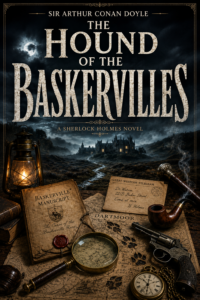
Hercule Poirot: The Detective of Human Nature
If Holmes investigates evidence, Hercule Poirot investigates people.
This distinction may seem subtle at first, but it fundamentally changes the nature of the mystery.
Poirot certainly notices clues. He examines timelines, alibis, and physical evidence. Yet his greatest strength lies elsewhere. He understands human behaviour.
His famous phrase about using the “little grey cells” captures this perfectly.
Poirot does not merely ask who could have committed the crime. He asks why they would commit it.
He studies relationships.
He studies jealousy.
He studies greed.
He studies fear.
He studies love.
For Poirot, the solution to a murder is usually hidden within the psychology of the people involved.
This approach gives Christie’s mysteries a very different flavour from Doyle’s.
Holmes often solves mysteries by discovering information nobody else possesses. Poirot frequently solves mysteries by correctly interpreting information that has been available all along.
A suspect’s reaction.
A careless remark.
An inconsistency in behaviour.
A motive hidden beneath a respectable exterior.
These become as important as fingerprints or footprints.
This emphasis on psychology is one reason Poirot remains so appealing to modern readers. Human nature changes far more slowly than technology. While some Victorian investigative methods may feel dated today, the emotions that drive Christie’s crimes remain instantly recognisable.
Readers may not understand nineteenth-century forensic techniques, but they understand envy.
They understand betrayal.
They understand ambition.
As a result, Poirot’s mysteries often feel surprisingly contemporary despite being written decades ago.
Miss Marple: The Quiet Revolutionary
If Holmes is the brilliant genius and Poirot is the master psychologist, Miss Marple represents something entirely different.
At first glance, she appears an unlikely detective.
She is elderly.
She is unmarried.
She lives in a quiet English village.
She lacks Holmes’s scientific expertise and Poirot’s professional experience.
Many criminals underestimate her.
So do many readers.
That is precisely why she is so effective.
Miss Marple’s genius lies in her understanding of human nature. She believes that people are fundamentally similar wherever they go. The same weaknesses, ambitions, resentments, and deceptions that exist in a small village can be found in country houses, cities, resorts, and wealthy estates.
When others see unique circumstances, Miss Marple sees familiar patterns.
A murderer may appear sophisticated and respectable.
Miss Marple remembers a shopkeeper’s nephew who behaved exactly the same way.
A seemingly impossible crime may puzzle the police.
Miss Marple recalls a village scandal from years ago that followed a remarkably similar pattern.
Her method transforms ordinary life into a powerful investigative tool.
This was a quietly revolutionary idea.
Detective fiction had traditionally favoured professional investigators, policemen, lawyers, and brilliant intellectuals. Christie demonstrated that deep knowledge of people could be just as valuable as scientific expertise.
In doing so, she created one of literature’s most important female detectives.
Miss Marple’s influence can still be seen today in countless amateur sleuths who solve crimes through observation, empathy, and social understanding rather than professional training.
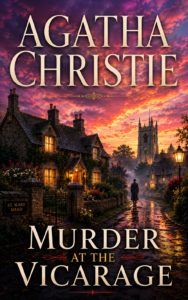
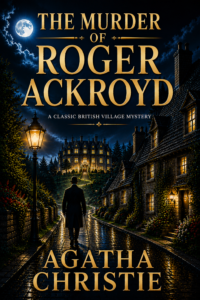
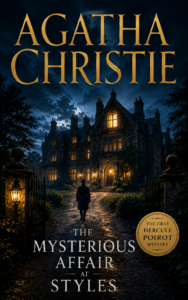
A Tale of Three Approaches
One of the most interesting aspects of this comparison is how differently these detectives solve crimes.
Holmes relies primarily on observation and deduction.
Poirot relies primarily on psychology and reasoning.
Miss Marple relies primarily on experience and human understanding.
All three methods can lead to the truth.
Yet they create very different reading experiences.
Reading Holmes often feels like watching a magician reveal a hidden trick.
Reading Poirot feels like assembling a puzzle.
Reading Miss Marple feels like uncovering truths about people that have been hiding in plain sight.
Each approach has strengths.
Each appeals to different readers.
And each demonstrates a different vision of detective fiction.
Doyle’s Greatest Strength—and Christie’s Greatest Achievement
This brings us to perhaps the most important point in the entire comparison.
Sherlock Holmes is probably the single greatest detective character ever created.
That statement is difficult to dispute.
His cultural influence is unmatched. His popularity has endured for generations. His name has become synonymous with deduction itself.
If this article were judging only the greatest detective character, Doyle would possess an extremely strong claim to victory.
But the comparison is not Holmes versus Poirot.
Nor is it Holmes versus Miss Marple.
It is Doyle versus Christie.
And when viewed from that perspective, Christie gains a significant advantage.
She did not create one enduring detective.
She created two.
Even more impressively, those detectives are genuinely different from one another.
Poirot is not simply a variation of Miss Marple.
Miss Marple is not simply a female version of Poirot.
Each possesses a distinct personality, investigative style, and narrative purpose.
Readers who prefer logical psychological puzzles can follow Poirot.
Readers who prefer character-driven mysteries rooted in human observation can follow Miss Marple.
Christie effectively provided two separate pathways into detective fiction while maintaining the same high standard of mystery writing.
This gave her a flexibility that Doyle never fully enjoyed.
Doyle’s detective-fiction reputation rests overwhelmingly upon Holmes.
Christie’s rests upon both Poirot and Miss Marple.
That difference would shape not only their careers but also the long-term legacy of their work.
And it becomes even more significant when we turn our attention to the mysteries themselves.
Which Author Created Better Mysteries?
Great detectives may attract readers to a book, but mysteries are what keep them turning the pages.
A detective can be charming, intelligent, memorable, and entertaining, but if the mystery itself is weak, readers are unlikely to remember the story years later. Conversely, a brilliantly constructed mystery can remain fascinating long after its detective has left the stage.
This raises perhaps the most important question in the entire debate:
Who created the better mysteries?
The answer depends largely on what we expect from detective fiction.
Although Doyle and Christie both wrote mysteries, they often pursued very different goals.
Crime & Mystery Novels
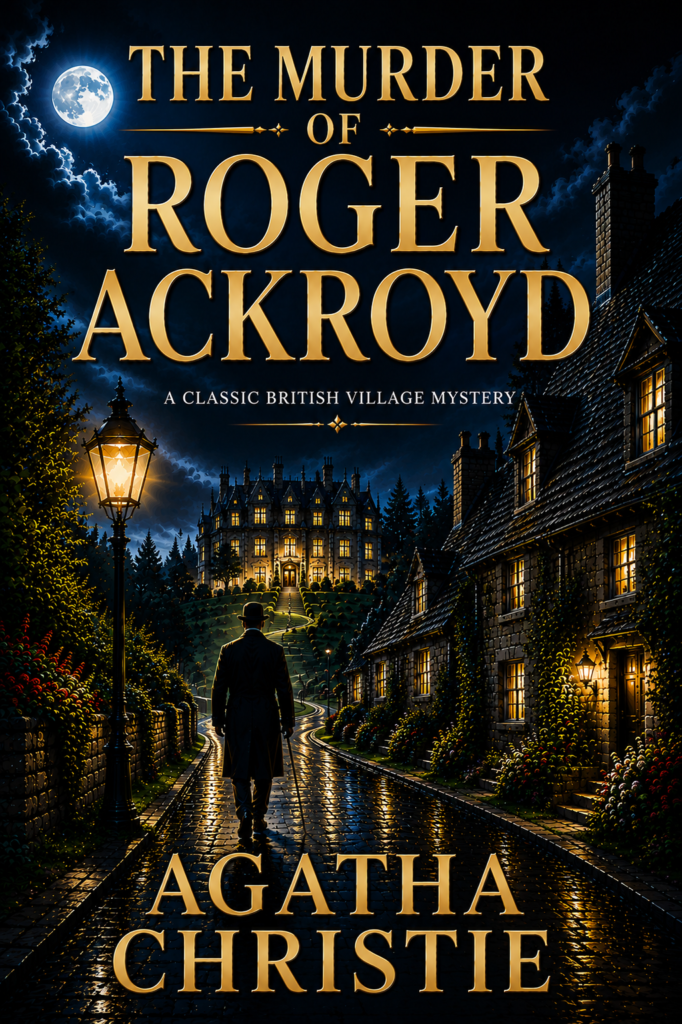
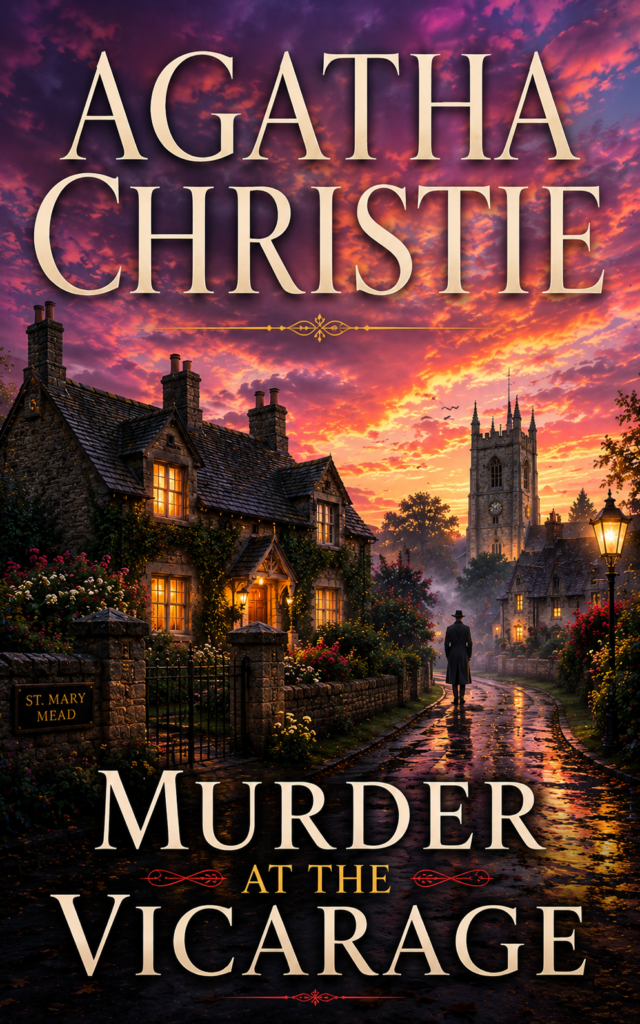
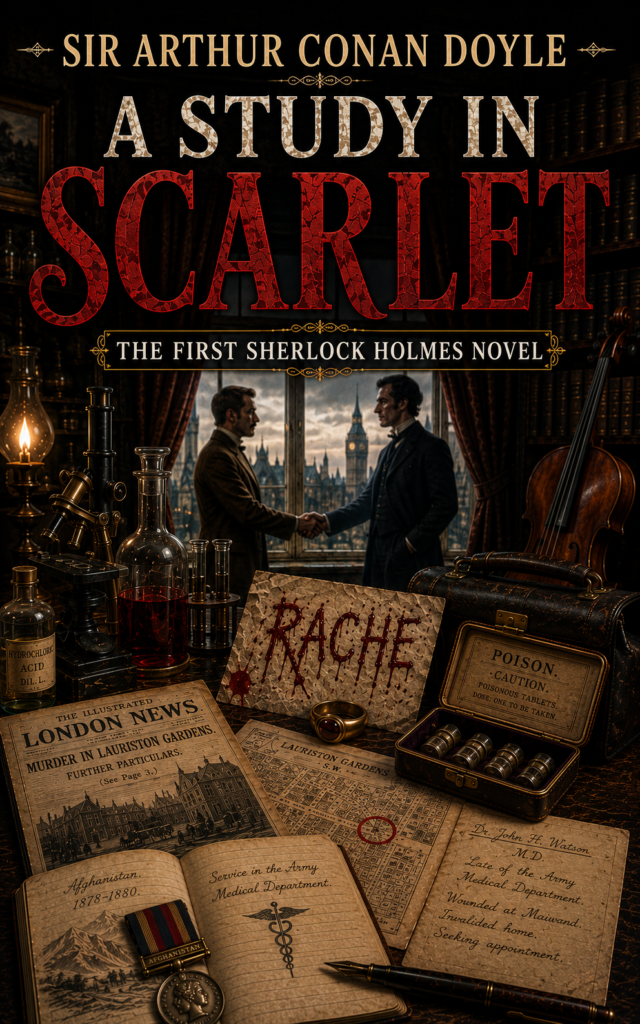
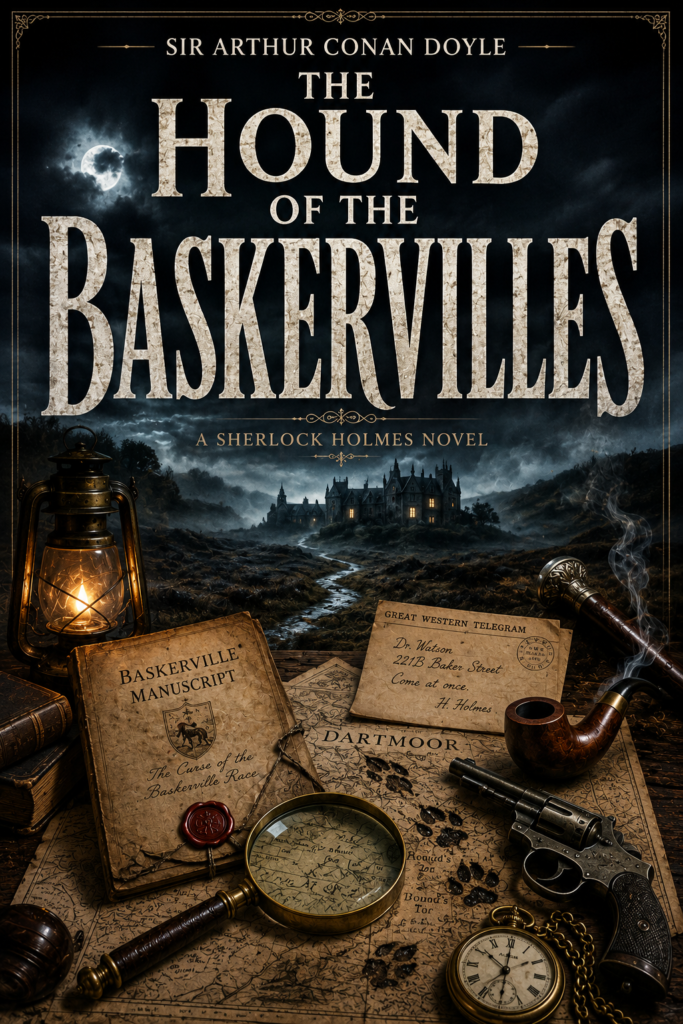


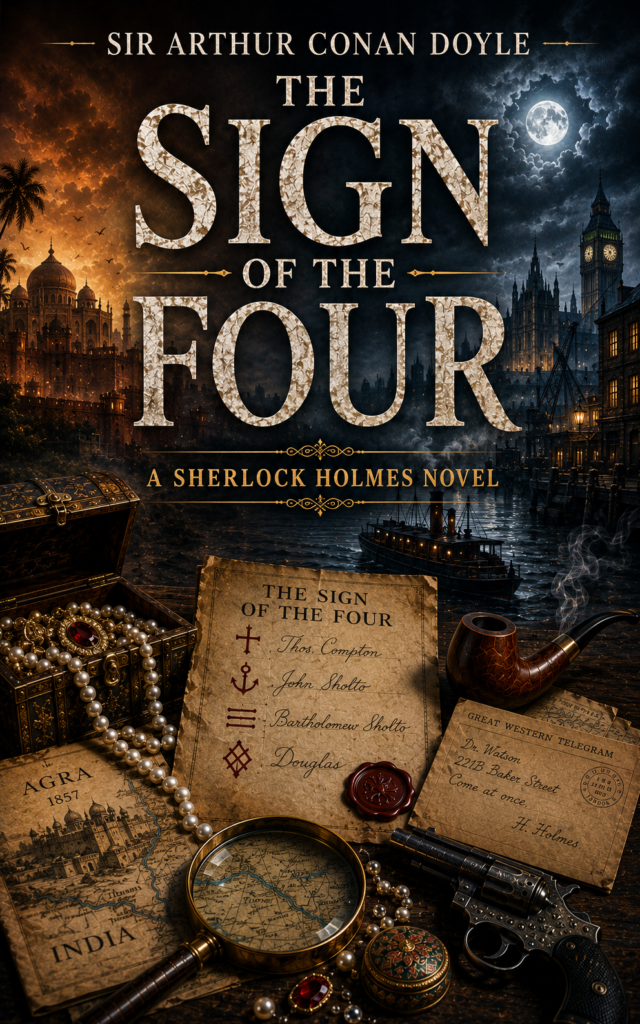
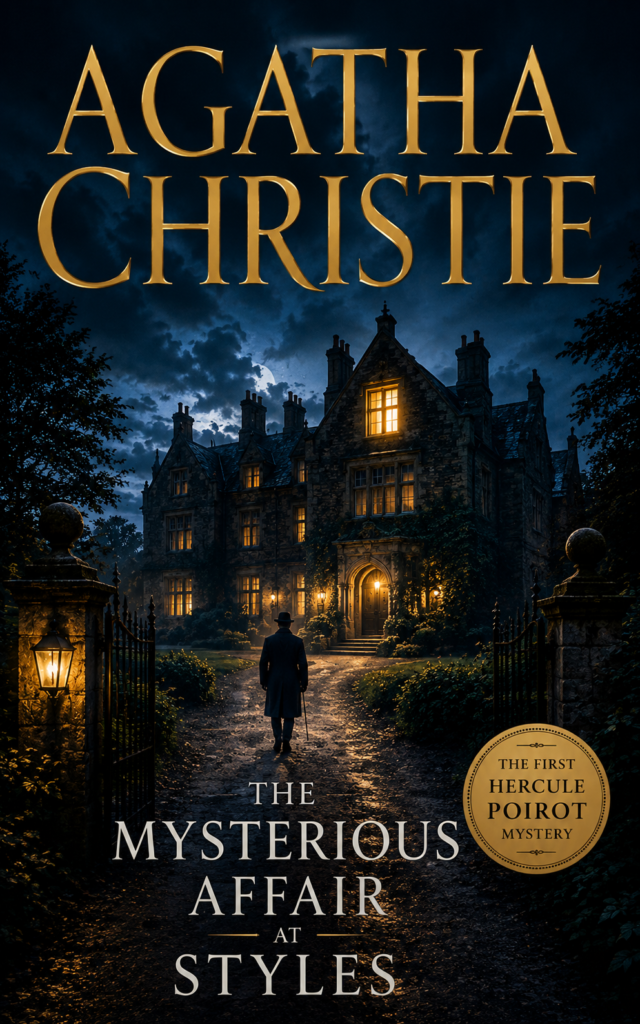

Doyle’s Mysteries: Discovering the Truth
Many Sherlock Holmes stories are built around a question larger than simply identifying a criminal.
Readers are often presented with strange and seemingly impossible situations.
A terrifying supernatural hound stalks the moors.
A woman dies under mysterious circumstances in a locked room.
A respected gentleman disappears.
A secret society leaves cryptic signs.
The central question is frequently not “Who committed the crime?” but “What is actually happening?”
This distinction is important.
In many Holmes stories, the mystery lies in understanding the situation itself.
The reader joins Watson in trying to make sense of bizarre events. Holmes gradually uncovers hidden relationships, secret histories, disguised identities, forgotten crimes, and carefully concealed motives until the truth finally emerges.
The pleasure comes from revelation.
Readers experience a sense of wonder as Holmes transforms confusion into understanding.
This approach gives many Doyle stories an adventurous quality.
The mystery often feels like an expedition into the unknown. Strange clues lead to hidden worlds beneath respectable Victorian society. Criminals emerge from unexpected places. International conspiracies, family secrets, stolen treasures, and long-buried scandals frequently lurk beneath the surface.
The result is detective fiction that feels expansive and exciting.
Even when murder occurs, the focus is often broader than simply identifying the killer.
Readers are discovering a hidden story.
Christie’s Mysteries: Identifying the Culprit
Christie approaches the mystery from a different direction.
The crime itself is usually straightforward.
A murder occurs.
A limited group of suspects emerges.
Everyone appears to have something to hide.
The challenge is determining which secret matters most.
Unlike Doyle, Christie often gives readers a reasonably clear understanding of what happened.
The victim is dead.
The suspects are known.
The circumstances are established.
The real puzzle lies elsewhere.
Who did it?
More importantly, how did Christie manage to conceal the answer while placing the clues directly in front of the reader?
This is the genius of the classic Christie mystery.
The solution often seems obvious in hindsight.
Readers finish the novel and immediately begin flipping backwards through previous chapters.
The clues were there.
The motive was there.
The opportunity was there.
The answer was there.
Yet somehow they missed it.
This creates a unique kind of satisfaction.
Rather than simply revealing information, Christie demonstrates how effectively she has manipulated the reader’s assumptions.
The Difference Between Surprise and Discovery
Perhaps the simplest way to understand the distinction is this:
Doyle specialises in discovery.
Christie specialises in surprise.
When reading Doyle, readers often think:
“I never knew that.”
When reading Christie, readers often think:
“I should have seen that.”
Both reactions are powerful.
Both create memorable reading experiences.
But they appeal to different instincts.
Doyle satisfies our curiosity.
Christie challenges our perception.
The Closed Circle Mystery
One of Christie’s greatest contributions to detective fiction was her mastery of what has become known as the closed-circle mystery.
A murder occurs within a clearly defined group.
Everyone is a suspect.
Nobody can be dismissed entirely.
The solution must come from within the circle.
This structure appears throughout her work and remains enormously influential today.
Country houses.
Remote villages.
Train carriages.
Small social gatherings.
Hotels.
Isolated communities.
These settings create natural tension because readers know the murderer is present from the beginning.
The question is not where the criminal will appear.
The criminal is already standing in the room.
Every conversation becomes suspicious.
Every alibi becomes important.
Every relationship matters.
The reader is transformed into an investigator.
This format proved so successful that it remains one of the foundations of modern mystery fiction.
Countless writers continue to build variations upon a structure Christie perfected decades ago.
The Holmes Formula
Doyle’s mysteries follow a different model.
Readers often encounter a client with an unusual problem.
Holmes investigates.
New information emerges.
The case expands.
The truth becomes increasingly complex.
Finally, Holmes reveals the complete picture.
This structure works brilliantly because it showcases Holmes’s intelligence.
Readers enjoy watching him solve problems that appear impossible.
The mystery becomes a stage upon which Holmes can demonstrate his brilliance.
This is not a criticism.
It is one of the reasons the stories remain popular.
Yet it produces a fundamentally different reading experience from Christie.
Readers admire Holmes.
Readers compete with Christie.
Which Mysteries Age Better?
This is a difficult question, but an interesting one.
Some aspects of Doyle’s work are tied closely to Victorian society.
The concerns, technologies, and assumptions of the late nineteenth century occasionally create distance between modern readers and the stories.
Holmes himself remains timeless.
Certain cases feel more historical.
Christie’s mysteries often feel surprisingly modern because they focus so heavily on human psychology.
Jealousy remains jealousy.
Greed remains greed.
Ambition remains ambition.
Family conflict remains family conflict.
The emotions driving her crimes are instantly recognisable.
As a result, many contemporary readers find Christie easier to enter despite her books being decades old.
This does not make her superior.
It simply reflects the enduring power of stories built around human behaviour.
The Ultimate Test
There is perhaps one final test that separates these authors.
Ask a reader to name their favourite Sherlock Holmes story.
They will probably discuss Holmes.
His deductions.
His personality.
His brilliance.
Ask a reader to name their favourite Christie novel.
They will often discuss the solution.
The twist.
The ending.
The culprit.
The moment everything suddenly made sense.
That distinction reveals something important.
Doyle created mysteries that elevated a detective.
Christie created mysteries that became famous in their own right.
Both are extraordinary achievements.
Yet when the discussion focuses specifically on the construction of mysteries rather than the creation of detectives, Christie possesses a powerful advantage.
Holmes may be detective fiction’s greatest investigator.
But Christie remains perhaps its greatest puzzle-maker.
And that advantage becomes even clearer when we examine one of the defining characteristics of the classic whodunit: whether readers have a genuine chance to solve the crime themselves.
Fair Play: Could Readers Solve the Crime?
If Sherlock Holmes established the detective as a literary hero, Agatha Christie helped establish another idea that would become central to the classic whodunit:
The reader should have a chance to solve the mystery.
This principle, often called “fair play,” lies at the heart of the Golden Age detective novel. It is one of the reasons Christie’s books continue to attract readers nearly a century after many of them were written.
The concept sounds simple.
A mystery writer should provide all the essential clues needed to identify the culprit.
The clues should not be hidden from the reader.
The author should not cheat.
The detective may interpret the clues more effectively than the reader, but the information itself should be available.
This transforms detective fiction into something more than a story.
It becomes a game.
And few writers have ever played that game better than Agatha Christie.
Watching the Detective vs Becoming the Detective
The difference between Doyle and Christie can perhaps be understood through a simple question:
What role does the reader play?
In many Holmes stories, the reader occupies a position similar to Dr. Watson.
We observe.
We follow.
We admire.
We watch Holmes perform intellectual feats that seem almost magical.
When Holmes explains the solution, readers often realise that crucial deductions depended upon specialist knowledge, observations they overlooked, or information Holmes never fully shared.
The pleasure comes from witnessing brilliance.
The mystery serves as a vehicle for Holmes’s extraordinary abilities.
There is nothing wrong with this approach.
It remains immensely entertaining.
But it creates a fundamentally different relationship between the reader and the mystery.
Christie asks something more demanding.
She invites readers to participate.
Rather than merely watching the detective solve the crime, readers are encouraged to solve it themselves.
Every suspect matters.
Every conversation matters.
Every detail may prove important.
The challenge is not simply understanding the solution once it is revealed.
The challenge is reaching the solution before Poirot or Miss Marple does.
The Art of Hiding Clues in Plain Sight
One of Christie’s greatest skills was her ability to conceal the truth without actually hiding it.
Many mystery writers achieve surprise by withholding information.
Christie often achieves surprise by controlling attention.
The clue is present.
The reader sees it.
The detective notices it.
Yet its significance remains invisible.
This is far more difficult than simply concealing information.
Readers frequently finish a Christie novel and immediately return to earlier chapters.
There, exactly where Poirot said they would be, sit the clues.
Not hidden.
Not disguised.
Simply misunderstood.
The reader was looking in the wrong direction.
This is one of the reasons Christie remains so admired by mystery enthusiasts.
The solutions rarely feel arbitrary.
They feel earned.
Even when readers fail to solve the mystery, they can usually see how the solution was possible.
Crime & Mystery Authors

Red Herrings and Misdirection
Fair play does not mean making the mystery easy.
In fact, Christie often made her mysteries extraordinarily difficult.
Her genius lay in misdirection.
Readers naturally focus on dramatic clues.
Suspicious behaviour.
Obvious motives.
Secret relationships.
Strange incidents.
Christie understood these instincts perfectly.
She knew where readers would look.
She knew what assumptions they would make.
And she knew how to exploit those assumptions.
A suspect appears too suspicious.
Another appears too innocent.
A clue seems important.
A different clue appears trivial.
The reader confidently follows one path while Christie quietly leads them somewhere else.
The remarkable part is that she does this without breaking the rules.
The truth remains visible throughout.
The challenge is recognising it.
Why Readers Love the Challenge
The popularity of Christie’s mysteries reveals something important about human nature.
People enjoy solving problems.
Crossword puzzles remain popular.
Escape rooms attract millions of participants.
Murder mystery parties continue to thrive.
The desire to solve puzzles appears deeply rooted in the human mind.
Christie tapped into that desire more effectively than almost any writer who came before or after her.
Her novels encourage active reading.
Readers form theories.
They identify suspects.
They search for clues.
They revise their conclusions.
They become emotionally invested in being right.
Every chapter becomes a test.
Every revelation becomes an opportunity to reassess the case.
The result is a reading experience that remains engaging even after repeated readings.
Many readers return to Christie not simply because they enjoy the stories but because they enjoy watching her construct the puzzle.
Holmes and the Impossible Leap
This comparison should not be interpreted as a criticism of Doyle.
Holmes stories pursue a different objective.
Doyle is often less concerned with challenging readers to solve the mystery and more concerned with demonstrating Holmes’s remarkable powers of reasoning.
The famous deductions are a perfect example.
Holmes examines a watch, a walking stick, a piece of clothing, or a footprint and immediately draws conclusions that seem astonishing.
Readers are not expected to compete with him.
They are expected to marvel at him.
This creates excitement of a different kind.
The mystery becomes a showcase for genius.
The reader experiences the same sense of wonder that Watson experiences.
The appeal is undeniable.
Indeed, it remains one of the reasons Holmes continues to attract new readers.
Yet it is also the reason many mystery enthusiasts ultimately place Christie slightly ahead when discussing the pure whodunit.
A reader can admire Holmes.
A reader can challenge Christie.
The Golden Age Standard
The Golden Age of Detective Fiction, roughly spanning the 1920s and 1930s, elevated fair play into an ideal.
Writers increasingly viewed detective fiction as a contest between author and reader.
The mystery should be difficult.
The mystery should be surprising.
But the mystery should also be solvable.
Christie became the most accomplished practitioner of this philosophy.
Her best novels remain benchmarks against which modern mystery writers are judged.
When contemporary readers praise a mystery for being “fair,” they are often praising a standard Christie helped popularise.
Even modern television mysteries, puzzle-box thrillers, and crime novels continue to operate within traditions she helped define.
The Reader’s Verdict
Imagine finishing a Sherlock Holmes story.
You admire Holmes.
You admire Doyle.
You appreciate the cleverness of the solution.
Now imagine finishing a great Christie novel.
You immediately start asking yourself questions.
How did I miss that?
Why didn’t I notice the clue?
When should I have realised?
Could I solve it on a second reading?
The difference is subtle but important.
Doyle leaves readers impressed.
Christie leaves readers challenged.
Both reactions are powerful.
Both explain why these authors remain giants of detective fiction.
Yet when the discussion focuses specifically on the art of the whodunit—the challenge of identifying the culprit before the detective reveals the answer—Christie possesses a distinct advantage.
She did not merely write mysteries.
She invited readers to play.
And generations of readers have accepted the challenge.
Verdict: Advantage Christie
This may be the clearest category in the entire comparison.
Doyle gave readers one of literature’s greatest detectives.
Christie gave readers a genuine opportunity to become detectives themselves.
For readers who value puzzle-solving, clue-hunting, and the satisfaction of uncovering the truth through careful observation, Christie remains the gold standard.
The mystery is no longer something that happens on the page.
It becomes something that happens in the reader’s mind.
And that achievement is one of the defining reasons her novels continue to captivate audiences around the world.
Atmosphere, Setting, and World-Building
A great mystery requires more than a clever detective and a surprising solution.
Readers must also want to spend time in the world the author creates.
This is one of the reasons both Arthur Conan Doyle and Agatha Christie continue to attract new readers. Their stories are not merely puzzles. They are invitations into carefully constructed worlds filled with memorable locations, distinctive characters, and unique atmospheres.
Yet once again, the two authors approach this challenge in very different ways.
The World of Sherlock Holmes
Few locations in literature are as famous as 221B Baker Street.
Like Dickens’s London or Tolkien’s Middle-earth, Baker Street has become more than a setting. It has become part of the mythology surrounding the character.
Readers return to Holmes not only because they enjoy the mysteries but because they enjoy revisiting his world.
The sitting room.
The chemistry experiments.
The violin.
The correspondence.
The comfortable chaos that surrounds the detective’s extraordinary mind.
This sense of place provides a powerful anchor throughout the Holmes stories.
Beyond Baker Street lies another equally important setting: Victorian London itself.
Doyle’s London feels alive.
Its fog-filled streets conceal criminals and secrets.
Its crowded neighbourhoods contain both respectable citizens and dangerous opportunists.
Its rapid growth creates endless opportunities for mystery.
Readers encounter lawyers, aristocrats, bankers, soldiers, criminals, politicians, servants, and businessmen. Holmes moves effortlessly between social classes, exploring every corner of a society undergoing enormous change.
The city itself becomes a character.
Even when Holmes ventures beyond London, the atmosphere often remains distinctly Doyle.
Bleak moors.
Ancient estates.
Quiet villages concealing dark secrets.
Remote houses where danger lurks behind respectable appearances.
The settings contribute heavily to the sense of adventure that defines many Holmes stories.
Readers rarely feel completely safe.
Something unusual is always waiting around the corner.
The World of Agatha Christie
If Doyle excelled at creating one unforgettable world, Christie excelled at creating many.
This difference is easy to overlook because Poirot and Miss Marple provide continuity across dozens of novels.
Yet the settings themselves vary enormously.
One novel may take place in an English village.
The next unfolds aboard a train.
Another occurs in a luxury hotel.
Another centres upon a country house.
Another explores an archaeological expedition.
Another takes readers to a seaside resort.
Another traps suspects within an isolated location.
This variety gives Christie’s body of work a remarkable freshness.
Readers never feel confined to a single environment.
The detective may remain familiar.
The world around them constantly changes.
St Mary Mead and the English Village Mystery
Among Christie’s many settings, none deserves more attention than St Mary Mead.
At first glance, it appears ordinary.
It is a small English village populated by familiar personalities and everyday concerns.
Yet Christie transforms this seemingly simple location into one of detective fiction’s richest environments.
Miss Marple repeatedly demonstrates that the village contains every aspect of human nature.
Jealousy exists there.
Greed exists there.
Ambition exists there.
Deception exists there.
The same motives that produce murder in grand estates and wealthy households also appear in miniature within village life.
This insight becomes one of the foundations of the Miss Marple stories.
Far from limiting Christie, St Mary Mead provides a lens through which she examines broader human behaviour.
The village becomes a microcosm of society itself.
The Country House Mystery
Perhaps no setting is more closely associated with Christie than the country house.
A wealthy family gathers.
A guest arrives.
Tensions simmer beneath the surface.
A murder occurs.
The detective investigates.
The formula sounds simple.
Yet Christie repeatedly found new ways to use it.
The country house provides the ideal environment for a whodunit.
The suspect pool is naturally limited.
Relationships are complicated.
Secrets accumulate.
Everyone has access.
Everyone has opportunity.
Most importantly, everyone has reasons to lie.
These settings create exactly the kind of controlled environment required for a great puzzle mystery.
Readers know the murderer must be present.
The challenge lies in determining which apparently respectable individual is hiding the darkest secret.
Variety as a Strength
This is where Christie gains one of her strongest advantages.
Doyle created an unforgettable atmosphere.
Christie created extraordinary variety.
A reader can spend months exploring Christie’s mysteries without feeling trapped within a single formula.
Poirot investigates murders among the wealthy, the middle class, travellers, archaeologists, tourists, and families.
Miss Marple explores village life, social relationships, and hidden tensions beneath ordinary existence.
The settings evolve continuously.
The social dynamics change.
The environments remain fresh.
This flexibility contributes significantly to Christie’s longevity.
Classic Authors
Bram Stoker
Stephen Crane
Mary Shelley
Herman Melville
Anton Pavlovich Chekhov
Lewis Carroll
Charles Dickens
Edward Verrall Lucas
James Fenimore Cooper
Charlotte Brontë
Which World Would You Rather Visit?
This question reveals much about individual readers.
Some readers prefer Doyle’s world.
They enjoy Victorian London.
They enjoy the atmosphere of adventure.
They enjoy returning to Baker Street and accompanying Holmes through a society filled with intrigue and danger.
Others prefer Christie.
They enjoy the changing settings.
They enjoy the country houses, villages, trains, and hotels.
They enjoy the sense that murder could occur anywhere and among anyone.
Neither preference is wrong.
Both authors excelled at creating immersive environments.
Yet when judged purely on variety and range, Christie possesses the stronger case.
Doyle gave readers one of literature’s most memorable worlds.
Christie gave readers dozens.
Verdict: Advantage Christie
This category does not diminish Doyle’s achievement.
The world of Sherlock Holmes remains one of the most recognisable settings in literary history.
Few writers have created a fictional environment that continues to feel so vivid more than a century later.
Yet Christie accomplished something equally impressive.
Rather than creating one iconic world, she created a seemingly endless series of memorable environments in which mysteries could unfold.
Country houses.
Villages.
Hotels.
Trains.
Ships.
Excavation sites.
Holiday resorts.
Private homes.
Each setting feels distinct.
Each serves the mystery differently.
And each helps explain why Christie was able to sustain such a long and successful career without exhausting either herself or her readers.
This variety would also contribute to another important advantage—one that extended beyond the stories themselves and shaped the careers of the authors who wrote them.
Doyle’s Frustration and Christie’s Freedom
Most comparisons between Arthur Conan Doyle and Agatha Christie focus on the detectives.
Holmes versus Poirot.
Holmes versus Miss Marple.
Deduction versus psychology.
Adventure versus puzzle.
Yet one of the most revealing differences between these authors has nothing to do with the mysteries themselves.
It concerns the relationship each writer had with their most famous creations.
In many ways, the story of Doyle and Holmes is a story about the dangers of extraordinary success.
The story of Christie, Poirot, and Miss Marple is a story about the freedom that comes from creative variety.
Understanding this difference helps explain not only their careers but also the lasting shape of their literary legacies.
Arthur Conan Doyle Wanted to Be More Than Sherlock Holmes
Modern readers often assume that Sherlock Holmes was always the centre of Doyle’s ambitions.
The reality was far more complicated.
Doyle certainly appreciated Holmes’s popularity, particularly early in his career. The detective brought him readers, recognition, and financial success.
Yet Doyle never viewed Holmes as his greatest achievement.
He considered many of his historical novels and serious works more important.
He admired books such as The White Company and hoped they would secure his place in literary history.
From Doyle’s perspective, Sherlock Holmes was only one part of a broader career.
From the public’s perspective, Sherlock Holmes was the career.
This difference would become a source of growing frustration.
The more successful Holmes became, the more difficult it became for Doyle to escape him.
Readers wanted more Holmes.
Publishers wanted more Holmes.
Editors wanted more Holmes.
Doyle increasingly wanted to write something else.
The Most Famous Death in Detective Fiction
Eventually Doyle attempted what many writers secretly dream about.
He tried to free himself from his most famous character.
In 1893, Holmes apparently died while struggling with Professor Moriarty at the Reichenbach Falls.
For Doyle, the decision seemed sensible.
He could move on to other projects.
He could devote more time to the historical fiction he valued so highly.
He could finally escape the detective who had come to dominate his reputation.
Readers had very different ideas.
The reaction was extraordinary.
Many readers were furious.
Subscriptions were cancelled.
Newspapers reported public outrage.
Letters poured in.
The death of Sherlock Holmes became a cultural event.
Few fictional characters had ever inspired such devotion.
Ultimately the pressure became impossible to ignore.
Holmes returned.
Doyle had won a temporary victory but lost the larger battle.
For the remainder of his life, Sherlock Holmes remained the achievement for which he was primarily remembered.
Even today, most readers know Doyle because of Holmes.
Far fewer know his historical fiction.
The character ultimately became larger than the author.
The Burden of Creating a Legend
There is an irony at the heart of Doyle’s career.
Most writers would consider it a privilege to create a character as beloved as Sherlock Holmes.
Doyle undoubtedly recognised this.
Yet enormous success can create unexpected limitations.
Every new Holmes story invited comparison with earlier successes.
Every non-Holmes project risked disappointing readers who wanted something else.
The detective became both an asset and a constraint.
The more successful Holmes became, the more difficult it became for Doyle to be recognised for anything beyond Holmes.
This is not a tragedy.
It is a testament to the extraordinary power of the character.
Yet it remains one of the most fascinating examples of a creator struggling with the success of his own creation.
Christie Faced a Different Problem
Agatha Christie also created a wildly popular detective.
Hercule Poirot became one of the most recognisable figures in mystery fiction.
Readers loved him.
Publishers wanted more of him.
His popularity eventually rivalled that of Holmes in many parts of the world.
At first glance, Christie appears destined to face the same problem as Doyle.
Yet something important was different.
Christie possessed an escape route.
His name was not Sherlock Holmes.
Her name was Miss Marple.
The Value of a Second Great Detective
Creating one great detective is extraordinarily difficult.
Creating two is almost unheard of.
This achievement fundamentally changed Christie’s career.
Whenever Poirot risked becoming predictable, Christie could shift her attention elsewhere.
When readers wanted a different flavour of mystery, she could provide it.
Poirot and Miss Marple were not interchangeable.
They approached crime differently.
They generated different kinds of stories.
They attracted different reader preferences.
This allowed Christie to maintain freshness throughout a remarkably long career.
She could alternate between perspectives.
She could explore different settings.
She could experiment with different social environments.
Most importantly, she could continue writing detective fiction without becoming completely dependent upon a single detective.
Two Detectives, Two Visions of Crime
Poirot embodies order.
He analyses.
He reasons.
He untangles complicated psychological puzzles.
His cases often feel intellectual.
Miss Marple embodies observation.
She notices.
She listens.
She understands people.
Her cases often feel social.
The existence of both detectives gave Christie a creative flexibility Doyle never fully possessed.
A reader who wanted brilliance could choose Poirot.
A reader who wanted insight into human nature could choose Miss Marple.
Christie never had to place the entire weight of her detective-fiction reputation on a single character.
Why This Matters to Readers
At first glance, this may seem like a discussion about publishing history rather than literature.
In reality, it affects the reading experience directly.
Because Christie was not entirely dependent upon Poirot, her body of work feels broader.
Readers encounter different investigative styles.
Different settings.
Different tones.
Different perspectives.
The catalogue feels expansive.
Doyle’s detective fiction, by comparison, remains closely tied to Holmes.
This gives the stories remarkable consistency.
It also limits their range.
The very quality that made Holmes so iconic inevitably concentrated attention upon a single character and a single world.
Christie spread that attention across multiple detectives and multiple environments.
As a result, her detective-fiction universe became larger.
A Tale of Two Legacies
The contrast between these authors reveals two very different forms of literary success.
Doyle created one immortal detective.
Christie created a detective-fiction empire.
Holmes remains one of the most recognisable characters in literature.
Yet Poirot and Miss Marple together gave Christie something equally valuable: freedom.
Freedom to experiment.
Freedom to alternate.
Freedom to surprise readers.
Freedom to remain within detective fiction without feeling confined by it.
This distinction helps explain why Christie ultimately produced such a vast and varied body of work.
It also helps explain why the debate between these authors remains so fascinating.
Doyle’s greatest strength became his greatest limitation.
Christie’s greatest strength became her greatest opportunity.
And both outcomes emerged from the same source: the creation of unforgettable detectives.
Verdict: Advantage Christie
This category is not really about quality.
It is about flexibility.
No detective ever eclipsed Sherlock Holmes.
Yet Holmes became so dominant that he overshadowed much of Doyle’s broader literary ambition.
Christie avoided that fate.
By creating both Poirot and Miss Marple, she ensured that her detective fiction could evolve without losing its identity.
The result was a career of remarkable longevity, variety, and creative freedom.
And that achievement deserves a place alongside any discussion of the mysteries themselves.
Influence on Modern Detective Fiction
When discussing Agatha Christie and Arthur Conan Doyle, it is tempting to ask a simple question:
Which writer influenced detective fiction more?
The answer, however, is surprisingly difficult.
Both authors transformed the genre, but they did so in different ways.
Doyle helped create the modern detective.
Christie helped create the modern whodunit.
Without Doyle, detective fiction might never have developed into the form we recognise today. Sherlock Holmes established many of the conventions that later writers would adopt and refine. The brilliant investigator. The loyal companion. The careful examination of clues. The use of logic and deduction. The detective as the central hero of the story.
Modern detectives as different as Hercule Poirot, Nero Wolfe, Lord Peter Wimsey, and countless television investigators all owe something to Holmes.
Even today, detective fiction remains filled with echoes of Baker Street.
The genius detective.
The eccentric investigator.
The specialist whose intellectual abilities set them apart from ordinary people.
These ideas can be traced directly back to Doyle.
Yet Christie proved equally influential.
If Doyle helped establish the detective, Christie helped define the mystery.
Many of the conventions modern readers associate with classic detective fiction reached their fullest expression in her work.
The closed-circle mystery.
The country house murder.
The carefully managed suspect list.
The fair-play clue structure.
The shocking final revelation.
The challenge issued directly to the reader.
These elements remain central to detective fiction today.
Modern mystery writers continue to borrow techniques Christie perfected decades ago. Television series, films, novels, and murder mystery games frequently follow structures she helped popularise.
Indeed, one of the greatest compliments that can be paid to Christie is that many readers no longer recognise how much they owe to her influence. Her ideas became so successful that they became part of the genre itself.
The same can be said of Doyle.
His influence became so widespread that it became almost invisible.
This is the challenge of comparing truly great authors.
Their innovations eventually stop feeling innovative because everyone else adopts them.
Doyle and Christie both suffer from this phenomenon.
Readers encounter their ideas everywhere because later writers spent generations imitating them.
Perhaps the strongest argument for Doyle is that he created the detective archetype.
Perhaps the strongest argument for Christie is that she perfected the detective story itself.
One built the foundation.
The other expanded and refined the structure.
Neither achievement would be easy to replace.
Verdict: Draw
Very few literary debates end in a genuine draw.
This one might.
Doyle changed detective fiction forever.
Christie changed it again.
The genre would be almost unrecognisable without either of them.
Rather than competing influences, they are better understood as successive giants who helped shape detective fiction into one of the world’s most enduring literary forms.
Final Verdict: Who Did It Better?
After comparing the detectives, the mysteries, the settings, the supporting casts, the authors’ careers, and their influence on detective fiction, we arrive at the inevitable question:
Who did it better?
The answer depends on what we value most.
If We Are Judging the Greatest Detective Character
The winner is Arthur Conan Doyle.
Sherlock Holmes remains the most famous detective ever created. More than a century after his debut, he continues to define what many readers imagine when they think of detective fiction. His influence extends far beyond literature into film, television, and popular culture itself.
No detective has cast a longer shadow.
If We Are Judging the Greatest Puzzle Mysteries
The winner is Agatha Christie.
Her mastery of misdirection, fair-play clue placement, and shocking yet logical solutions remains unmatched. Few writers have challenged readers so effectively while remaining so scrupulously fair.
The modern whodunit still operates largely within the framework Christie helped perfect.
If We Are Judging Variety and Range
The winner is Agatha Christie.
Poirot and Miss Marple provided two distinct approaches to crime solving. Combined with her enormous range of settings and situations, they allowed Christie to create a broader detective-fiction catalogue than Doyle.
If We Are Judging Cultural Impact
The winner is Arthur Conan Doyle.
Sherlock Holmes transcended literature in a way very few fictional characters ever have. He became a cultural icon recognised throughout the world.
If We Are Judging Detective Fiction as a Whole
The answer becomes far more complicated.
Doyle created the detective fiction hero.
Christie perfected the detective fiction puzzle.
Doyle gave us the detective readers admire.
Christie gave us the mystery readers attempt to solve.
Doyle created one immortal detective.
Christie created two.
Holmes remains the genre’s most iconic character.
Yet Christie’s combination of Hercule Poirot, Miss Marple, and her unparalleled mastery of the fair-play mystery gives her the stronger overall body of detective fiction.
That is not a criticism of Doyle.
It is a testament to the extraordinary breadth of Christie’s achievement.
The Final Word
If the question is:
“Who created the greatest detective?”
The answer is probably Sherlock Holmes.
If the question is:
“Who wrote the greatest detective fiction?”
The answer is probably Agatha Christie.
And perhaps that is why this debate continues to endure.
Neither author truly defeats the other.
Instead, they represent two different peaks of detective fiction.
One gave the genre its greatest detective.
The other gave the genre its greatest mysteries.
Doyle built the foundation.
Christie built the mansion.
More than a century later, readers are still happily exploring both.
Articles
Why did Mark Twain not like James Fenimore Cooper?
When Novels Were Released Like a TV Series

Why I Hate Shakespeare

Classic Literature Quiz (Part 1): How Well Do You Know the Classics?

What Classic Horror Was Really Trying to Tell Us

Why Jane Austen Remains So Popular

Jane Austen vs the Brontë Sisters