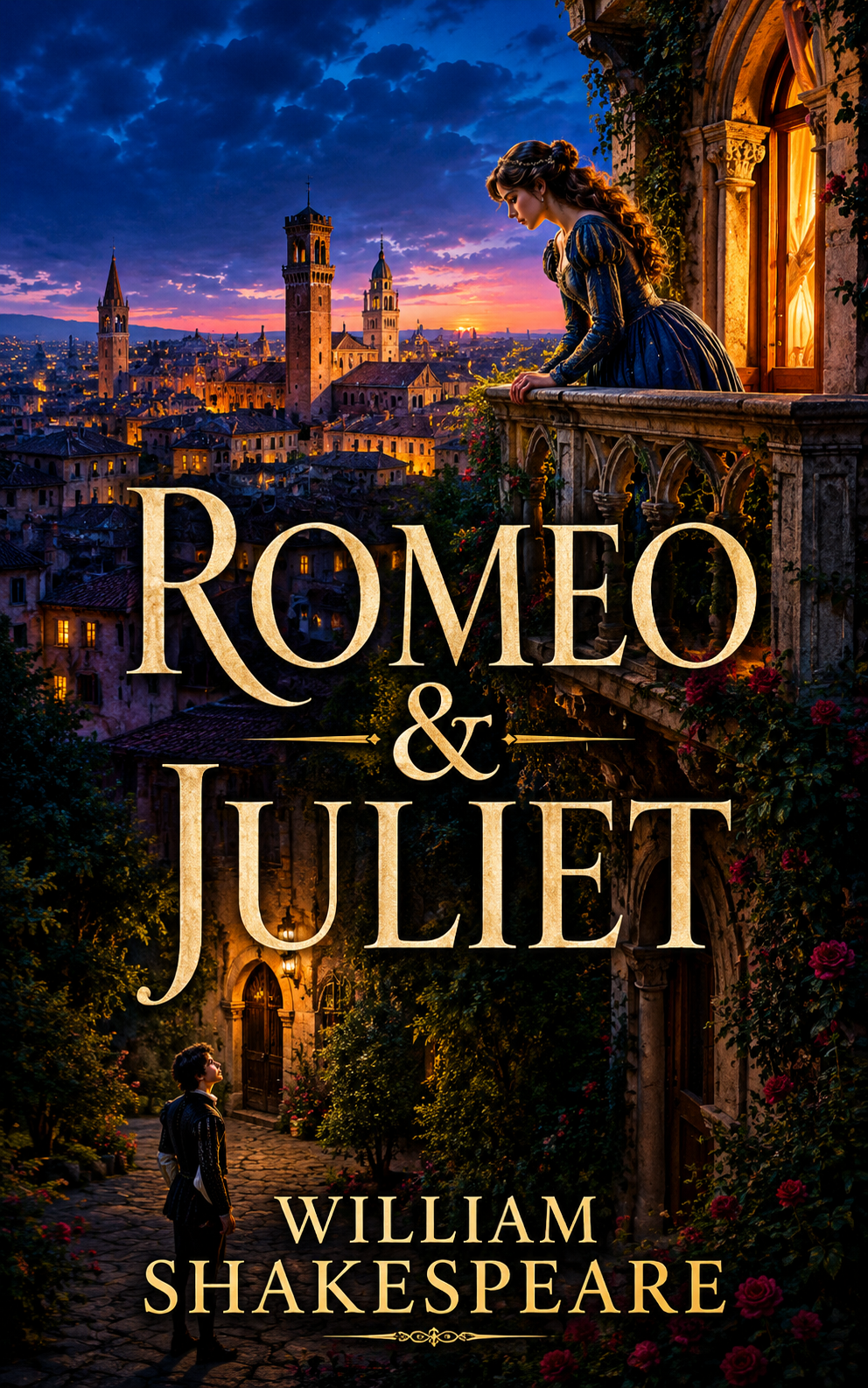
The Tragedy of
Romeo and Juliet
Two young hearts. Two rival families. One unforgettable tragedy.
Many people think they already know Romeo and Juliet.
They know the balcony scene. They know the lovers come from rival families. They know the ending is tragic. They may have studied parts of the play at school, watched a film adaptation, or encountered countless references in popular culture.
Yet knowing about Romeo and Juliet is not the same thing as reading it.
In fact, one of the most remarkable things about Shakespeare’s famous tragedy is how often readers discover an entirely different story when they return to it later in life.
What appears at first to be a simple tale of young romance gradually reveals itself to be something much richer, more complicated, and more emotionally powerful.
The older you become, the more there seems to be hidden within its pages.
It Is Not Really About the Ending
One reason some people avoid reading Romeo and Juliet is because they already know how it ends.
After all, why read a story when you already know the outcome?
Shakespeare understood this question better than anyone.
That is why he tells the audience the ending before the play even begins.
The Prologue openly reveals that Romeo and Juliet are “star-cross’d lovers” whose story will end in tragedy.
Modern readers are often surprised by this.
Surely Shakespeare should have kept the ending secret?
But Shakespeare was interested in a different kind of storytelling.
The tragedy is not powerful because it surprises us.
It is powerful because we watch it unfold.
As readers, we see opportunities for things to go differently. We see moments where a different decision, a different conversation, or a different piece of information might have changed everything.
The play becomes an exploration of how lives are shaped by choices, misunderstandings, timing, and circumstance.
The question is never what will happen.
The question is whether it could have been avoided.
Romeo and Juliet Are More Human Than Their Reputation Suggests
Popular culture has transformed Romeo and Juliet into symbols.
Their names have become shorthand for romance.
Yet when readers encounter Shakespeare’s actual characters, they often discover something unexpected.
Romeo and Juliet are not perfect.
They are emotional.
Impulsive.
Hopeful.
Frightened.
Idealistic.
Sometimes foolish.
Sometimes remarkably wise.
In other words, they feel like real people.
Romeo is often remembered simply as a romantic hero, but Shakespeare presents him as a young man struggling to understand his own emotions. Juliet is frequently imagined as a passive heroine waiting to be rescued, yet she repeatedly demonstrates courage, intelligence, and determination throughout the play.
Part of the reason the tragedy remains effective is that Shakespeare never allows his characters to become mere symbols.
They remain recognizably human.
Readers see their strengths.
Readers see their mistakes.
Readers understand why they make the choices they do, even when those choices ultimately lead to disaster.
The Villain Is Not Who You Think
Many stories have a clear villain.
Romeo and Juliet does not.
There is no single character responsible for the tragedy.
No evil mastermind.
No obvious antagonist.
Instead, Shakespeare presents a world where good intentions, personal flaws, social expectations, and old resentments combine to create catastrophe.
The true enemy is the feud itself.
Long before Romeo and Juliet meet, Verona is already trapped in a cycle of hatred.
The younger generation inherits a conflict they did not create.
The adults continue a rivalry whose original cause has long been forgotten.
Violence has become normal.
Pride has become tradition.
By placing the lovers within this environment, Shakespeare asks a question that remains relevant today:
What happens when people inherit divisions they never chose?
It is one reason the play still feels surprisingly modern.
Every Generation Finds Something Different
A teenager reading Romeo and Juliet often sees a story about first love.
An older reader may see something entirely different.
Some focus on family expectations.
Others focus on missed opportunities.
Some become fascinated by questions of fate and chance.
Others become interested in the social pressures surrounding honour, marriage, and reputation.
The play changes because readers change.
Experiences that seemed distant when we were young often become more familiar as we grow older.
Parents may identify with Lord Capulet’s fears.
Young readers may sympathize with Juliet’s desire for independence.
Others may find themselves reflecting on Friar Laurence’s attempts to help and the unintended consequences that follow.
The richness of the play allows multiple interpretations to exist simultaneously.
That is one reason readers return to it throughout their lives.
Shakespeare’s Language Is More Accessible Than Many People Expect
Perhaps the greatest obstacle preventing modern readers from enjoying Shakespeare is the belief that his language is impossible to understand.
Certainly, some passages require patience.
The play was written more than four hundred years ago, and the language reflects its time.
Yet Romeo and Juliet is often far more approachable than many people expect.
The emotions are clear.
The conflicts are recognizable.
The characters express fears, hopes, frustrations, and desires that remain familiar.
Moreover, Shakespeare possessed an extraordinary ability to create images that linger in the imagination.
The beauty of the language is not simply decorative.
It helps readers feel what the characters feel.
Love becomes more intense.
Fear becomes more immediate.
Loss becomes more painful.
The poetry serves the story rather than distracting from it.
Many readers discover that once they settle into Shakespeare’s rhythm, the language becomes one of the most rewarding aspects of the experience.
More Than a Love Story
To describe Romeo and Juliet merely as a romance is to overlook much of what makes it remarkable.
The play is also about family.
Identity.
Violence.
Forgiveness.
Choice.
Reconciliation.
It explores how communities become divided and how difficult it can be to break free from inherited loyalties.
It examines the consequences of impulsive decisions and the dangers of allowing anger to dictate behaviour.
At the same time, it celebrates courage, devotion, and the belief that people can choose a different path from the one society expects them to follow.
The result is a story that operates on multiple levels at once.
Readers may arrive for the romance, but they often leave thinking about much more.
Why Read It Now?
Because the questions Shakespeare asks are still relevant.
How much of our future is determined by circumstances beyond our control?
Can love overcome division?
What responsibilities do we bear for conflicts we inherit?
How do we balance loyalty to family with loyalty to ourselves?
What happens when pride prevents reconciliation?
These are not merely Renaissance questions.
They are human questions.
That is why readers continue to discover meaning in Romeo and Juliet century after century.
The play endures because it speaks to experiences that remain recognisable regardless of time or place.
And perhaps that is the strongest reason to read it.
Not because it is famous.
Not because it is important.
Not because generations of teachers have assigned it.
But because beneath the poetry, the tragedy, and the history lies a deeply human story that still has the power to move, challenge, and surprise modern readers.
Even those who think they already know it.
Ready to enjoy Shakespeare’s most famous tragedy?
Other Plays
Play Writes
Articles
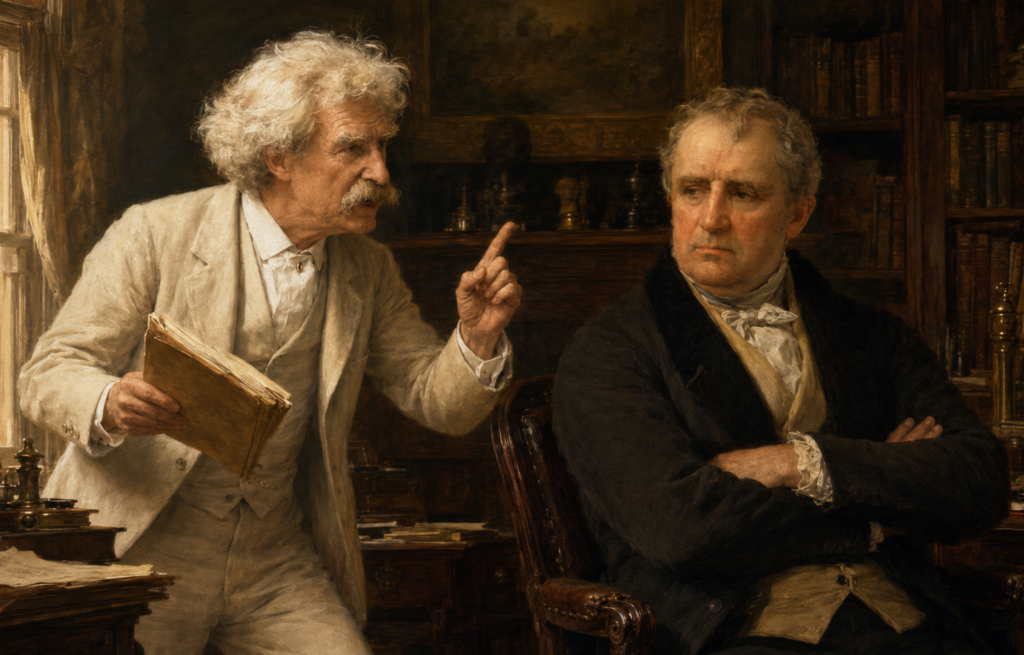
Why did Mark Twain not like James Fenimore Cooper?

Have the Jane Austen Movies Replaced the Books?

Whodunit Better

What Classic Horror Was Really Trying to Tell Us
Why Jane Austen Remains So Popular

Why I Hate Shakespeare
When Novels Were Released Like a TV Series

Jane Austen vs the Brontë Sisters