
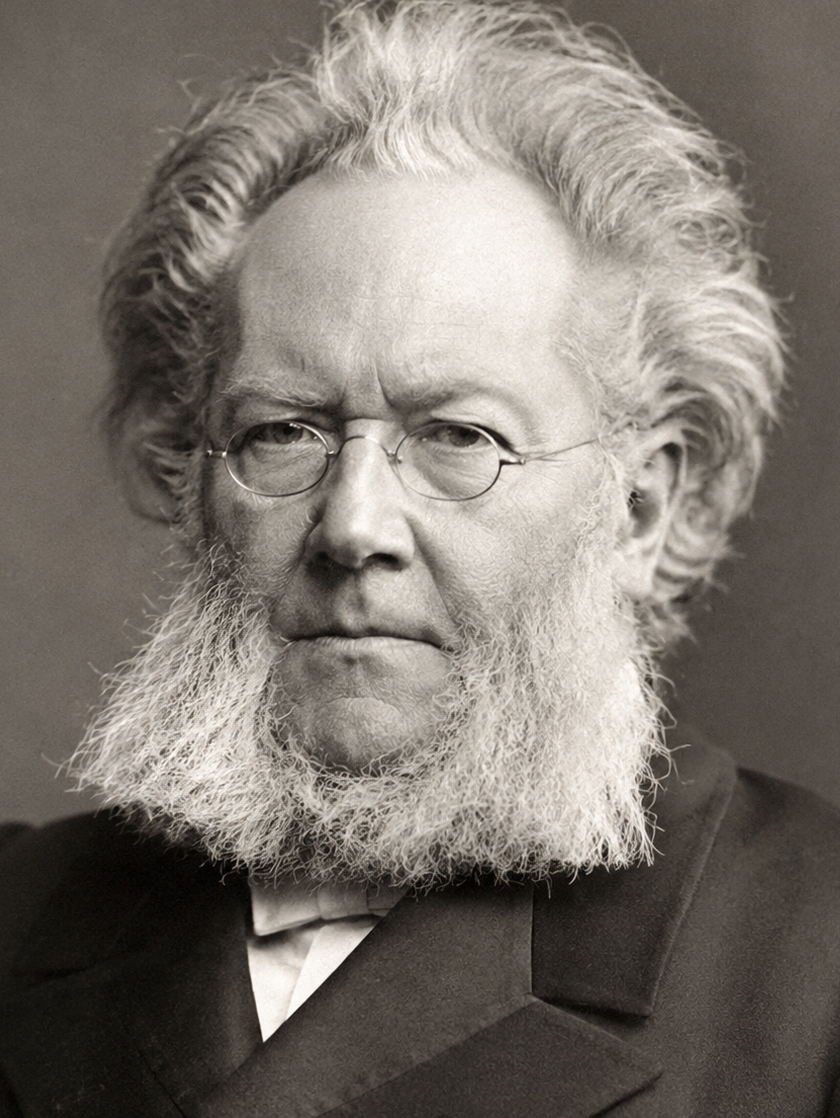
Henrik Ibsen:
Truth, Society,
and the Masks We Wear
Most people wear masks.
Not literal masks, but the roles and identities they present to the world.
We try to be good parents, loyal friends, respected professionals, dutiful family members, and responsible citizens. We often hide our fears, suppress uncomfortable truths, and present versions of ourselves that seem acceptable to those around us.
What happens when those carefully constructed masks begin to crack?
What happens when truth collides with reputation, duty, tradition, or social expectation?
These questions lie at the heart of Henrik Ibsen’s work.
More than a century after his death, Ibsen remains one of the most influential playwrights in literary history because he explored conflicts that continue to shape modern life. His plays examine the tension between appearance and reality, individual freedom and social pressure, honesty and self-deception. They challenge readers and audiences to confront difficult questions about themselves and the societies in which they live.
That willingness to confront uncomfortable truths is one of the reasons his work continues to resonate today.
A Writer Ahead of His Time
Henrik Ibsen was born in Norway in 1828 and became one of the most important figures in modern drama.
Yet his lasting significance comes not from his nationality or his historical period, but from his willingness to challenge accepted ideas.
Many playwrights of his era focused on entertainment, romance, or historical spectacle. Ibsen took a different approach. He turned his attention to ordinary homes, ordinary families, and ordinary people. Within these familiar settings, he explored extraordinary emotional and moral conflicts.
His characters wrestle with questions that remain deeply relevant.
How much of ourselves do we hide from others?
What happens when social expectations conflict with personal truth?
How much are we willing to sacrifice in order to maintain appearances?
These questions helped transform theatre from a form of entertainment into a powerful tool for examining human nature and society.
Truth Versus Appearance
One of the most important themes running through Ibsen’s work is the conflict between truth and appearance.
Many of his characters live within carefully constructed worlds. They maintain reputations, preserve family images, and cling to stories that allow life to continue without disruption.
Yet beneath the surface, reality often tells a different story.
Secrets remain hidden.
Resentments grow.
Old decisions continue to shape the present.
Truth waits patiently beneath the appearance of respectability.
Ibsen understood that people often fear truth not because it is false, but because it threatens the identities they have created for themselves. A revelation can destroy a reputation, challenge a relationship, or force an individual to confront uncomfortable realities.
This tension gives many of his plays their extraordinary power.
The audience sees characters struggling to preserve appearances while truth gradually emerges.
The question is rarely whether the truth exists.
The question is what will happen when it can no longer be ignored.
The Cost of Keeping Secrets
Closely connected to this theme is Ibsen’s fascination with secrets.
Many of his plays revolve around information that has been hidden, suppressed, or deliberately ignored. Characters believe they can protect themselves or others by concealing the truth.
Often they discover the opposite.
The longer a secret remains hidden, the greater its power becomes.
Relationships become strained.
Trust erodes.
Misunderstandings multiply.
Eventually the truth emerges, frequently with consequences far more devastating than if it had been faced honestly from the beginning.
Ibsen recognised something many readers still understand today: problems rarely disappear simply because people refuse to discuss them.
The past has a way of returning.
Uncomfortable truths have a way of resurfacing.
And the emotional cost of concealment can be enormous.
Society as a Powerful Force
One of the reasons Ibsen’s plays feel so realistic is that his characters do not exist in isolation.
They live within communities.
Families.
Social circles.
Institutions.
These forces shape behaviour and influence decisions.
In many of Ibsen’s works, society itself becomes a powerful presence. Characters fear public opinion, social scandal, and the judgement of others. They often feel trapped between what they genuinely believe and what society expects them to believe.
This conflict remains surprisingly familiar.
Even today, people face pressure to conform to expectations, maintain appearances, and avoid actions that might attract criticism or disapproval.
Ibsen understood that social pressure can influence lives as powerfully as any individual villain.
Sometimes the greatest obstacles are not people at all.
They are assumptions, traditions, and expectations that everyone accepts without question.
Families, Duty, and Personal Freedom
Few writers explored family relationships with greater honesty than Ibsen.
His plays frequently examine the obligations people feel toward parents, children, spouses, and society itself. Characters often find themselves caught between competing responsibilities.
Duty pulls them in one direction.
Personal freedom pulls them in another.
The resulting conflicts feel deeply human because they reflect struggles many readers recognise in their own lives.
How much do we owe to others?
How much do we owe to ourselves?
Can a person pursue happiness without causing pain?
Can honesty coexist with loyalty?
Ibsen rarely offered simple answers.
Instead, he explored these questions with nuance and emotional depth, allowing readers and audiences to draw their own conclusions.
Plays


Ghosts and the Burden of the Past
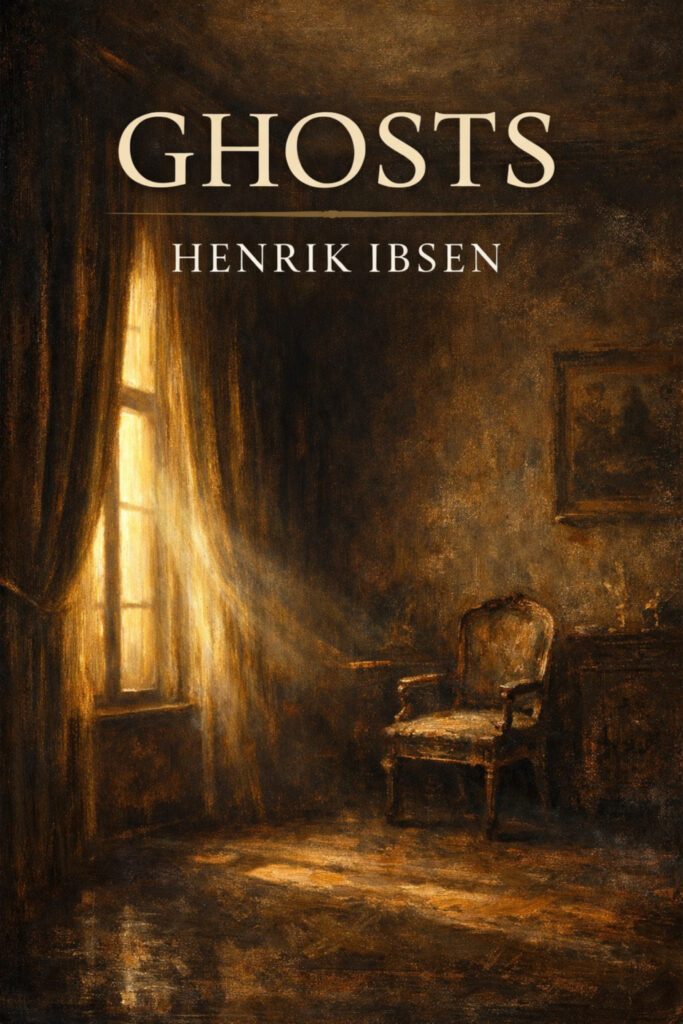
These themes reach one of their most powerful expressions in Ghosts.
At first glance, the title suggests a supernatural story.
In reality, the ghosts are not spirits.
They are ideas.
Memories.
Secrets.
Decisions made long ago whose consequences continue to affect the living.
The play explores the ways the past shapes the present and how attempts to conceal difficult truths can create suffering for future generations.
Family reputation, social respectability, and personal sacrifice all collide as hidden realities gradually emerge.
What makes Ghosts so powerful is that its central concerns remain universal.
Many people inherit burdens created by previous generations.
Many families carry unspoken histories.
Many individuals struggle with the consequences of decisions made long before they were born.
Ibsen transforms these experiences into a deeply emotional and unforgettable drama.
Why Ibsen Shocked His Audience
When Ibsen’s plays first appeared, many audiences were shocked.
The reason was not sensationalism.
It was honesty.
He addressed subjects that many preferred not to discuss openly. He questioned accepted social values. He challenged assumptions about family, morality, marriage, and authority.
Rather than presenting comforting illusions, he forced audiences to confront difficult realities.
For some, this was unsettling.
For others, it was liberating.
His willingness to ask difficult questions helped reshape modern theatre and established him as one of the most influential playwrights in history.
Why Ibsen Still Feels Modern
Many nineteenth-century writers feel tied to a distant era.
Ibsen often feels surprisingly contemporary.
The issues he explored remain relevant because human nature has changed far less than technology or fashion.
People still struggle with social expectations.
They still fear judgement.
They still conceal uncomfortable truths.
They still wrestle with questions of identity, freedom, responsibility, and authenticity.
Readers continue to recognise themselves in Ibsen’s characters because the emotional conflicts remain familiar.
The settings may belong to another century.
The dilemmas belong to every generation.
Related Authors
The Courage to Live Authentically
One of the most powerful ideas running through Henrik Ibsen’s work is the belief that living truthfully often requires courage.
Many of his characters find themselves trapped between two competing forces.
On one side lies social expectation.
On the other lies personal truth.
The choice is rarely simple.
Conforming to society’s expectations often provides comfort, stability, and acceptance. It allows individuals to avoid conflict and preserve relationships. Yet it may also require them to suppress their beliefs, conceal important truths, or deny aspects of themselves.
Ibsen was fascinated by what happens when these tensions become impossible to ignore.
His characters frequently reach moments when they must decide whether to continue maintaining appearances or confront reality, regardless of the consequences.
These decisions often come at great personal cost.
Relationships may suffer.
Reputations may be damaged.
Long-established assumptions may collapse.
Yet Ibsen repeatedly suggests that a life built upon illusion carries its own dangers.
This theme continues to resonate because it reflects challenges many people still face today.
Individuals continue to wrestle with questions about authenticity, identity, responsibility, and self-determination. They continue to ask how much of themselves they should reveal and how much they should sacrifice in order to satisfy the expectations of others.
Ibsen understood that honesty is not always comfortable.
Sometimes it is disruptive.
Sometimes it is painful.
Sometimes it requires extraordinary courage.
Yet he also recognised that genuine freedom often begins with the willingness to confront uncomfortable truths.
This belief helps explain why his plays continue to feel so relevant.
The settings may belong to another century.
The struggle to live authentically belongs to every generation.
Why Ibsen Changed Modern Drama
Today it is difficult to imagine theatre without Henrik Ibsen’s influence.
Many of the dramatic techniques and themes that modern audiences take for granted were revolutionary when he introduced them.
Before Ibsen, much popular theatre focused on historical spectacles, melodramatic plots, and larger-than-life characters. Audiences often expected entertainment that provided clear heroes, obvious villains, and reassuring conclusions.
Ibsen chose a different path.
He brought drama into ordinary homes.
His plays focused on families, relationships, personal choices, and social pressures. Rather than presenting distant heroes, he explored the lives of recognisable people facing difficult decisions.
In doing so, he transformed the possibilities of theatre.
He demonstrated that everyday life could contain profound drama.
A conversation between family members could be as compelling as a battlefield.
A hidden secret could be as dramatic as a duel.
A moral dilemma could carry greater emotional weight than a physical conflict.
This approach influenced generations of playwrights and helped shape the development of modern drama.
Yet Ibsen’s influence extends beyond theatre.
His willingness to explore uncomfortable truths encouraged writers, readers, and audiences to think more critically about society and themselves. He showed that literature could do more than entertain. It could challenge assumptions, provoke reflection, and inspire meaningful discussion.
That influence continues today.
His plays remain widely performed not because they are historical curiosities, but because they continue to speak to modern concerns.
The questions he asked about truth, freedom, responsibility, and social expectation remain as relevant as ever.
This enduring relevance is one of the clearest signs of a truly great writer.
More than a century after his death, Henrik Ibsen’s work continues to challenge, provoke, and inspire new generations of readers and audiences around the world.
Conclusion
Henrik Ibsen’s lasting achievement was not simply writing great plays.
It was revealing the tensions that exist beneath the surface of ordinary life.
The conflict between truth and appearance.
The struggle between personal freedom and social expectation.
The consequences of secrets and self-deception.
The enduring influence of the past.
These themes continue to resonate because they are not confined to nineteenth-century Norway. They are part of the human experience itself.
More than a century after his death, readers and audiences still return to Ibsen because he understood something fundamental about people.
We all wear masks.
And sooner or later, we must decide whether to continue hiding behind them or confront the truth.
Articles

Why I Hate Shakespeare
Why did Mark Twain not like James Fenimore Cooper?

Have the Jane Austen Movies Replaced the Books?

Why Jane Austen Remains So Popular

Whodunit Better
When Novels Were Released Like a TV Series

Jane Austen vs the Brontë Sisters

Classic Literature Quiz (Part 1): How Well Do You Know the Classics?