
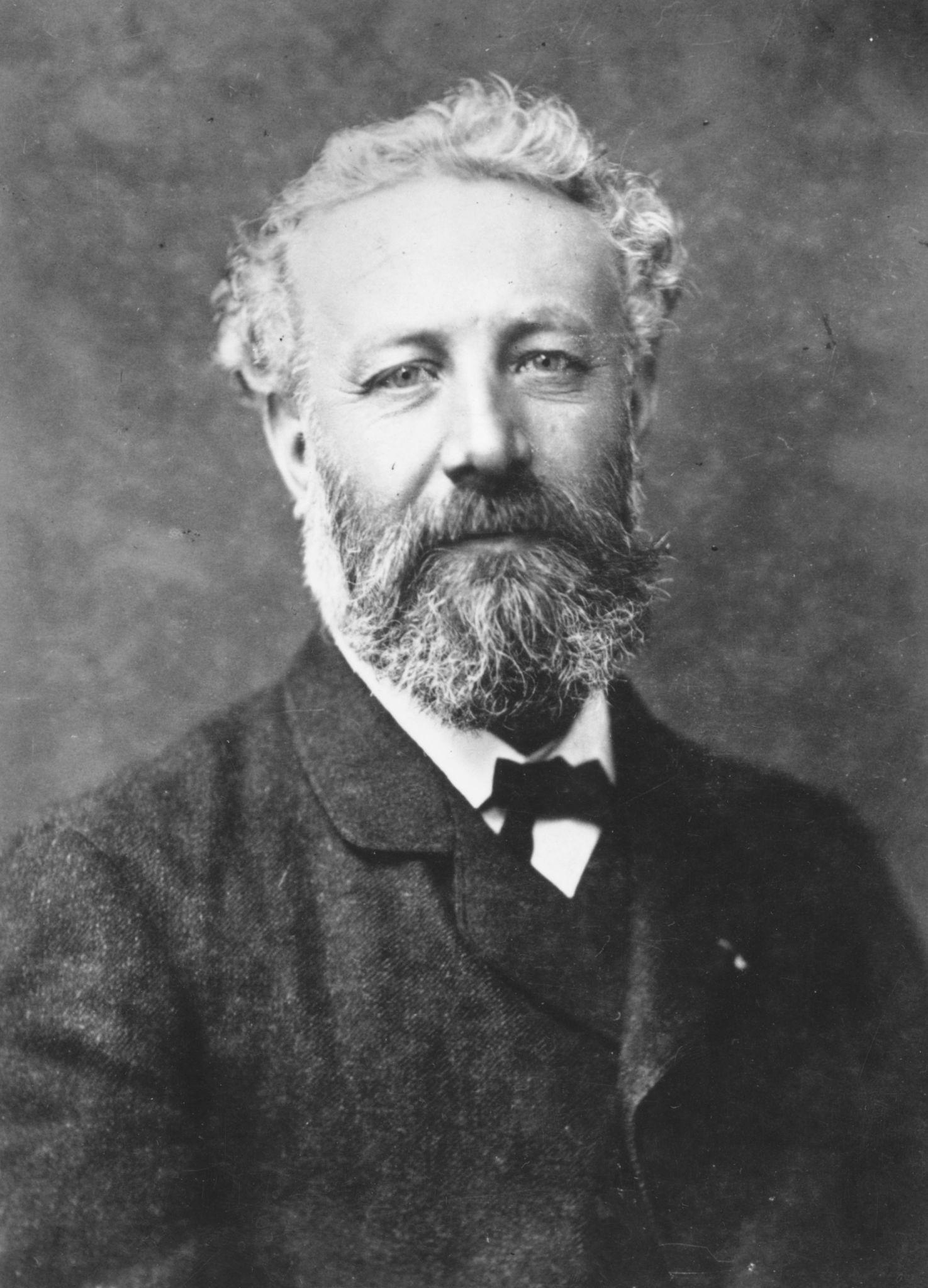









Jules Verne:
Where Curiosity Becomes Adventure
Most adventure writers begin with danger.
Most science fiction writers begin with technology.
Jules Verne began with curiosity.
That simple distinction helps explain why Verne remains one of the most widely read and beloved authors in literary history. More than a century after his death, readers continue to be captivated by his stories not merely because of their imaginative settings or remarkable inventions, but because Verne understood something fundamental about human nature.
We are curious creatures.
We want to know what lies beyond the horizon, beneath the ocean, inside the unexplored cave, or at the end of the journey. We are drawn toward mysteries. We are fascinated by the unknown. Long before the modern world became obsessed with technological innovation, Jules Verne recognized that curiosity itself could be the engine of great storytelling.
His novels are filled with extraordinary voyages and remarkable discoveries, but at their heart they are celebrations of humanity’s desire to explore.
That may be Verne’s greatest achievement.
He transformed curiosity into adventure.
Related Novels
Verne’s Heroes Are Not Conquerors
Many adventure stories are driven by conquest.
Heroes seek treasure. Armies seek victory. Explorers seek fame. Characters pursue power, wealth, or glory.
Verne’s protagonists are often different.
Again and again, his stories are propelled not by greed but by questions.
What lies beneath the Earth’s surface?
What secrets remain hidden beneath the sea?
Can a journey around the world be completed in just eighty days?
These questions are not obstacles placed in the path of the story. They are the story.
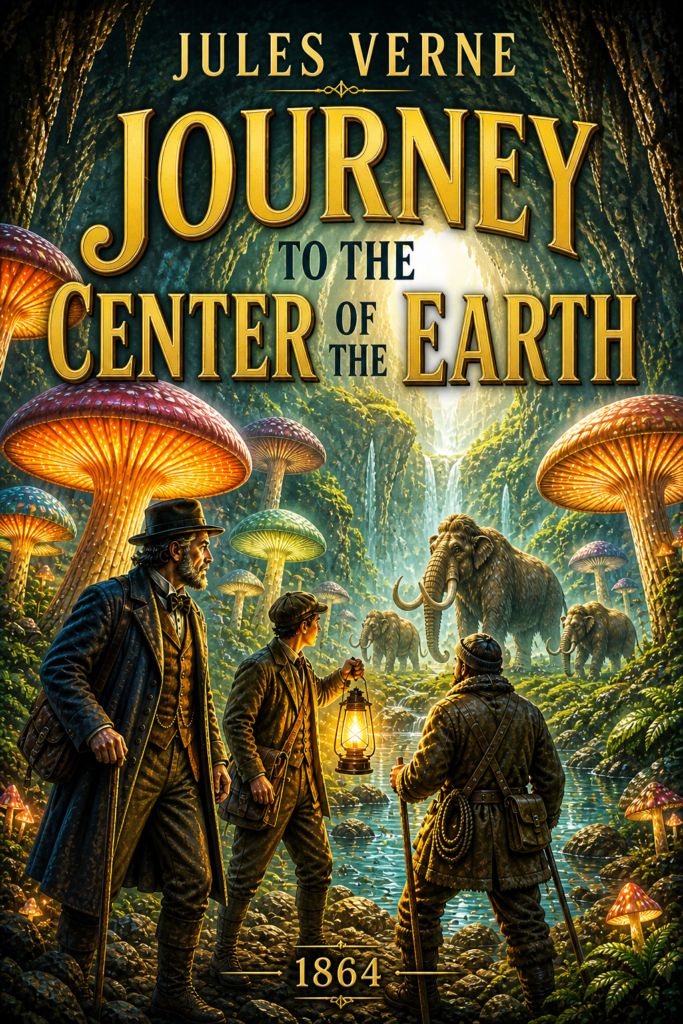
Professor Lidenbrock in Journey to the Center of the Earth is not motivated by wealth or prestige. He is driven by the possibility that a mystery can be solved. His willingness to descend into the unknown stems from an overwhelming desire to know whether the impossible might actually be possible.
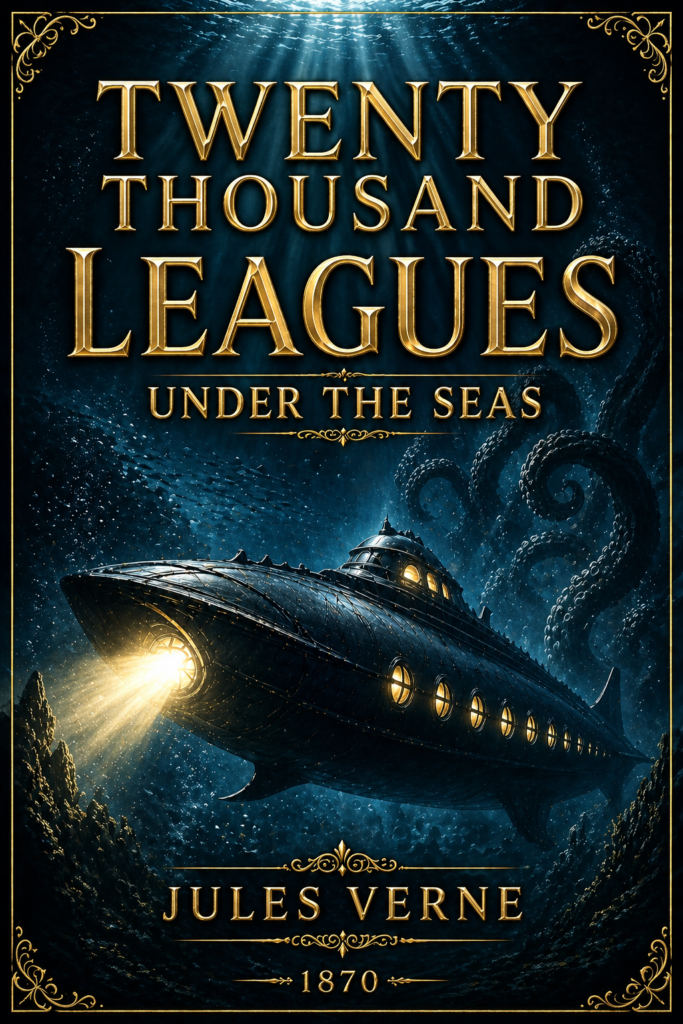
Professor Aronnax in Twenty Thousand Leagues Under the Seas is similarly defined by curiosity. Faced with the prospect of encountering a mysterious creature unlike anything previously known, he does not retreat from the unknown. He pursues it.
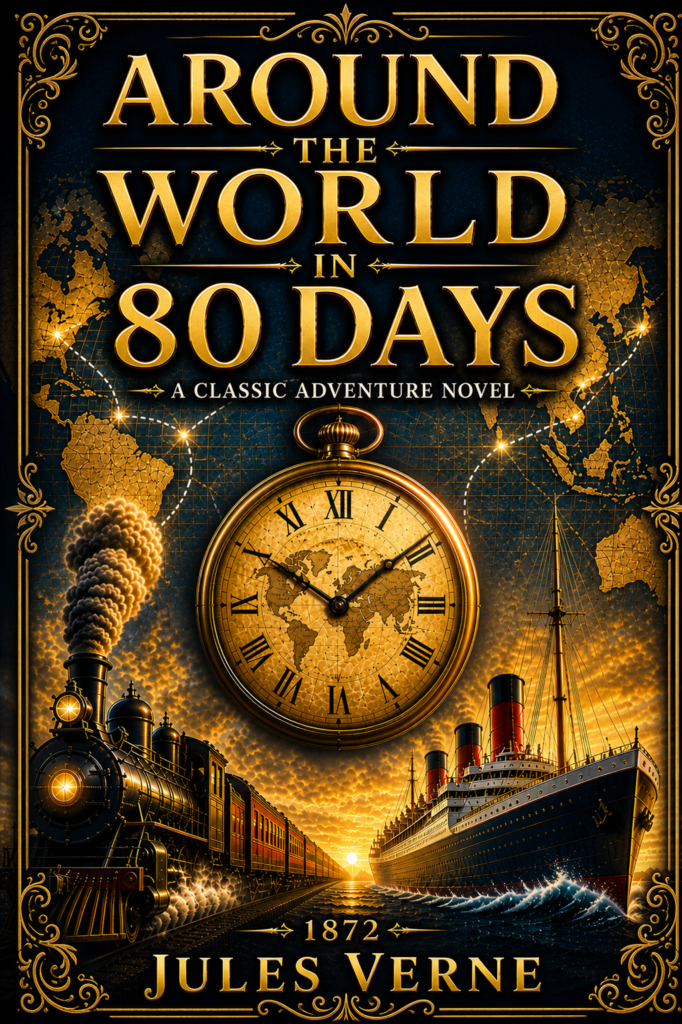
Even Phileas Fogg, who initially appears motivated by a wager in Around the World in Eighty Days, ultimately embodies Verne’s fascination with possibility. His journey is a demonstration of what can be achieved when accepted limitations are challenged.
These characters are not conquerors.
They are explorers.
And through them, Verne invites readers to become explorers as well.
The Unknown Is Always Calling
If there is a recurring setting in Verne’s fiction, it is not the ocean, the underground world, or the distant corners of the globe.
It is the unknown itself.
Verne repeatedly places his characters on the edge of what is understood and then asks them to step forward.
This pattern appears throughout his most celebrated works.
In Journey to the Center of the Earth, the unknown lies beneath humanity’s feet. Beneath familiar landscapes and established scientific understanding exists the possibility of an entirely different world waiting to be discovered.
In Twenty Thousand Leagues Under the Seas, the unknown lies beneath the waves. Vast regions of the planet remain unexplored, filled with mysteries that few have witnessed and fewer still understand.
In Around the World in Eighty Days, the unknown takes a different form. The challenge is not geographical but practical. Can a journey thought impossible actually be accomplished?
The specific mystery changes from novel to novel.
The underlying impulse does not.
Verne continually reminds readers that the world is larger, stranger, and more fascinating than it first appears.
His stories encourage a way of seeing.
A belief that somewhere beyond accepted knowledge there are still discoveries waiting to be made.
Verne Made Discovery Feel Like Adventure
This may be what truly separates Verne from many of his contemporaries.
Most adventure novels use discovery as a reward.
Verne makes discovery itself the adventure.
The excitement in his novels rarely comes solely from danger. It comes from revelation.
Readers turn pages because they want to know what lies beyond the next tunnel, beneath the next wave, or over the next horizon.
The joy of uncovering something previously unseen becomes every bit as thrilling as escaping villains or surviving perilous situations.
This approach helps explain why Verne’s novels continue to appeal to readers who might otherwise have little interest in nineteenth-century science or exploration.
The emotional experience remains timeless.
Everyone remembers moments of discovery.
Finding something unexpected.
Learning something new.
Realizing that the world is larger than previously imagined.
Verne captured that feeling better than almost any writer before or since.
His stories remind readers that wonder is not a childish emotion.
It is one of the most powerful motivations human beings possess.
The World Was Changing—and Verne Saw Opportunity
Verne’s career coincided with one of the most transformative periods in human history.
Railways connected distant regions.
Steamships reduced travel times dramatically.
Telegraph lines allowed information to move across continents with unprecedented speed.
Scientific discoveries were reshaping how people understood the world.
Many observers saw disruption.
Verne saw possibility.
Rather than fearing change, he became fascinated by what those changes might make possible. His novels often reflect an optimism that feels increasingly rare in modern discussions of technology.
He did not view innovation as an end in itself.
Instead, he viewed it as a means of expanding humanity’s horizons.
Technology mattered because it enabled exploration.
It allowed people to go farther, see more, and discover what had previously remained hidden.
This perspective helps explain why Verne’s works influenced generations of explorers, inventors, scientists, and engineers.
His stories encouraged readers to think not merely about what technology could do, but about where it might take them.
Why Jules Verne Influenced the World
Many authors entertain.
A smaller number shape how people think.
Jules Verne belongs firmly in the second category.
His influence extends far beyond literature.
Explorers cited his works as inspirations. Inventors admired his imagination. Scientists grew up reading his novels. Generations of readers found in his stories a celebration of curiosity that encouraged them to look at the world differently.
The reason for this influence is not difficult to understand.
Verne’s novels communicate a fundamentally optimistic idea.
The unknown is not something to fear.
It is something to explore.
Questions are not problems.
They are opportunities.
Mysteries are not barriers.
They are invitations.
That message resonated in the nineteenth century.
It continues to resonate today.
Why Readers Still Need Jules Verne
Modern readers live in a world where maps are complete, information is instantly accessible, and satellite imagery can reveal nearly every corner of the globe.
Yet despite these advances, Verne’s work continues to feel relevant.
Why?
Because his novels were never really about geography.
They were about curiosity.
The desire to learn.
The willingness to ask questions.
The belief that wonder still exists.
Those qualities remain just as important today as they were when Verne first began writing.
In an age increasingly defined by certainty, Verne reminds us of the value of curiosity.
In a world that often feels fully explored, he reminds us that discovery remains possible.
And in a culture that sometimes mistakes knowledge for wisdom, he reminds us that asking questions may be just as important as finding answers.
The Adventure Begins with a Question
Many writers have created unforgettable adventures.
Jules Verne did something rarer.
He convinced generations of readers that curiosity itself could be the greatest adventure of all.
His novels continue to endure because they speak to one of humanity’s deepest instincts: the desire to know what lies beyond the limits of the known.
Whether beneath the sea, beneath the Earth, or on the far side of the world, Verne’s characters are always pursuing the same thing.
Not treasure.
Not power.
Not conquest.
Discovery.
And more than a century later, readers continue to follow them.
Jules Verne Believed Discovery Was Worth Pursuing
To understand what makes Jules Verne unique, it is important to understand the age in which he wrote.
The nineteenth century was a period of extraordinary change. New inventions appeared with astonishing speed. Railways connected distant cities. Steamships crossed oceans. Scientific discoveries challenged long-held assumptions about the world. Humanity seemed to be entering a new era in which almost anything might become possible.
Not every writer viewed these changes with enthusiasm.
Many saw danger, disruption, and uncertainty. Others worried that technological progress would outpace human wisdom. These concerns would later become central themes in the works of writers such as H. G. Wells.
Verne took a different approach.
He was not blind to the challenges of progress, nor was he naïvely optimistic about every invention. Yet beneath his stories lies a conviction that discovery itself is valuable. Curiosity is worthwhile. Exploration is worthwhile. The pursuit of knowledge is worthwhile.
Again and again, his novels celebrate humanity’s desire to learn more about the world.
This optimism helps explain why Verne’s works often feel different from later science fiction. Many modern stories focus on warnings. Technology becomes a source of danger. Scientific breakthroughs create unintended consequences. The future is often presented as something to fear.
Verne’s imagination moved in another direction.
For him, the unknown was an invitation.
A challenge.
A frontier.
His stories remind readers that the desire to discover is one of humanity’s most admirable qualities.
That belief remains surprisingly refreshing today.
Three Journeys That Changed Literature
Many authors are remembered for a single masterpiece.
Verne produced multiple novels that helped define entire genres.
Each explores a different form of curiosity, yet all share the same underlying belief: extraordinary adventures begin with a question.
Around the World in Eighty Days: The Possibility of the Impossible
At first glance, Around the World in Eighty Days appears to be the least “Verne-like” of his major works.
There are no hidden worlds.
No remarkable inventions.
No scientific mysteries.
Yet the novel perfectly captures Verne’s central idea.
The story begins with a challenge that most people consider impossible.
Phileas Fogg’s journey is not driven by treasure or conquest. It is driven by the desire to test a possibility. Could modern transportation make such a journey achievable?
The answer matters less than the attempt itself.
The novel celebrates a willingness to challenge accepted limits and demonstrates how quickly the impossible can become reality when someone is willing to try.
Even today, readers find themselves inspired by the same question that drives the story:
What might be possible if we refused to accept conventional limits?
Journey to the Center of the Earth: The Adventure of Discovery
If Around the World in Eighty Days celebrates possibility, Journey to the Center of the Earth celebrates discovery.
The novel begins with one of literature’s great invitations:
What if there is still a world waiting to be found?
Rather than sending readers across oceans or continents, Verne directs their attention downward, toward a mystery hidden beneath familiar ground.
This is classic Verne.
He takes a question that sounds impossible and treats it seriously enough that readers begin to wonder whether it might actually be true.
The result is not merely an adventure story.
It is a celebration of intellectual curiosity.
The characters venture into the unknown because they want answers.
Readers follow because they want them too.
Twenty Thousand Leagues Under the Seas: The Adventure of Wonder
Among Verne’s many achievements, none better captures his sense of wonder than Twenty Thousand Leagues Under the Seas.
The novel transports readers into a hidden world beneath the ocean, revealing sights few people of the nineteenth century could even imagine.
Yet the story’s enduring power extends beyond its remarkable setting.
Captain Nemo remains one of literature’s most fascinating characters because he embodies many of the tensions that fascinated Verne himself. He is brilliant, visionary, isolated, and deeply human.
The Nautilus may be the most famous vessel in literature, but the true heart of the novel lies in its ability to inspire awe.
Readers are reminded that the world contains mysteries larger than themselves.
That sense of wonder is one of Verne’s greatest gifts.
More than a century later, it remains undiminished.
Related Authors
Why Verne Influenced Generations of Explorers, Inventors, and Readers
Many authors entertain their audiences.
A much smaller number shape how future generations imagine the world.
Verne belongs firmly in the second category.
His novels inspired countless readers because they encouraged a particular way of thinking.
They suggested that exploration was worthwhile.
That difficult questions deserved investigation.
That the unknown was not something to avoid but something to pursue.
Inventors admired his imagination.
Scientists admired his curiosity.
Explorers admired his willingness to venture beyond accepted boundaries.
Even readers with no interest in science often found themselves captivated by his enthusiasm for discovery.
This influence cannot be measured solely through literary history.
It can be seen in the countless people who read Verne and emerged with a renewed sense of curiosity about the world around them.
His stories do not merely entertain.
They encourage readers to ask questions.
And every significant discovery begins with a question.
Why Jules Verne Still Matters
Many Victorian authors are remembered primarily because they were important.
Jules Verne continues to be read because he remains enjoyable.
That distinction matters.
The scientific theories within his novels may no longer be accurate. The technology he imagined has often been surpassed. The world itself has changed dramatically since his lifetime.
Yet the emotions at the heart of his stories remain timeless.
Wonder.
Curiosity.
Discovery.
The thrill of encountering something new.
The excitement of venturing beyond the known.
These experiences are as meaningful today as they were in the nineteenth century.
Modern readers may no longer believe they can find a hidden world beneath the Earth’s surface or travel aboard a submarine like the Nautilus. Yet they still understand the desire to explore. They still recognize the excitement of discovery.
Verne reminds us that the world remains larger than our understanding of it.
There are still questions worth asking.
There are still mysteries worth pursuing.
There are still adventures waiting to be found.
The Adventure Begins with a Question
Many writers have created unforgettable adventures.
Jules Verne did something rarer.
He transformed curiosity itself into adventure.
His greatest characters are not defined by strength, wealth, or power. They are defined by a desire to know more than they knew yesterday.
That desire drives every journey.
It fuels every discovery.
It turns ordinary people into explorers and ordinary questions into extraordinary adventures.
More than a century after his death, Verne’s novels continue to captivate readers because they speak to one of humanity’s deepest instincts: the need to understand the world around us.
The oceans may have been mapped.
The continents explored.
The frontiers transformed.
Yet the spirit that animated Verne’s stories remains unchanged.
Curiosity still leads the way.
And wherever curiosity leads, adventure is never far behind.
Articles

100 Editions, Countless Discoveries
Why did Mark Twain not like James Fenimore Cooper?

Classic Literature Quiz (Part 1): How Well Do You Know the Classics?

When Novels Were Released Like a TV Series

Why I Hate Shakespeare

Whodunit Better

What Classic Horror Was Really Trying to Tell Us

Have the Jane Austen Movies Replaced the Books?

Jane Austen vs the Brontë Sisters

Why Jane Austen Remains So Popular