
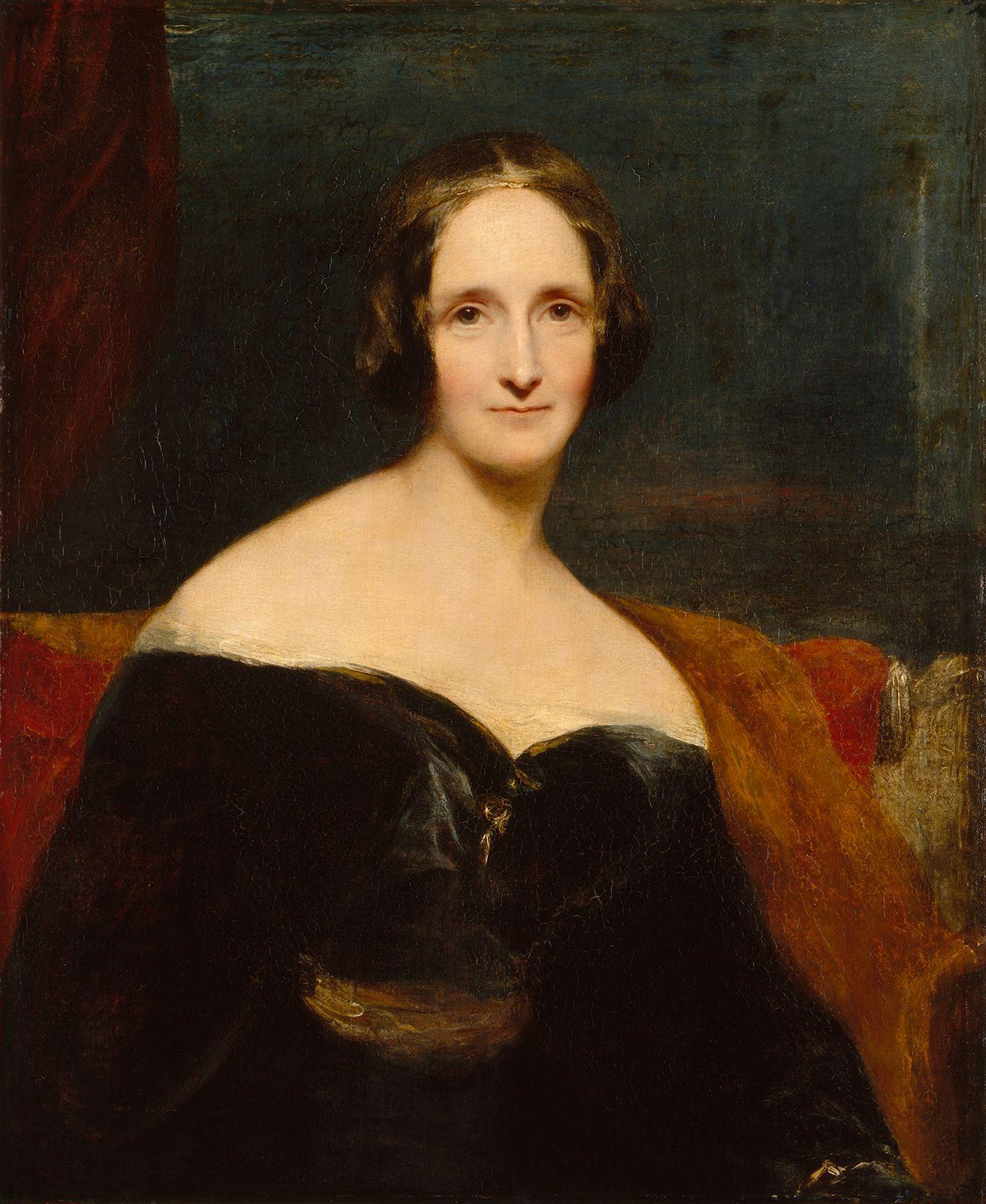









How a Teenage Mary Shelley Created One of the Greatest Novels Ever Written
Few novels have had a greater impact on literature than Frankenstein.
More than two centuries after its publication, Mary Shelley’s masterpiece continues to captivate readers around the world. Its influence can be seen in countless novels, films, television series, and discussions about science, ethics, and human responsibility. The story has become so deeply embedded in popular culture that even people who have never read the book recognize the name Frankenstein.
Yet many readers are surprised to learn that the novel was conceived by a teenager.
Mary Shelley was only eighteen years old when the idea first came to her and just twenty when the book was published anonymously in 1818.
The achievement becomes even more remarkable when viewed in the context of her life.
She was not an established author with decades of experience behind her. She was a young woman navigating a world filled with intellectual giants, personal tragedy, scandal, financial hardship, and extraordinary expectations. The circumstances that led to the creation of Frankenstein were as dramatic and fascinating as the novel itself.
Understanding Mary Shelley’s life not only reveals the origins of one of literature’s greatest works but also helps explain why Frankenstein continues to resonate so powerfully with modern readers.
The Daughter of Revolutionary Thinkers
Mary Shelley was born Mary Wollstonecraft Godwin in London on August 30, 1797.
From the moment she entered the world, she was surrounded by ideas.
Her father, William Godwin, was one of Britain’s most influential political philosophers. Her mother, Mary Wollstonecraft, was a pioneering advocate for women’s rights whose work would later become one of the foundations of modern feminism.
Together, her parents represented some of the most radical intellectual thought of their era.
Tragically, Mary never truly knew her mother.
Mary Wollstonecraft died only days after giving birth, leaving the infant Mary to grow up with stories of a woman whose intellect, independence, and courage would become a lasting influence on her life.
Although she lost her mother before she could remember her, Mary remained deeply connected to her legacy. She later spoke of visiting her mother’s grave and spending time reading her writings.
Books, ideas, and discussion formed the foundation of her childhood.
Writers, philosophers, scientists, and political thinkers regularly visited her father’s home. Unlike many young women of her era, Mary was exposed to serious intellectual debate from an early age.
These experiences helped shape the curious and imaginative mind that would eventually create Frankenstein.
A Scandalous Love Affair
In 1814, when Mary was only sixteen years old, she met a young poet named Percy Bysshe Shelley.
The meeting would change her life forever.
Percy Shelley was brilliant, charismatic, idealistic, and already gaining recognition as one of the leading voices of the Romantic movement. He admired William Godwin’s political philosophy and frequently visited the family home.
Mary and Percy quickly formed a powerful connection.
There was just one problem.
Percy was already married.
The relationship scandalized many of those around them. Nevertheless, the pair fell deeply in love. In July 1814, they ran away together to continental Europe, accompanied by Mary’s stepsister Claire Clairmont.
Their journey was romantic, adventurous, and deeply controversial.
Financial difficulties soon followed. Public criticism was relentless. Friends and family often disapproved of their choices. Yet despite these challenges, Mary and Percy remained devoted to one another.
The intensity of their relationship would influence Mary’s writing throughout her life.
Like many Romantic writers, they believed deeply in imagination, emotion, individual freedom, and the pursuit of ideals. These themes would later find their way into Frankenstein.
But the years that followed were far from easy.
Tragedy and Loss
Behind the image of youthful romance lay profound suffering.
Mary experienced repeated personal losses throughout her early adulthood.
Several of her children died in infancy. The grief was devastating.
Her journals reveal a young woman struggling to cope with sorrow while continuing to build a life alongside Percy Shelley. These experiences exposed her to questions about life, death, love, and loss at an unusually young age.
Many scholars have noted the possible influence of these experiences on Frankenstein.
The novel is deeply concerned with creation and loss.
It explores the consequences of bringing life into the world while failing to accept responsibility for it. It examines loneliness, abandonment, grief, and the desire for connection.
While it would be simplistic to reduce the novel to autobiography, Mary’s personal experiences undoubtedly contributed to its emotional depth.
The tragedy she endured gave her a profound understanding of human suffering.
It is one reason why Frankenstein remains far more than a simple horror story.
Related Novels

The Summer That Changed Literature Forever
The most famous chapter of Mary Shelley’s life began in the summer of 1816.
It was a strange year.
A volcanic eruption in Indonesia had altered weather patterns around the world, producing unusually cold temperatures and relentless storms across Europe. The season became known as the “Year Without a Summer.”
During this period, Mary, Percy Shelley, Claire Clairmont, and Lord Byron gathered near Lake Geneva in Switzerland.
The group found themselves spending long periods indoors as rain and storms swept across the landscape.
To pass the time, they read German ghost stories and discussed science, philosophy, and the supernatural.
Eventually, Lord Byron proposed a challenge.
Each person would attempt to write a ghost story.
At first, Mary struggled to think of an idea.
Then, after listening to conversations about scientific experiments and the possibility of reanimating life, she experienced what she later described as a waking dream.
She imagined a young scientist kneeling beside the thing he had assembled.
She imagined the horror of seeing it come to life.
The image stayed with her.
From that moment, the foundations of Frankenstein were born.
Few creative moments in literary history have proven more influential.
The Birth of Frankenstein
The story that emerged from Mary’s imagination would become one of the most influential novels ever written.
Published anonymously in 1818, Frankenstein; or, The Modern Prometheus initially surprised many readers. Some critics admired its originality and emotional power. Others were shocked by its themes and disturbing ideas.
Few could have predicted the novel’s lasting impact.
What made Frankenstein remarkable was not merely its plot.
Stories about supernatural events and Gothic horrors already existed. What Mary Shelley created was something different. Instead of relying solely on magic or ancient curses, she grounded her story in contemporary scientific thought and philosophical questions.
Victor Frankenstein does not stumble upon dark sorcery.
He uses reason, experimentation, and scientific ambition.
This distinction helped establish a foundation for what would later become science fiction.
Yet despite its groundbreaking ideas, the novel’s enduring appeal lies elsewhere.
The true power of Frankenstein comes from its humanity.
At its heart, the novel is not about creating life.
It is about what happens after life is created.
Why Frankenstein Is About More Than a Monster
Many people who have never read the novel believe they already know its story.
Popular culture often reduces Frankenstein to the image of a shambling monster brought to life by a mad scientist.
The novel itself is far richer and more complex.
In fact, one of the book’s greatest achievements is that readers often find themselves sympathizing with both Victor Frankenstein and the Creature.
Victor is driven by ambition, curiosity, and the desire to achieve something extraordinary.
The Creature begins life innocent, curious, and eager for companionship.
Neither character starts as a villain.
Instead, Mary Shelley explores how choices, circumstances, rejection, and responsibility shape human lives.
The Creature’s tragedy is not simply that he was created.
It is that he was abandoned.
Rejected by his creator and feared by society, he longs for friendship, understanding, and acceptance. Again and again, those hopes are denied.
His suffering becomes one of the novel’s most powerful emotional forces.
Readers are forced to confront uncomfortable questions.
How much of our identity is shaped by how others treat us?
What responsibilities do creators have toward their creations?
Can compassion prevent tragedy?
These questions remain as relevant today as they were two centuries ago.
Creation, Responsibility, and Human Nature
One reason Frankenstein continues to attract new generations of readers is that its central themes feel remarkably modern.
Scientific progress has advanced far beyond anything Mary Shelley could have imagined.
Yet many of the questions she asked remain unresolved.
As societies debate artificial intelligence, genetic engineering, biotechnology, and other emerging technologies, the novel’s warnings feel increasingly relevant.
Victor Frankenstein succeeds in achieving something extraordinary.
His failure comes afterward.
He refuses to accept responsibility for what he has done.
The tragedy of the novel is not that creation was possible.
The tragedy is that responsibility was abandoned.
This insight gives Frankenstein much of its lasting power.
The novel is not anti-science.
Mary Shelley was surrounded by scientific discussion throughout her life and deeply interested in new ideas.
Instead, she asks readers to consider the relationship between knowledge and wisdom.
Can human beings pursue discovery without considering consequences?
Should every possibility be explored simply because it exists?
What obligations accompany power?
These questions extend far beyond the laboratory.
They apply to leadership, parenting, politics, technology, and countless aspects of modern life.
The novel therefore functions on multiple levels simultaneously.
It is a Gothic horror story.
It is a tragedy.
It is a philosophical novel.
And it is an exploration of human responsibility.
Related Authors
Why Readers Still Love Frankenstein
More than two hundred years after its publication, Frankenstein remains one of the most widely read and discussed novels in the world.
Part of this appeal comes from its unforgettable story.
The image of a scientist creating life continues to capture the imagination.
The Gothic atmosphere remains compelling.
The suspense remains effective.
Yet countless novels possess memorable plots.
What makes Frankenstein endure is its emotional depth.
Readers recognize themselves within its characters.
Most people understand ambition.
Most people understand regret.
Most people have experienced loneliness, rejection, or the desire to belong.
These emotions connect modern readers to a novel written in the early nineteenth century.
The story’s scientific ideas may have evolved, but its understanding of human nature remains timeless.
This is why Frankenstein continues to inspire new adaptations, scholarly discussions, and passionate readers.
It speaks to concerns that transcend any particular era.
Mary Shelley’s Enduring Legacy
Although Frankenstein remains her most famous work, Mary Shelley’s achievement extends beyond a single novel.
She helped establish an entirely new way of thinking about literature.
She demonstrated that imaginative fiction could explore serious philosophical questions.
She showed that stories about extraordinary events could reveal profound truths about ordinary human experiences.
Most remarkably, she accomplished this while still a teenager.
The young woman who sat beside Lake Geneva in 1816 could never have known how far her creation would travel.
Generations of readers, writers, filmmakers, and scholars would continue to engage with the questions she first explored.
The novel would become one of the foundational works of modern literature.
And Mary Shelley herself would become one of its most important voices.
More Than the Author of Frankenstein
It is tempting to remember Mary Shelley only as the creator of a single masterpiece.
Yet her life was every bit as extraordinary as her novel.
She was the daughter of revolutionary thinkers.
She defied social conventions in pursuit of love.
She endured personal tragedy and profound loss.
She moved among some of the greatest literary figures of her age.
And while still a teenager, she imagined a story that would change literature forever.
Understanding her life helps readers appreciate Frankenstein more deeply.
The novel’s themes of ambition, loss, responsibility, isolation, and belonging were not abstract ideas to Mary Shelley. They were questions she had confronted throughout her own experiences.
That connection between life and art helps explain why the novel continues to resonate.
Readers may first pick up Frankenstein expecting a classic horror story.
What they discover is something far more powerful.
They discover a deeply human tale written by a remarkable young woman whose imagination, insight, and courage transformed literature forever.
More than two centuries later, Mary Shelley’s masterpiece continues to challenge, move, and inspire readers around the world—and its questions remain as compelling as ever.
Articles

Whodunit Better

100 Editions, Countless Discoveries

What Classic Horror Was Really Trying to Tell Us

Classic Literature Quiz (Part 1): How Well Do You Know the Classics?

Have the Jane Austen Movies Replaced the Books?

Jane Austen vs the Brontë Sisters
Why Jane Austen Remains So Popular
Why did Mark Twain not like James Fenimore Cooper?

Why I Hate Shakespeare
When Novels Were Released Like a TV Series