Have the Jane Austen Movies Replaced the Books?
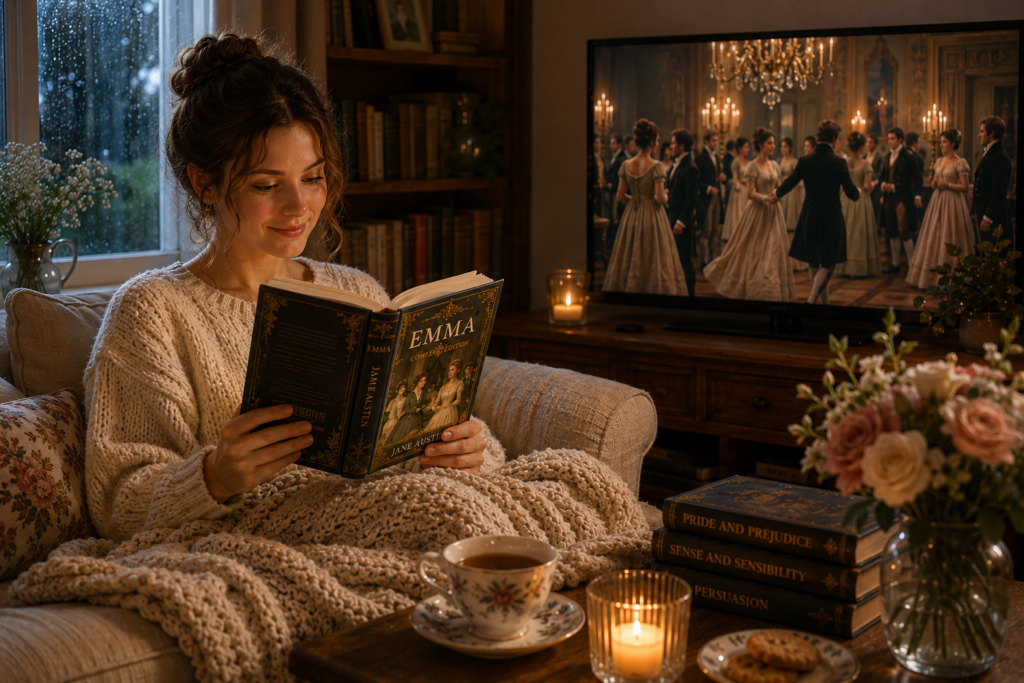
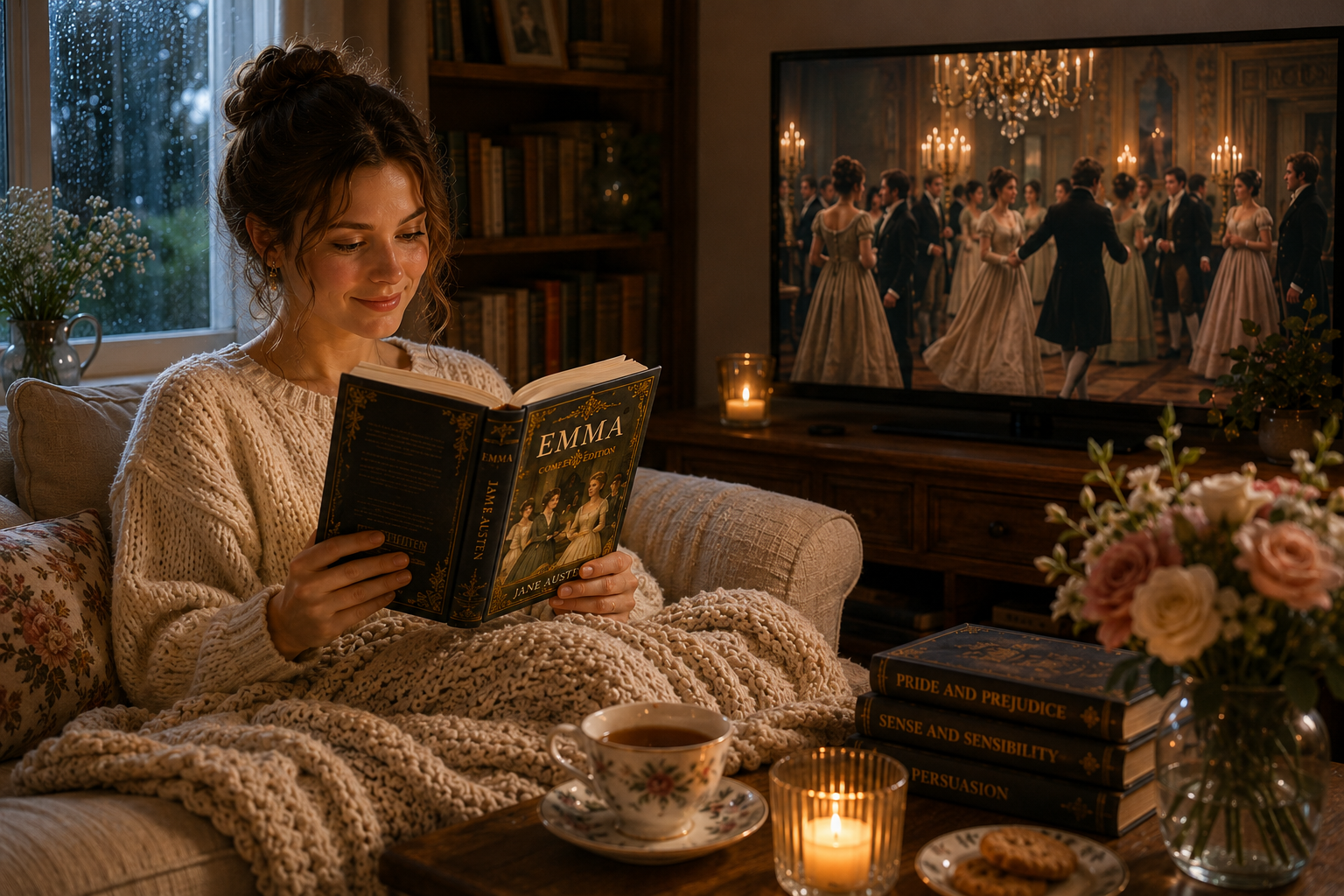
For many people, Jane Austen‘s stories no longer begin on the page.
They begin with a film.
Perhaps it is Colin Firth emerging from the lake in the 1995 BBC adaptation of Pride and Prejudice. Perhaps it is Keira Knightley’s spirited Elizabeth Bennet walking across a mist-covered field in the 2005 film. Perhaps it is Emma Thompson’s heartfelt adaptation of Sense and Sensibility or one of the many screen versions of Emma and Persuasion.
For millions of viewers around the world, these adaptations have become their first introduction to Jane Austen’s world.
This raises an interesting question: have the movies become more popular than the books themselves?
It is easy to understand why some readers might think so. Film and television adaptations are widely accessible, visually stunning, and capable of reaching audiences far larger than even the most successful novels. Many people can identify Mr. Darcy, Elizabeth Bennet, Emma Woodhouse, or Anne Elliot without ever having read a single page of Austen’s work.
Yet despite the extraordinary popularity of these adaptations, Jane Austen’s novels continue to attract new readers more than two hundred years after they were first published. Her books remain among the most widely read works in English literature. New editions continue to appear. Book clubs continue to discuss them. Universities continue to teach them. Readers continue to fall in love with her characters.
The truth is more complicated than a simple battle between books and movies.
The adaptations have undoubtedly transformed how modern audiences experience Austen, but they have not replaced the novels. In many ways, they have strengthened Austen’s position as one of the most beloved authors in the world.
To understand why, it is worth examining both what the adaptations do brilliantly and what only the books can provide.
Why Jane Austen Adaptations Became So Popular
Few classic authors have enjoyed as much success on screen as Jane Austen.
Her novels possess several qualities that make them particularly well suited to adaptation. They feature memorable characters, compelling romantic storylines, vivid social settings, and emotionally satisfying conclusions. The Regency period itself provides filmmakers with elegant costumes, beautiful country estates, formal dances, and visually appealing settings.
These elements create an ideal foundation for film and television.
The modern explosion of Austen adaptations can largely be traced to the enormous success of the 1995 BBC adaptation of Pride and Prejudice. Starring Jennifer Ehle as Elizabeth Bennet and Colin Firth as Mr. Darcy, the six-part series became a cultural phenomenon. Its faithful treatment of the novel, combined with strong performances and lavish production values, introduced Austen to a vast audience.
For many viewers, this adaptation became the definitive version of Pride and Prejudice. Even today, countless readers first discover the novel after watching the series.
The success of the BBC production demonstrated that Austen’s stories still resonated with modern audiences. It paved the way for numerous subsequent adaptations.
The 2005 film version of Pride and Prejudice brought Austen to yet another generation. While different in tone from the BBC series, it captured the emotional energy of the story and introduced millions of viewers to Elizabeth and Darcy’s relationship.
Sense and Sensibility, adapted by Emma Thompson and directed by Ang Lee, became another major success. The film earned critical acclaim and introduced audiences to the Dashwood sisters and Austen’s exploration of reason, emotion, and love.
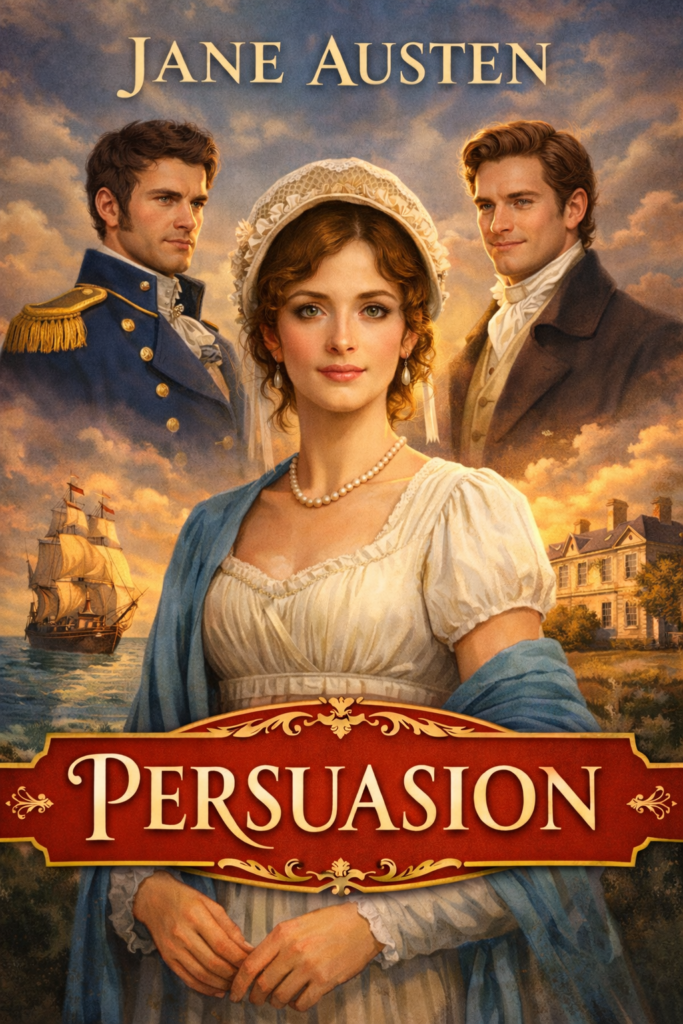
Emma has received multiple adaptations, each highlighting different aspects of Austen’s charming but flawed heroine. Persuasion has likewise attracted filmmakers drawn to its emotional depth and moving second-chance romance.
As a result, many modern readers encounter Austen through a screen adaptation before ever opening one of her novels.
In some respects, this represents an extraordinary achievement. Few authors remain so culturally relevant that their stories continue to be retold successfully more than two centuries after they were written.
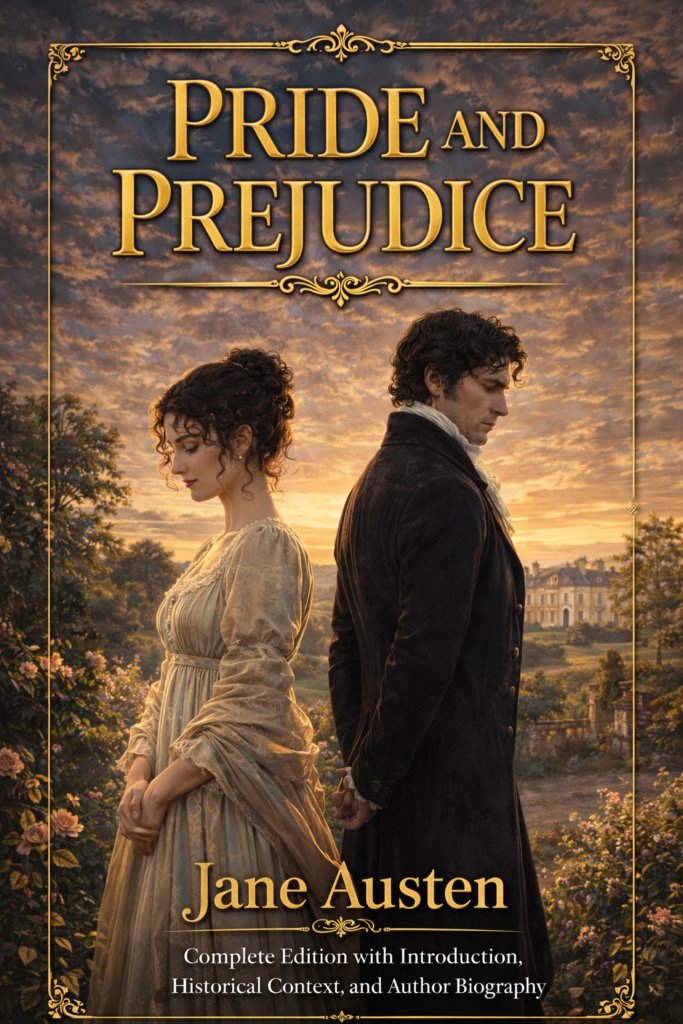
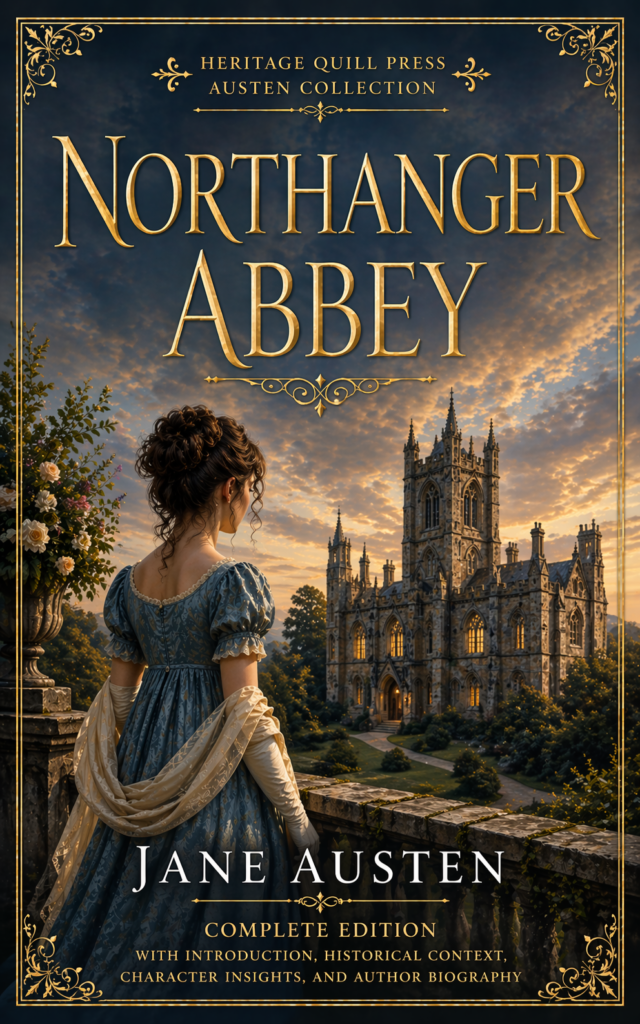
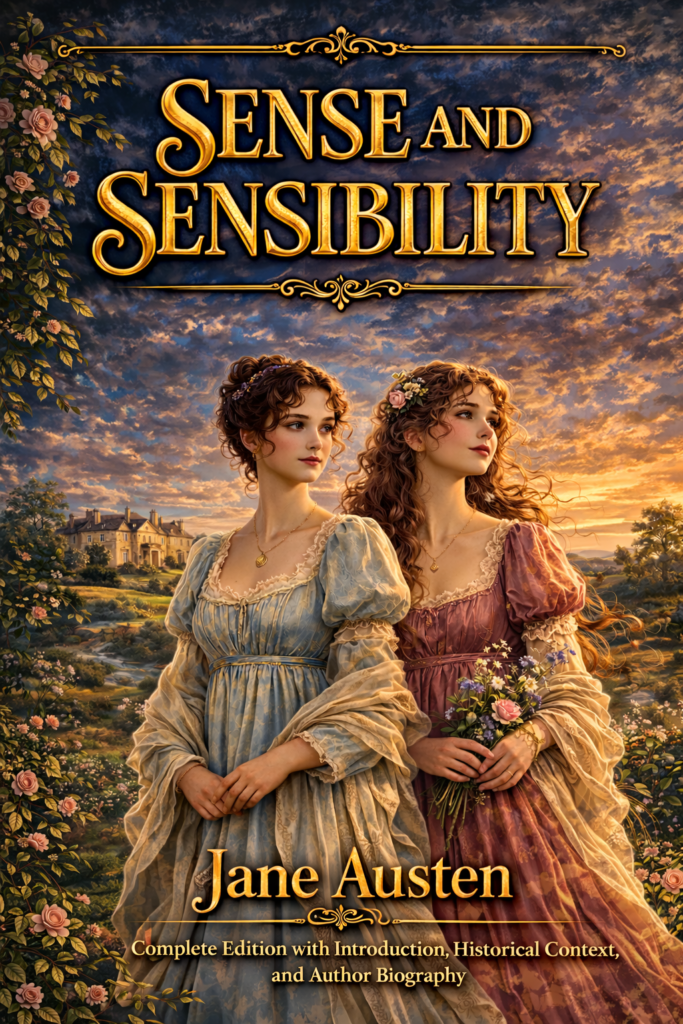
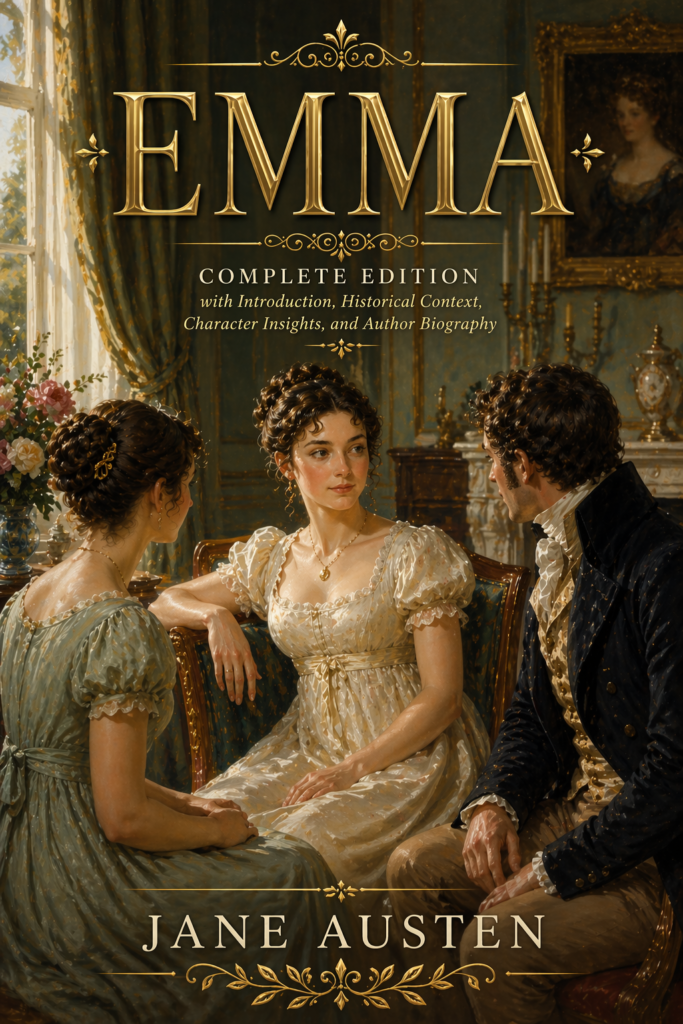
Related Novels
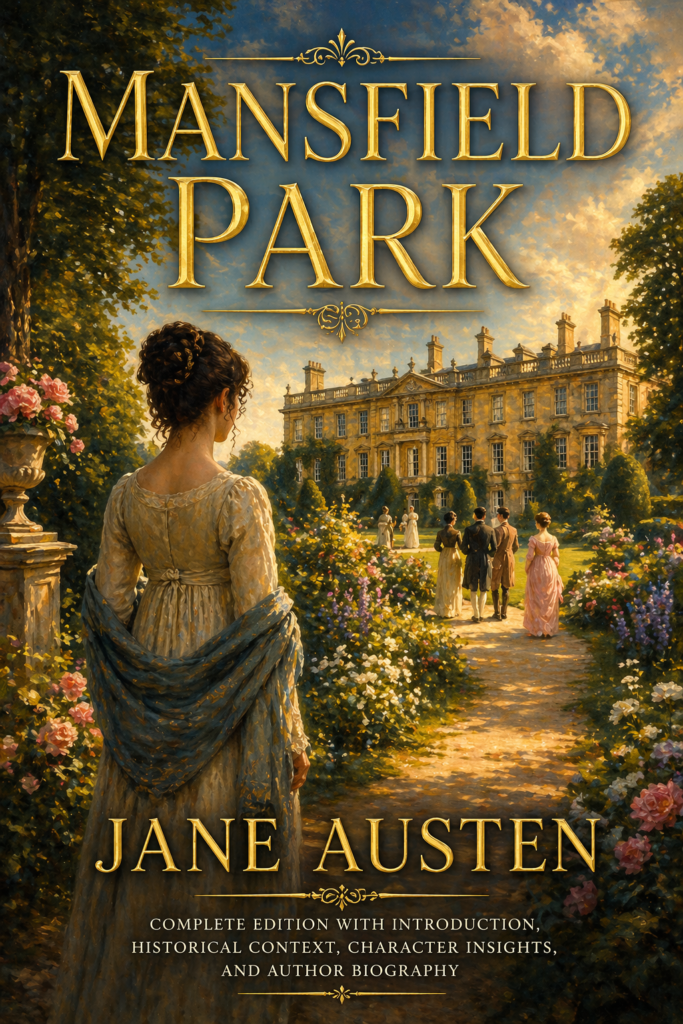
What Movies Can Do Better Than Books
Book lovers often insist that novels are always superior to adaptations.
The reality is more nuanced.
Film and television possess strengths that literature simply cannot replicate.
One obvious advantage is visual storytelling.
A single shot of a grand country estate can immediately establish setting and atmosphere. A ballroom filled with dancers communicates social expectations and hierarchy without requiring pages of description. Costumes, landscapes, facial expressions, and music all contribute to an emotional experience that unfolds instantly.
The 2005 Pride and Prejudice film provides a perfect example. Its sweeping cinematography captures the beauty of the English countryside in ways that even Austen’s elegant prose cannot. The visual world feels immersive and immediate.
Music is another significant advantage.
Film scores can intensify emotion, create anticipation, and shape the audience’s response to a scene. Romantic moments often gain additional power through carefully chosen music.
Screen adaptations also make Austen more accessible.
Many readers feel intimidated by classic literature. They worry that the language will be difficult or that the stories will feel outdated. A film adaptation removes many of these barriers. Viewers can quickly become invested in the characters and relationships without worrying about unfamiliar vocabulary or historical context.
Adaptations also compress lengthy novels into a format that fits modern lifestyles. A two-hour film demands less time than a several-hundred-page novel.
This accessibility explains why adaptations often serve as an entry point for new readers.
Movies make Austen approachable.
The books make her unforgettable.
What the Books Still Do Better
Despite the strengths of film and television, the novels retain advantages that no adaptation can fully replicate.
The most important of these is access to Austen’s narrative voice.
Jane Austen was not merely a storyteller. She was one of the finest observers of human nature in literary history. Much of her genius lies not in what happens but in how she describes it.
Her irony, humor, and subtle commentary often exist beneath the surface of the plot.
Readers are invited to observe characters through Austen’s uniquely intelligent perspective. They see how people misunderstand one another. They witness moments of self-deception. They recognize flaws long before the characters themselves do.
Much of this subtlety disappears when stories move to the screen.
Film can show actions and expressions, but it struggles to reproduce Austen’s narrative voice.
This becomes particularly evident in Pride and Prejudice.
Many viewers understand the basic story after watching a film adaptation. They know Elizabeth Bennet and Mr. Darcy dislike one another initially before eventually falling in love.
What they often miss is the depth of Austen’s exploration of judgment, pride, prejudice, and self-awareness.
Elizabeth’s greatest challenge is not finding love.
It is learning that she can be wrong.
Darcy’s greatest challenge is not winning Elizabeth’s affection.
It is becoming a better man.
These internal journeys are central to the novel’s power.
Readers experience the gradual transformation of both characters. They witness the subtle shifts in perspective that ultimately make the romance satisfying.
Film adaptations capture much of the emotional journey, but they cannot fully reproduce the richness of Austen’s psychological insight.
The same is true throughout her work.
In Emma, readers gain access to Emma Woodhouse’s assumptions, mistakes, and gradual self-discovery. In Persuasion, they experience Anne Elliot’s quiet reflections and emotional resilience. In Sense and Sensibility, they understand the contrasting temperaments of Elinor and Marianne in ways that film can only partially convey.
The novels also provide deeper social commentary.
Austen wrote about marriage, class, wealth, gender expectations, and social mobility. These themes remain relevant today, yet adaptations often simplify them in favor of romance.
The result is that viewers frequently enjoy Austen’s love stories while missing some of her most insightful observations about society and human behavior.
Mr. Darcy: The Book Hero vs the Screen Icon
No discussion of Austen adaptations would be complete without considering Mr. Darcy.
Few literary characters have become as iconic.
For many modern audiences, Darcy is inseparable from the actors who have portrayed him.
Colin Firth’s performance in the 1995 BBC adaptation transformed Darcy into a cultural phenomenon. Matthew Macfadyen’s interpretation in the 2005 film created another beloved version of the character.
Both performances introduced Darcy to millions of people.
Yet neither version is exactly the same as Austen’s original creation.
Book Darcy is more socially awkward than many adaptations suggest. He is proud, reserved, and often uncomfortable in social situations. His growth throughout the novel is gradual and meaningful.
Screen adaptations naturally emphasize his romantic appeal.
This is understandable. Film relies heavily on visual storytelling and emotional impact.
Yet Austen’s Darcy becomes compelling not because he is handsome or wealthy, but because he learns. He recognizes his flaws, changes his behavior, and becomes more considerate of others.
His character development is what makes him memorable.
The films capture much of this journey, but readers who encounter Darcy only on screen may never fully appreciate the complexity of Austen’s original creation.
Have Adaptations Changed How We Read Austen?
The popularity of adaptations has undoubtedly influenced modern perceptions of Austen.
Many readers approach the novels with preconceived ideas shaped by film and television.
They already know who Elizabeth Bennet is. They already know Mr. Darcy’s reputation. They often know how the story ends before they begin reading.
This can alter the reading experience.
At the same time, adaptations have expanded Austen’s audience dramatically.
Without them, many readers might never have discovered her work at all.
Rather than replacing the novels, adaptations often act as gateways. They spark curiosity. They encourage exploration. They invite viewers to experience the original stories.
In this sense, the relationship between books and adaptations is largely beneficial.
The films introduce.
The novels deepen.
Together, they help ensure Austen’s continued relevance.
Why Readers Still Return to the Novels
If adaptations are so successful, why do readers continue returning to the books?
The answer lies in the unique experience that Austen provides.
Her novels reward rereading.
Readers discover new layers with each visit. Characters appear more complex. Relationships reveal greater nuance. Themes become richer.
Many readers find comfort in Austen’s world.
Her novels offer humor, intelligence, emotional satisfaction, and insight into human behavior. They remind readers that people can grow, learn, and become better versions of themselves.
They also provide something increasingly rare: patience.
Austen’s romances develop gradually. Relationships emerge through conversation, observation, and understanding. Emotional rewards are earned rather than rushed.
For modern readers accustomed to fast-paced entertainment, this slower approach can feel refreshing.
The novels invite reflection.
They encourage readers to think about character, judgment, relationships, and personal growth.
These qualities explain why Austen’s books continue to attract devoted readers even in an age dominated by visual media.
The Verdict: Have the Movies Replaced the Books?
The answer is no.
The movies have not replaced Jane Austen’s books.
If anything, they have helped preserve and expand their influence.
Adaptations have introduced Austen to audiences who might never have encountered her work otherwise. They have kept her stories visible within popular culture and ensured that new generations continue discovering Elizabeth Bennet, Mr. Darcy, Anne Elliot, Emma Woodhouse, and countless other memorable characters.
Yet the novels remain the foundation of everything.
The films provide beautiful interpretations.
The books provide the complete experience.
Readers who begin with an adaptation often find themselves drawn toward the originals. There they discover Austen’s wit, insight, humor, and understanding of human nature in a form that no screen adaptation can fully reproduce.
More than two hundred years after they were first published, Jane Austen’s novels continue to thrive alongside the movies they inspired.
Perhaps that is the strongest evidence of all that they remain irreplaceable.
The adaptations may open the door.
But it is the books themselves that keep readers coming back.
More Articles

What Classic Horror Was Really Trying to Tell Us

Classic Literature Quiz (Part 1): How Well Do You Know the Classics?

Why I Hate Shakespeare
Why did Mark Twain not like James Fenimore Cooper?
Whodunit Better
Why Jane Austen Remains So Popular

Jane Austen vs the Brontë Sisters
When Novels Were Released Like a TV Series