
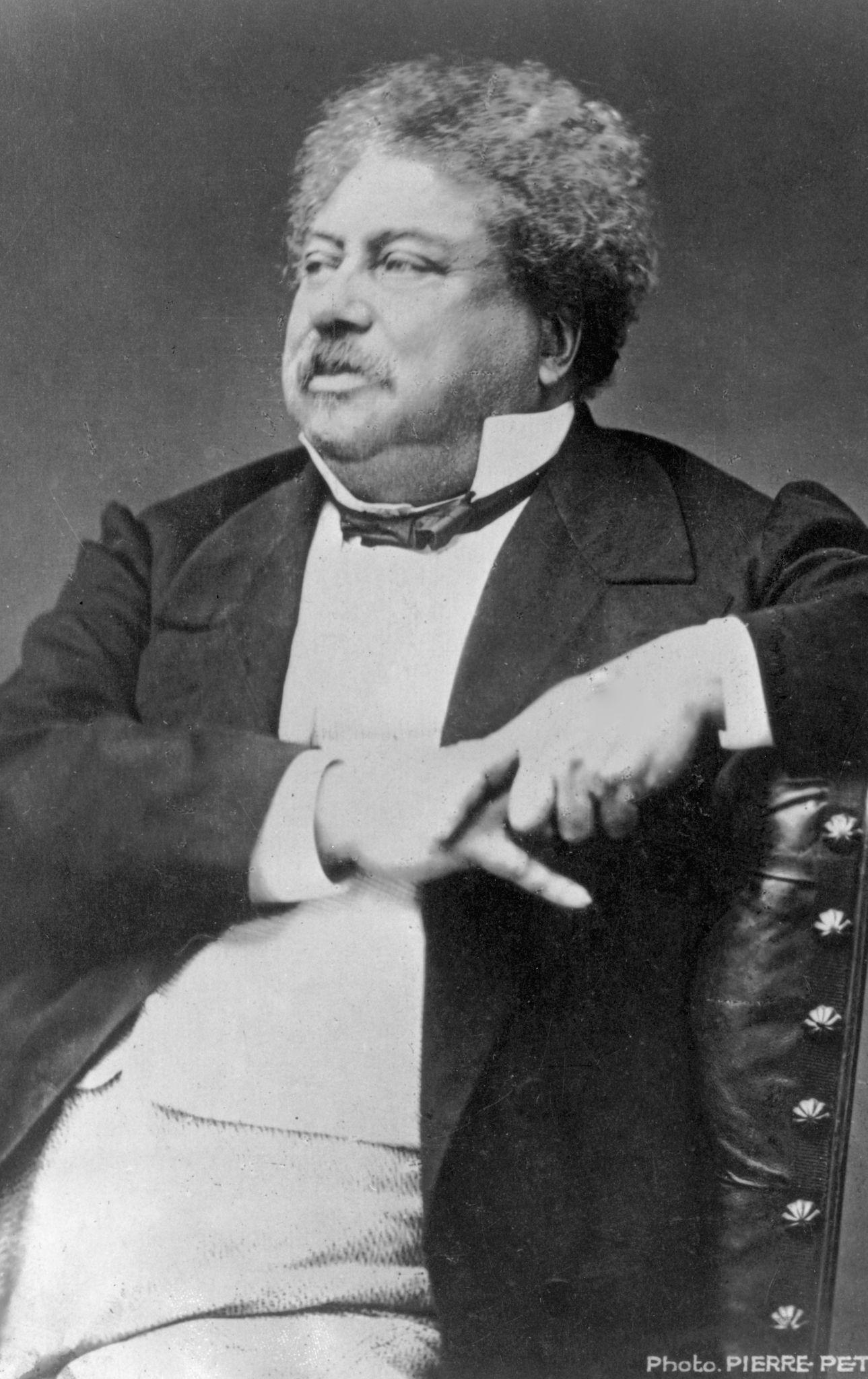









Alexandre Dumas:
When Adventure Changes Everything
Few writers have ever understood the art of storytelling as completely as Alexandre Dumas.
More than 150 years after his death, readers continue to discover the same surprising truth: his novels remain astonishingly difficult to put down.
Whether following Edmond Dantès from betrayed sailor to the mysterious Count of Monte Cristo, riding alongside d’Artagnan and the Musketeers through the intrigues of seventeenth-century France, or reuniting with beloved heroes years after their greatest adventures, readers quickly discover what made Dumas extraordinary.
He understood something many writers forget.
Adventure is not merely about what happens.
It is about how people are changed by what happens.
That simple idea lies at the heart of his greatest works and helps explain why his stories continue to captivate readers around the world. Dumas created unforgettable adventures, but the reason those adventures endure is that they transform the people who experience them.
In the world of Alexandre Dumas, adventure changes everything.
Related Novels






The Storyteller Who Refused to Let Readers Stop Reading
To understand Dumas, it is important to understand how many of his novels first reached their audience.
Today, readers purchase complete novels.
In Dumas’s time, many of his stories appeared in newspapers as serialized installments.
Readers did not receive the entire story at once.
They received a chapter.
Then they waited.
And waited.
And waited.
If Dumas failed to keep readers interested, they might never return for the next installment.
This environment shaped him into one of the most effective storytellers in literary history.
Every chapter needed momentum.
Every revelation needed impact.
Every mystery needed to encourage readers to continue.
Every ending needed to leave readers desperate for more.
Long before television series, streaming platforms, or cliffhangers became common storytelling tools, Dumas understood the power of anticipation.
He knew how to create suspense.
He knew how to delay answers.
He knew how to introduce mysteries that readers could not stop thinking about.
Most importantly, he understood how to make readers care about what happened next.
This is one reason his novels still feel remarkably modern.
The pacing remains effective because it was designed to keep readers returning day after day.
Few nineteenth-century writers understood audience engagement as instinctively as Dumas.
Why Dumas’s Stories Still Feel Alive
Many classic novels are admired.
Dumas’s novels are consumed.
Readers often approach books such as The Count of Monte Cristo expecting a slow and difficult literary experience because of their length.
Instead, they discover something very different.
They discover momentum.
The chapters move.
The mysteries deepen.
The stakes rise.
The surprises keep coming.
Dumas possessed a rare ability to balance multiple storylines while maintaining clarity and excitement. He knew exactly when to reveal information and exactly when to withhold it. He understood that readers enjoy solving mysteries, anticipating confrontations, and watching carefully laid plans unfold.
This talent explains why novels written in the nineteenth century can still feel more engaging than many modern thrillers.
Dumas was not simply writing stories.
He was orchestrating experiences.
Readers become emotionally invested because they are constantly being pulled forward.
They want answers.
They want justice.
They want to know what happens next.
And Dumas was a master at making them wait.
Adventure Is Never the Destination
At first glance, Dumas appears to be writing about adventure.
His novels contain duels, conspiracies, escapes, betrayals, hidden identities, political intrigue, secret plots, and dramatic reversals of fortune.
Yet beneath the excitement lies something deeper.
The adventures themselves are not the destination.
The transformations they produce are.
This is the thread that connects many of Dumas’s greatest works.
His heroes rarely finish their journeys as the same people who began them.
The adventure changes them.
The challenges reshape them.
The hardships transform them.
In many respects, Dumas was less interested in the adventure itself than in what the adventure revealed about human character.
He understood that extraordinary circumstances expose strengths, weaknesses, virtues, and flaws that ordinary life often conceals.
Adventure becomes a test.
A forge.
A catalyst for transformation.
And that transformation is what readers remember.
Edmond Dantès and the Power of Reinvention
No character better illustrates Dumas’s fascination with transformation than Edmond Dantès.
When readers first meet him in The Count of Monte Cristo, he appears to have everything.
Youth.
Promise.
Love.
A bright future.
Then, through betrayal and injustice, everything is taken from him.
The story that follows is often described as a revenge tale.
Certainly, revenge plays an important role.
Yet reducing the novel to revenge misses what makes it extraordinary.
The true question is not whether Dantès will obtain justice.
The true question is what suffering, imprisonment, knowledge, wealth, and power will turn him into.
By the time he emerges as the Count of Monte Cristo, he is no longer the man who entered prison.
He has reinvented himself.
His identity has been transformed.
His understanding of the world has changed.
This theme of reinvention runs throughout Dumas’s fiction.
His characters rarely remain fixed.
They evolve.
They adapt.
They become more than they once were.
That idea remains deeply appealing because readers understand it instinctively.
Life changes people.
Dumas understood this better than most writers.
The Musketeers and the Passage of Time
One of the most remarkable aspects of Dumas’s work is his willingness to revisit his characters after their greatest adventures have ended.
Many writers conclude their stories at the moment of triumph.
Dumas often asked a more interesting question:
What happens afterward?
This is one reason Twenty Years After remains such a fascinating companion to The Three Musketeers.
The heroes are no longer young.
The world has changed.
Friendships have been tested.
Responsibilities have increased.
Time has left its mark.
Rather than simply repeating the formula of the original adventure, Dumas explores how people evolve as they grow older.
This gives his characters a depth that continues to resonate with readers.
The adventures may be exciting.
The sword fights may be memorable.
Yet beneath them lies a reflection on loyalty, friendship, aging, and change.
Dumas understood that the passage of time is one of the most powerful forces in any human life.
His novels acknowledge that reality while still celebrating the courage and ideals that make heroism possible.
History Was His Stage
Unlike many novelists, Dumas rarely created entirely separate worlds for his stories.
Instead, he turned history itself into a stage for adventure.
Kings.
Queens.
Cardinals.
Political intrigues.
Wars.
Revolutions.
These historical realities provide the backdrop for many of his greatest works.
Yet Dumas was never interested in writing textbooks.
He was interested in bringing history to life.
His genius lay in recognizing that historical events become more meaningful when experienced through memorable characters.
Readers may not remember every political detail of seventeenth-century France.
They remember d’Artagnan.
They remember Athos.
They remember Edmond Dantès.
By combining historical settings with compelling personal stories, Dumas transformed the past into something immediate and engaging.
History became adventure.
Adventure became personal.
And readers became invested.
Why Readers Still Love Dumas
Many nineteenth-century writers are respected.
Dumas is loved.
That distinction matters.
Readers continue to return to his novels because they offer something timeless.
Excitement.
Suspense.
Adventure.
Heroism.
But beneath those pleasures lies a deeper appeal.
Dumas reminds us that people are capable of change.
A betrayed sailor can become a count.
An ambitious young man can become a legend.
Old friendships can survive extraordinary trials.
Lives can be reshaped by courage, perseverance, and determination.
His stories are ultimately optimistic.
Not because they deny hardship.
Quite the opposite.
His characters often endure tremendous suffering.
Yet they emerge transformed rather than defeated.
This message continues to resonate because it reflects a hope many readers share.
The belief that our circumstances do not have to define us.
The belief that setbacks are not necessarily endings.
The belief that people can become more than they once were.
When Adventure Changes Everything
Many authors tell stories about extraordinary events.
Alexandre Dumas was fascinated by what those events do to ordinary people.
That is the secret behind his enduring appeal.
His greatest characters are remembered not simply because of the adventures they experience, but because of the people they become.
Adventure changes their fortunes.
Adventure changes their relationships.
Adventure changes their understanding of the world.
Adventure changes their destinies.
And in doing so, it changes them.
More than a century after his death, readers continue to discover the same truth that captivated newspaper audiences in nineteenth-century France.
Alexandre Dumas knew how to tell a story.
But he also understood something deeper.
The most memorable adventures are not the ones that take us to distant places.
They are the ones that transform us along the way.
That is why his novels continue to endure.
And that is why, in the world of Alexandre Dumas, adventure changes everything.
Dumas the Literary Phenomenon
It is difficult for modern readers to appreciate just how famous Alexandre Dumas became during his lifetime.
Today, readers may discover his novels in bookstores, libraries, or online collections of classic literature. In nineteenth-century France, however, Dumas was not merely a successful novelist.
He was a cultural phenomenon.
His stories were discussed in newspapers, shared among friends, adapted for the stage, and eagerly anticipated by readers across Europe and beyond. New installments of his serialized novels were awaited with a level of excitement more commonly associated with modern television series or blockbuster film franchises.
Part of this success came from his extraordinary productivity. Dumas wrote at a remarkable pace and produced a body of work far larger than most readers realize. Yet productivity alone does not explain his popularity.
Readers returned because he consistently delivered what they wanted most.
Adventure.
Suspense.
Emotion.
Characters they cared about.
Questions that demanded answers.
He understood that storytelling was not simply about presenting events. It was about creating anticipation. Every chapter had to earn the next one. Every revelation had to increase curiosity. Every setback had to make eventual triumph more satisfying.
This instinctive understanding of audience engagement helped make Dumas one of the most widely read authors of the nineteenth century.
More importantly, it helped ensure that his stories would survive long after the newspapers that first published them had disappeared.
Related Authors

Why Dumas Is Still So Readable
Many classic authors are admired more than they are read.
Readers acknowledge their importance while quietly admitting that finishing their novels can require patience.
Dumas occupies a different category.
People read Dumas.
They continue reading.
Then they find themselves wondering why they stayed up far later than intended.
Part of the answer lies in his mastery of pacing.
Dumas rarely allows a story to remain stationary for long. New information emerges. Plans develop. Alliances shift. Mysteries deepen. Characters face choices whose consequences ripple through the narrative.
The result is a constant sense of forward movement.
Equally important is his understanding of emotional investment.
Readers do not continue because they are interested only in events.
They continue because they care about the people experiencing those events.
Will Dantès succeed?
Will the Musketeers survive?
Will loyalty prevail over betrayal?
Will justice triumph over corruption?
These questions keep readers turning pages because they matter on a human level.
Dumas also possessed a gift for clarity. Even when managing large casts of characters and intricate plots, he rarely loses sight of what readers need to understand. His stories remain accessible because he never allows complexity to become confusion.
This combination of momentum, character, suspense, and clarity explains why his novels continue to attract modern readers.
Many nineteenth-century books feel rooted in their era.
Dumas often feels surprisingly contemporary.
The technology may have changed.
The settings may belong to the past.
But the storytelling remains remarkably effective.
Dumas and the Power of Hope
If transformation is the defining theme of Dumas’s fiction, hope may be its emotional foundation.
Again and again, his novels ask readers to believe that circumstances do not have to determine destiny.
This idea appears throughout his greatest works.
Edmond Dantès loses everything.
His freedom.
His future.
His happiness.
Yet his story does not end in a prison cell.
D’Artagnan begins life with little more than ambition, courage, and determination.
He is not defined by where he starts.
He is defined by what he becomes.
Even in Twenty Years After, where age and experience have altered the lives of the Musketeers, Dumas refuses to surrender to cynicism. Time changes people, but friendship, loyalty, and courage remain meaningful.
This recurring belief helps explain why readers continue to connect with his work.
Dumas acknowledges suffering.
He does not ignore betrayal, injustice, loss, or disappointment.
Many of his characters endure tremendous hardship.
What makes his stories memorable is that hardship is rarely the final chapter.
His novels suggest that people can rebuild.
They can recover.
They can reinvent themselves.
They can become more than their circumstances.
This is not a simplistic optimism that denies life’s difficulties.
It is a hard-earned hope that emerges from overcoming them.
Perhaps this is the deepest reason Dumas continues to resonate with readers around the world.
His stories remind us that the future is not always determined by the past.
That today’s setbacks do not necessarily define tomorrow’s possibilities.
And that adventure, in all its forms, can transform a life in ways that are impossible to predict.
That idea was powerful in the nineteenth century.
It remains powerful today.
Articles

Why Jane Austen Remains So Popular

Classic Literature Quiz (Part 1): How Well Do You Know the Classics?

What Classic Horror Was Really Trying to Tell Us

100 Editions, Countless Discoveries

Jane Austen vs the Brontë Sisters

Whodunit Better

Why I Hate Shakespeare

When Novels Were Released Like a TV Series

Have the Jane Austen Movies Replaced the Books?
Why did Mark Twain not like James Fenimore Cooper?