
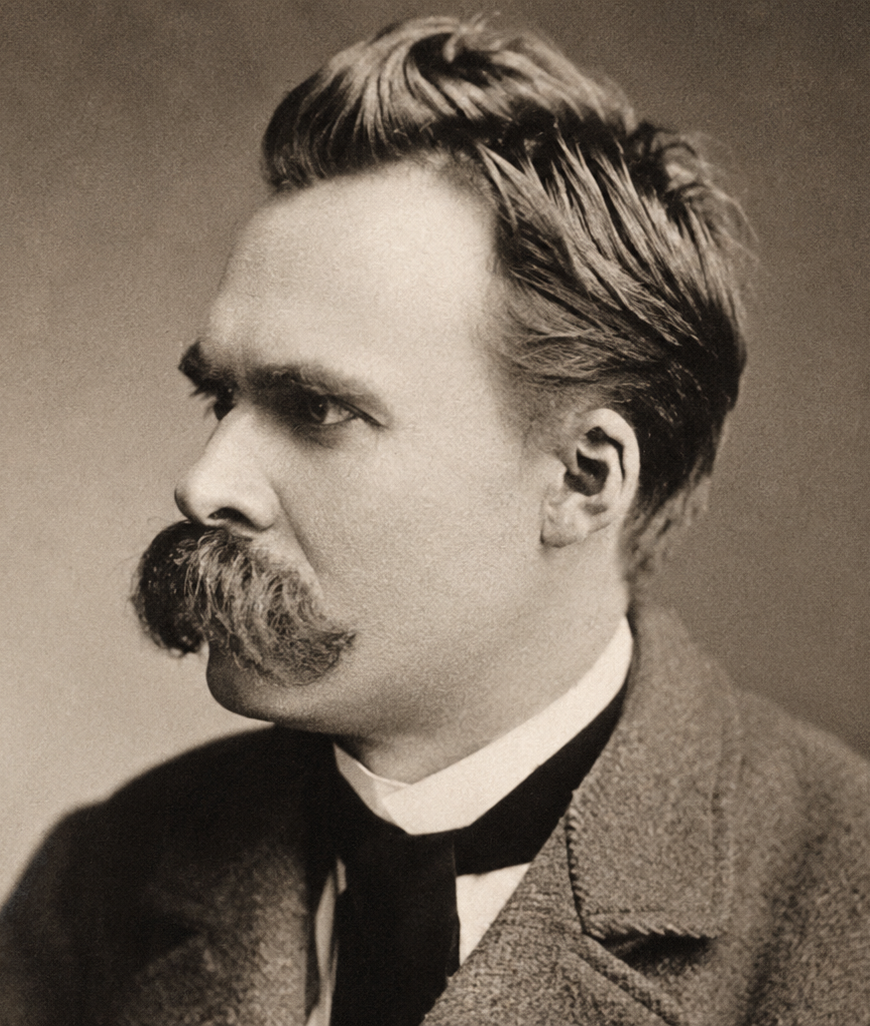









Friedrich Nietzsche
The Philosopher Who Challenged the World to Think Differently
Few philosophers have influenced the modern world as profoundly as Friedrich Nietzsche.
His ideas continue to shape philosophy, psychology, literature, politics, religion, art, and popular culture. His books are quoted by university professors, psychologists, novelists, entrepreneurs, and filmmakers alike. His name is recognised even by many people who have never read a single page of his work.
Yet Nietzsche is also one of history’s most misunderstood thinkers.
He has been described as an atheist, a nihilist, a poet, a prophet, a psychologist, a revolutionary, and one of the founders of existential thought. Some readers regard him as one of humanity’s greatest philosophers. Others find his writings challenging, unsettling, or even contradictory.
Perhaps that is exactly as Nietzsche intended.
Unlike many philosophers, he rarely tried to construct a neat system that explained everything. Instead, he challenged readers to question assumptions they had never thought to examine. His books ask uncomfortable questions about morality, truth, religion, ambition, creativity, suffering, and the purpose of human life—not to provide easy answers, but to encourage each reader to think independently.
More than a century after his death, those questions remain just as relevant.
Whether discussing personal growth, the search for meaning, or the courage to reject conventional thinking, many of today’s conversations still echo ideas Nietzsche explored during the nineteenth century.
To understand Friedrich Nietzsche is not simply to learn about an influential philosopher.
It is to discover the remarkable life of a man whose greatest work was largely ignored during his lifetime, yet whose ideas would eventually help reshape modern thought.
A Brilliant but Lonely Beginning
Friedrich Wilhelm Nietzsche was born on 15 October 1844 in the small Prussian village of Röcken.
His father, Carl Ludwig Nietzsche, served as a Lutheran pastor, and religion formed the centre of family life during Friedrich’s earliest years. Biblical language, Christian traditions, and theological discussion surrounded him from childhood. Although Nietzsche would later become one of religion’s most famous critics, these early experiences never truly left him.
Readers of Thus Spake Zarathustra quickly notice that Nietzsche did not abandon biblical language.
He transformed it.
The book speaks in parables, blessings, warnings, and prophetic speeches whose rhythm deliberately echoes the Bible while expressing entirely different philosophical ideas.
His childhood, however, was also marked by profound tragedy.
When Nietzsche was only four years old, his father died following a prolonged illness. Less than a year later, his younger brother Joseph also passed away. These losses forced his mother, Franziska, to move the family to Naumburg, where Nietzsche grew up surrounded almost entirely by women—his mother, grandmother, two aunts, and younger sister Elisabeth.
Friends later remembered him as quiet, thoughtful, gentle, and exceptionally polite.
This often surprises readers.
The powerful voice found throughout his books can easily suggest a forceful personality. In reality, Nietzsche was generally shy and reserved, preferring long conversations with close friends to public attention.
Books became his closest companions.
He developed an early fascination with music, composing piano pieces while still a boy, and displayed remarkable gifts for language and literature. Teachers quickly recognised his extraordinary ability, earning him admission to Schulpforta, one of Germany’s finest classical boarding schools.
The education he received there shaped the rest of his life.
Students immersed themselves in Greek and Latin literature, history, philosophy, rhetoric, and classical culture. Nietzsche encountered Homer, Sophocles, Aeschylus, Plato, and countless other ancient writers whose influence can still be felt throughout his later works.
Yet he admired the Greeks for more than their literary achievements.
He believed they confronted life honestly.
Their tragedies recognised suffering without pretending it could always be overcome. Their heroes embraced greatness while accepting failure. Their philosophers sought wisdom without assuming certainty.
These qualities would remain central to Nietzsche’s own philosophy.
The Young Professor Who Had Everything
After studying classical philology at the Universities of Bonn and Leipzig, Nietzsche’s brilliance quickly attracted attention.
Philology during the nineteenth century was far more than the study of ancient languages.
It combined literature, history, archaeology, philosophy, and textual analysis in an attempt to reconstruct entire civilisations through their surviving writings.
Nietzsche excelled.
His mentor, Friedrich Ritschl, regarded him as one of the finest young scholars he had ever taught. Acting upon Ritschl’s recommendation, the University of Basel appointed Nietzsche Professor of Classical Philology in 1869.
He was only twenty-four years old.
Even more remarkably, he had not yet completed a doctoral degree.
The appointment astonished Europe’s academic community and marked Nietzsche as one of Germany’s brightest intellectual talents.
From the outside, his future appeared secure.
He enjoyed professional respect, financial stability, and a prestigious university position that promised an outstanding academic career.
Yet beneath this success, another journey had already begun.
The more Nietzsche studied ancient Greece, the more he found himself asking questions that reached beyond history.
Why had some civilisations produced extraordinary art while others declined?
What made great cultures possible?
Why did societies lose their creative vitality?
Could modern Europe be experiencing a similar decline?
These questions slowly drew him away from traditional scholarship and towards philosophy.
Around this time, Nietzsche encountered the writings of Arthur Schopenhauer.
Although Schopenhauer had already died, his books profoundly influenced the young professor. Nietzsche admired his intellectual honesty and willingness to confront suffering directly rather than offering comforting illusions.
Later, Nietzsche would reject many of Schopenhauer’s conclusions.
He never abandoned his respect for the courage with which the older philosopher pursued truth.
Another equally important influence soon entered his life.
Richard Wagner.
Wagner, Friendship, and Independence
When Nietzsche first met Richard Wagner, he believed he had encountered the greatest artist of his age.
The composer welcomed the young professor warmly, and the two developed a close friendship built upon their shared admiration for ancient Greek tragedy and the transformative power of art.
For several years, Wagner became something of a mentor.
Nietzsche frequently visited the composer’s home, joined lively discussions about music and culture, and imagined that Wagner might lead a cultural renaissance capable of renewing modern civilisation.
But Nietzsche possessed one quality that would define his entire philosophy.
He refused to remain loyal to ideas simply because they were once his own.
As Wagner became increasingly nationalistic and turned once more towards Christianity, Nietzsche grew deeply uncomfortable.
He believed genuine thinkers must always remain willing to question even their most cherished beliefs.
Eventually the friendship collapsed.
The break was painful, but it marked one of the most important turning points in Nietzsche’s intellectual development.
Looking back, it is impossible not to see echoes of this experience in Thus Spake Zarathustra.
Throughout the book, Zarathustra repeatedly leaves behind old certainties, refuses blind obedience, and encourages others to become independent rather than loyal followers.
Long before Nietzsche wrote these lessons…
He had lived them.
Illness Changed Everything
Just as his philosophical voice was beginning to emerge, Nietzsche’s health began to fail.
Throughout adulthood he suffered severe migraines, chronic digestive illness, nausea, insomnia, and rapidly deteriorating eyesight.
Sometimes reading became physically painful.
Bright sunlight caused intense discomfort.
Entire weeks could pass during which he was unable to work productively.
Eventually his health forced him to resign from the University of Basel.
He was only thirty-four years old.
To many observers, this appeared to be the end of a brilliant academic career.
Ironically, it became the beginning of his greatest achievements.
Freed from university responsibilities—but also deprived of regular income, colleagues, and routine—Nietzsche adopted an unusually solitary life.
He travelled constantly between Switzerland, Italy, France, and the Mediterranean coast, seeking climates that eased his symptoms.
More importantly…
He walked.
Friends estimated that Nietzsche often spent five, six, or even eight hours each day walking through mountains, forests, and lakeside paths.
These walks were not simply exercise.
They were his workshop.
Ideas emerged while walking.
Arguments developed one step at a time.
Images appeared unexpectedly.
Nietzsche always carried small notebooks so inspiration could be captured before it disappeared.
It is difficult to imagine Thus Spake Zarathustra being written anywhere else.
The mountains, valleys, forests, and wide open skies that surround Zarathustra were not imagined from a study.
They were the landscapes through which Nietzsche himself wandered while thinking about humanity, freedom, suffering, and the possibilities of human greatness.
Few philosophers have allowed the natural world to shape their writing so completely.
The Birth of Thus Spake Zarathustra
During the early 1880s, Nietzsche spent long periods living in the Alpine village of Sils Maria in Switzerland.
High among the mountains, surrounded by crystal lakes and endless walking trails, he found both physical relief and creative freedom.
It was here that inspiration struck with extraordinary force.
Between 1883 and 1885, Nietzsche wrote the four parts of Thus Spake Zarathustra, often at astonishing speed.
He later described ideas arriving almost as revelations, as though the book had been discovered rather than invented.
Unlike his earlier philosophical works, Thus Spake Zarathustra abandoned traditional argument entirely.
Instead, Nietzsche created the fictional prophet Zarathustra—a solitary teacher who descends from his mountain to challenge humanity’s deepest assumptions through stories, speeches, parables, and unforgettable symbols.
No other philosophical work reads quite like it.
It is part poetry.
Part literature.
Part philosophy.
Part spiritual journey.
For many readers, it remains Nietzsche’s greatest achievement precisely because it asks to be experienced rather than merely understood.
Yet when it first appeared…
Almost nobody recognised what he had accomplished.
The Philosopher the World Almost Missed
When the first part of Thus Spake Zarathustra appeared in 1883, Nietzsche believed he had written the most important book of his life.
The world barely noticed.
Only a small number of copies were printed, and even fewer were sold. Reviews were scarce, many readers struggled to understand its unusual style, and friends who admired Nietzsche’s earlier works often found themselves bewildered by what he had created.
Was it philosophy?
Was it poetry?
Was it literature?
Was it religious satire?
It seemed to belong to every category and none of them at the same time.
For Nietzsche, the disappointment was profound.
Years of reflection, solitude, illness, and creative struggle had culminated in a work he regarded as unlike anything that had been written before. Yet the audience he hoped to reach simply wasn’t there.
Still, he continued.
Over the next two years he completed the remaining three parts of Thus Spake Zarathustra, often paying for publication himself because commercial publishers saw little demand for such an unusual book.
Looking back, there is something deeply moving about this period of Nietzsche’s life.
He frequently wrote about the importance of remaining true to one’s own path regardless of recognition or approval. Now he was being asked to live according to the very philosophy he had spent years developing.
History would eventually prove him right.
It simply took longer than he imagined.
Beyond Thus Spake Zarathustra: Nietzsche’s Other Great Works
Although Thus Spake Zarathustra is widely regarded as Nietzsche’s masterpiece, it represents only one chapter in an extraordinary body of work that transformed modern philosophy.
Each of his major books explores a different aspect of the questions that occupied him throughout his life.
The Birth of Tragedy (1872)
Nietzsche’s first major work examined the culture of ancient Greece, arguing that its greatest achievements came from balancing two opposing forces.
The Apollonian represented order, beauty, reason, and harmony.
The Dionysian embodied passion, instinct, chaos, emotion, and creative energy.
Rather than choosing one over the other, Nietzsche believed the greatest works of art emerged when both existed together.
Although controversial upon publication, the book introduced themes that would remain central throughout his career: creativity, suffering, and the importance of embracing life in all its complexity.
Human, All Too Human (1878)
This marked a turning point.
Gone was the romantic admiration for Wagner and metaphysical speculation of Nietzsche’s earlier writing.
Instead, he adopted a far more analytical style, examining religion, morality, psychology, culture, and human behaviour through hundreds of short observations.
Many readers see this book as the beginning of Nietzsche’s mature philosophy.
Daybreak (1881)
Here Nietzsche began asking difficult questions about morality.
Why do people believe certain actions are good or evil?
Where do moral values come from?
Are they eternal truths—or human creations that change over time?
Questions first explored in Daybreak would later become central to Beyond Good and Evil and On the Genealogy of Morality.
The Gay Science (1882)
One of Nietzsche’s most accessible and influential books.
It contains one of his most famous declarations:
“God is dead.”
Often misunderstood, Nietzsche was not celebrating religion’s disappearance.
Instead, he recognised that modern society could no longer rely upon traditional religious certainty in the same way previous generations had done.
If old foundations disappear…
What should replace them?
This question lies at the heart of much of Nietzsche’s philosophy.
The Gay Science also introduces the idea of eternal recurrence, one of his most thought-provoking concepts and a theme that later becomes central to Thus Spake Zarathustra.
Beyond Good and Evil (1886)
Perhaps Nietzsche’s most famous philosophical work after Thus Spake Zarathustra.
Here he challenges conventional morality more directly than ever before.
Rather than accepting inherited beliefs, Nietzsche encourages readers to examine where those beliefs originated and whether they still deserve unquestioning acceptance.
Many readers begin with Beyond Good and Evil because its arguments are more direct than the poetic style of Zarathustra.
Together, however, the two books complement one another beautifully.
On the Genealogy of Morality (1887)
This book investigates one of Nietzsche’s central questions:
Where do our moral values actually come from?
Rather than assuming concepts such as good, evil, guilt, and conscience have always existed, Nietzsche examines their historical development and argues that moral systems evolve alongside cultures.
It remains one of the most influential works in moral philosophy.
Twilight of the Idols (1889)
Written during Nietzsche’s final productive year, this concise work serves almost as an introduction to his mature philosophy.
Sharp, witty, and often humorous, it attacks unquestioned assumptions while summarising many ideas developed throughout his earlier books.
For readers seeking an overview of Nietzsche’s thinking, it provides an excellent companion to his larger works.
Ecce Homo (Written 1888)
One of the most unusual autobiographies ever written.
Rather than simply recounting events, Nietzsche reflects upon his books, his philosophy, and the path that shaped his life.
Its famous chapter titles—
“Why I Am So Wise,”
“Why I Am So Clever,”
and
“Why I Write Such Good Books”
continue to surprise modern readers.
Beneath the apparent arrogance, however, lies an intensely personal reflection upon a lifetime devoted to ideas.
Nietzsche’s Most Important Ideas
Although Nietzsche rejected rigid philosophical systems, several recurring ideas appear throughout his work.
Self-Overcoming
Perhaps no idea defines Nietzsche more clearly.
He believed human beings should never become satisfied with who they already are.
Growth requires continual challenge, learning, creativity, and the willingness to leave comfort behind.
Self-overcoming does not mean defeating others.
It means continually becoming more than one’s former self.
The Übermensch
Probably Nietzsche’s most misunderstood concept.
The Übermensch—or “Overman”—is not a political leader or biological ideal.
It represents the individual who creates meaning rather than simply inheriting it, who lives creatively, courageously, and independently despite uncertainty.
In Thus Spake Zarathustra, this idea serves as an aspiration rather than a destination.
The Will to Power
Nietzsche believed life possesses an inherent drive toward growth, achievement, creativity, and self-expression.
Contrary to popular misunderstanding, this is not merely the desire to dominate others.
It is the impulse to develop one’s own abilities, overcome limitations, and realise one’s potential.
Eternal Recurrence
Imagine living your life exactly as it is…
Again.
And again.
Forever.
Would you embrace that possibility?
Or despair?
Nietzsche presents this as a thought experiment that encourages readers to examine whether they are truly living a life they would willingly choose again.
Perspectivism
Nietzsche questioned whether any single viewpoint could fully capture reality.
Different perspectives reveal different aspects of truth.
Rather than encouraging relativism, he challenged readers to remain intellectually humble and continue questioning assumptions.
Misunderstood—and Misused
Few philosophers have suffered more misunderstanding than Friedrich Nietzsche.
Partly this results from his writing style.
He preferred aphorisms, metaphors, poetry, and symbolism over systematic arguments.
Readers often quote individual sentences without considering their wider context.
After Nietzsche’s mental collapse in 1889, responsibility for preserving his literary estate largely fell to his sister, Elisabeth Förster-Nietzsche.
She successfully promoted his work to wider audiences and established an archive dedicated to his writings.
However, modern scholars generally agree that Elisabeth’s own political beliefs influenced the way some unpublished material was arranged and presented after Nietzsche’s death.
During the twentieth century, various political movements attempted to claim Nietzsche’s philosophy for their own purposes.
Modern scholarship has worked extensively to separate Nietzsche’s authentic writings from later interpretations, restoring a far more nuanced understanding of his ideas.
Today, Nietzsche is studied not as the spokesman for any political ideology, but as one of history’s most original and challenging philosophers.
Nietzsche’s Influence on the Modern World
Few philosophers have shaped the modern intellectual landscape as profoundly as Friedrich Nietzsche.
During his lifetime, he remained a relatively obscure writer whose books sold only modestly. He never held the influence enjoyed by many of his contemporaries, nor did he witness the extraordinary impact his ideas would have after his death.
Yet throughout the twentieth century, Nietzsche emerged as one of the most important figures in modern philosophy.
His influence reached far beyond academic philosophy. Psychologists, novelists, artists, composers, historians, and cultural critics all found inspiration in his work, often interpreting his ideas in very different ways.
One reason for this extraordinary influence is that Nietzsche rarely attempted to provide final answers.
Instead, he changed the questions people were asking.
He encouraged readers to examine the origins of their beliefs rather than accepting them unquestioningly. He challenged inherited ideas about morality, religion, creativity, ambition, suffering, and personal responsibility. Above all, he insisted that every individual bears responsibility for shaping the meaning of his or her own life.
These questions remain remarkably relevant today.
Philosophy
Nietzsche’s influence on modern philosophy is almost impossible to overstate.
Although he rejected the idea of creating a rigid philosophical system, many of the twentieth century’s greatest thinkers engaged deeply with his work.
Existential philosophers such as Jean-Paul Sartre and Karl Jaspers explored themes that Nietzsche had developed decades earlier, including freedom, personal responsibility, and the challenge of creating meaning in an uncertain world. Martin Heidegger devoted years to studying Nietzsche, regarding him as one of the defining philosophers of modern Europe.
Even philosophers who strongly disagreed with Nietzsche recognised that his ideas demanded serious attention.
Psychology
Long before psychology became an established scientific discipline, Nietzsche was making remarkably perceptive observations about human motivation.
Rather than viewing people as entirely rational beings, he argued that unconscious drives, emotions, instincts, and hidden desires often influence our decisions far more than we realise.
Carl Jung admired Nietzsche’s exploration of symbolism, myth, and personal transformation, while Viktor Frankl’s search for meaning addressed many of the same questions that concerned Nietzsche, even though their philosophical conclusions differed significantly.
Today, readers often discover Nietzsche not through philosophy courses but through psychology, leadership, and personal development.
Literature
Writers have long admired Nietzsche’s ability to combine profound ideas with unforgettable language.
Unlike many philosophers, he understood the power of metaphor, story, rhythm, and imagery. Thus Spake Zarathustra remains one of the few philosophical works read not only for its ideas but also for its literary beauty.
Authors including Hermann Hesse, Thomas Mann, André Gide, and countless others drew inspiration from Nietzsche’s writings. His influence can also be found throughout twentieth-century literature exploring identity, freedom, and the search for meaning.
Music and the Arts
Nietzsche’s influence extended beyond books.
Richard Strauss’s famous tone poem Also sprach Zarathustra introduced the title of Nietzsche’s masterpiece to audiences around the world, while painters, sculptors, playwrights, and filmmakers have repeatedly returned to his ideas in search of creative inspiration.
His writing continues to appear in films, documentaries, theatre productions, and popular culture—not because people always agree with him, but because his questions remain difficult to ignore.
Why Friedrich Nietzsche Still Matters Today
More than 125 years after his death, readers continue discovering Nietzsche for the first time.
Why?
Part of the answer lies in the world we live in.
Many of the traditional certainties that shaped previous generations have become less secure. Questions about identity, purpose, morality, happiness, and personal responsibility remain central to modern life.
Nietzsche did not create these questions.
He recognised them early.
Rather than offering simple solutions, he encouraged readers to confront uncertainty with honesty and courage.
His philosophy reminds us that growth often begins with discomfort.
That genuine creativity requires independence.
That meaningful lives are built rather than inherited.
Even readers who ultimately disagree with Nietzsche frequently acknowledge that engaging with his ideas forces them to think more deeply about their own beliefs.
Perhaps this explains why every generation rediscovers him.
His books do not belong to one historical period.
They belong to every age willing to ask difficult questions.
Where Should You Begin Reading Nietzsche?
Readers approaching Nietzsche for the first time often wonder where to start.
There is no single correct answer.
Each of his major books reveals a different side of his philosophy, and many readers return to them repeatedly throughout their lives, discovering new insights with every reading.
For readers seeking his most imaginative and inspiring work, Thus Spake Zarathustra remains the natural starting point. Although it demands patience and reflection, it is also the book in which Nietzsche’s ideas become a living journey rather than a series of abstract arguments.
Those looking for a more direct philosophical style often begin with Beyond Good and Evil, while The Gay Science provides an engaging introduction to many of Nietzsche’s most influential ideas. Readers interested in morality frequently turn to On the Genealogy of Morality, and those curious about the origins of his thought may enjoy The Birth of Tragedy.
Whichever path you choose, one thing soon becomes clear.
Nietzsche is not an author to read only once.
His books reward careful thought, repeated reading, and the willingness to question both his conclusions and your own.
Every return reveals something new.
Friedrich Nietzsche’s Lasting Legacy
When Friedrich Nietzsche died in 1900, he could not have imagined the audience he would eventually find.
The philosopher whose greatest work attracted little attention during his lifetime would go on to influence generations of readers across every continent. His ideas continue to be debated in universities, discussed in book clubs, explored in psychology, quoted in literature, and rediscovered by readers searching for meaning in an increasingly complex world.
Perhaps the greatest tribute to Nietzsche is not that people agree with him.
It is that they continue arguing with him.
More than a century after his death, his books still provoke discussion, inspire curiosity, and challenge comfortable assumptions in ways few other philosophers have achieved.
Few writers ask more of their readers.
Few reward thoughtful reading more generously.
Whether you encounter Nietzsche through Thus Spake Zarathustra, Beyond Good and Evil, or any of his other remarkable works, you are not simply reading the ideas of a nineteenth-century philosopher.
You are joining a conversation that has continued for generations—and shows no sign of ending.
Explore Friedrich Nietzsche with Heritage Quill Press
At Heritage Quill Press, we believe that the world’s greatest classics deserve editions that help modern readers engage more deeply with the original works while preserving their historical integrity.
Our edition of Thus Spake Zarathustra combines Thomas Common’s classic English translation with Elisabeth Förster-Nietzsche’s historical introduction, Anthony M. Ludovici’s explanatory notes, and original Heritage Quill Press essays exploring the book’s philosophical ideas, symbolism, historical context, and Nietzsche’s remarkable life.
Whether this is your first encounter with Nietzsche or a return to one of philosophy’s greatest masterpieces, we invite you to experience Thus Spake Zarathustra in an edition designed to reward curiosity, encourage reflection, and inspire a lifetime of thoughtful reading.
Because the greatest philosophers do not simply change what we know.
They change the questions we ask.
Articles

Classic Literature Quiz (Part 1): How Well Do You Know the Classics?

Whodunit Better

Why I Hate Shakespeare
Why did Mark Twain not like James Fenimore Cooper?

What Classic Horror Was Really Trying to Tell Us

100 Editions, Countless Discoveries

Jane Austen vs the Brontë Sisters

Why Jane Austen Remains So Popular

Have the Jane Austen Movies Replaced the Books?
When Novels Were Released Like a TV Series