
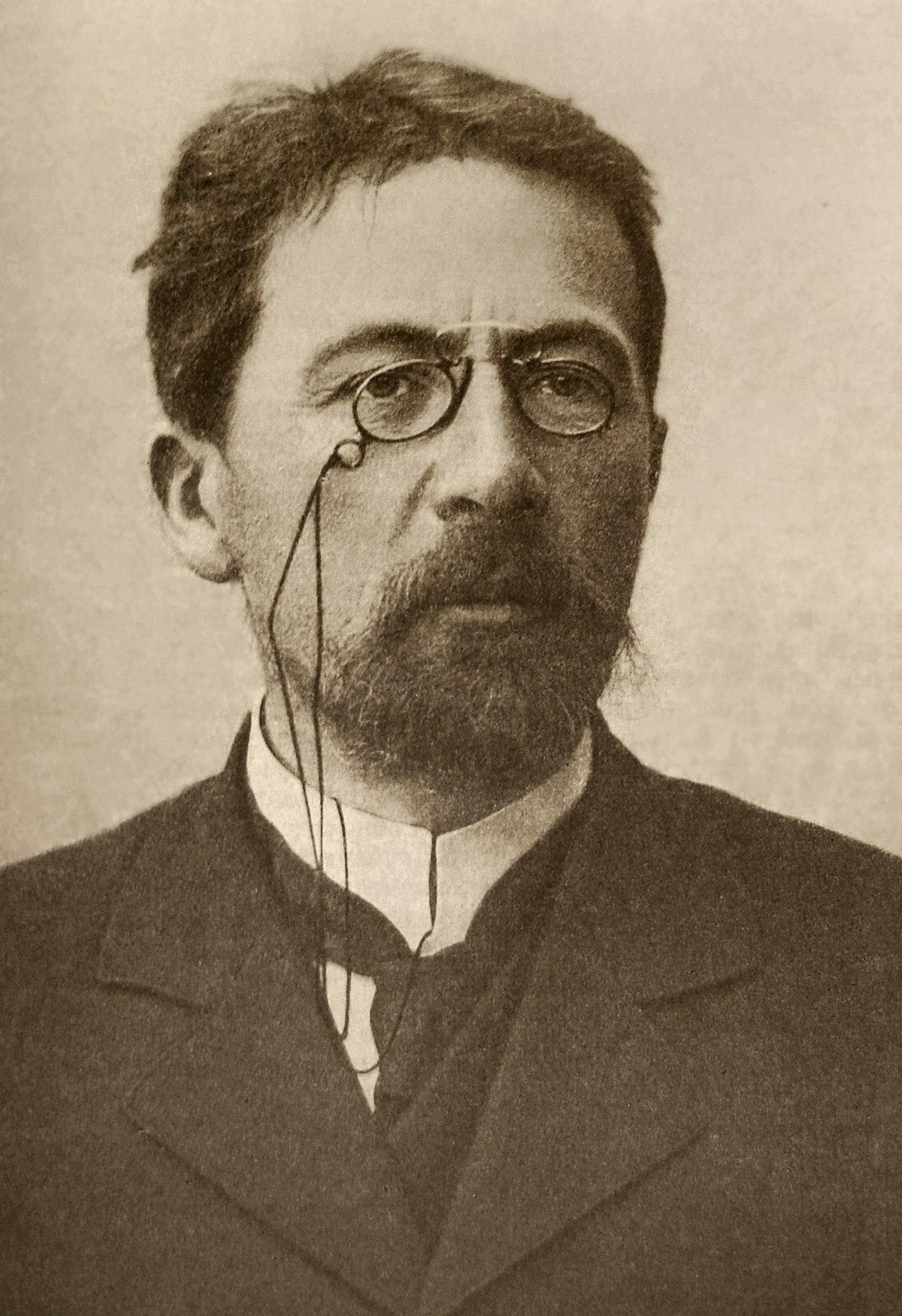
Anton Chekhov:
Finding Extraordinary Meaning
in Ordinary Lives
Few writers have demonstrated more clearly that ordinary lives can contain extraordinary meaning than Anton Chekhov.
More than a century after his death, readers continue to discover his stories and plays, not because they are filled with grand adventures, dramatic villains, or epic historical events, but because they illuminate something far more familiar: the everyday experiences that shape our lives.
Love.
Loneliness.
Hope.
Regret.
Ambition.
Disappointment.
Human connection.
These are the subjects that fascinated Chekhov throughout his career.
His stories often focus on seemingly ordinary people living seemingly ordinary lives. Yet beneath the surface, they reveal emotional depths, quiet struggles, and profound truths that continue to resonate with readers around the world.
What makes Chekhov remarkable is not that he found meaning in extraordinary events.
It is that he found extraordinary meaning in ordinary ones.
From Humble Beginnings to Literary Greatness
Anton Pavlovich Chekhov was born in 1860 in the Russian port city of Taganrog.
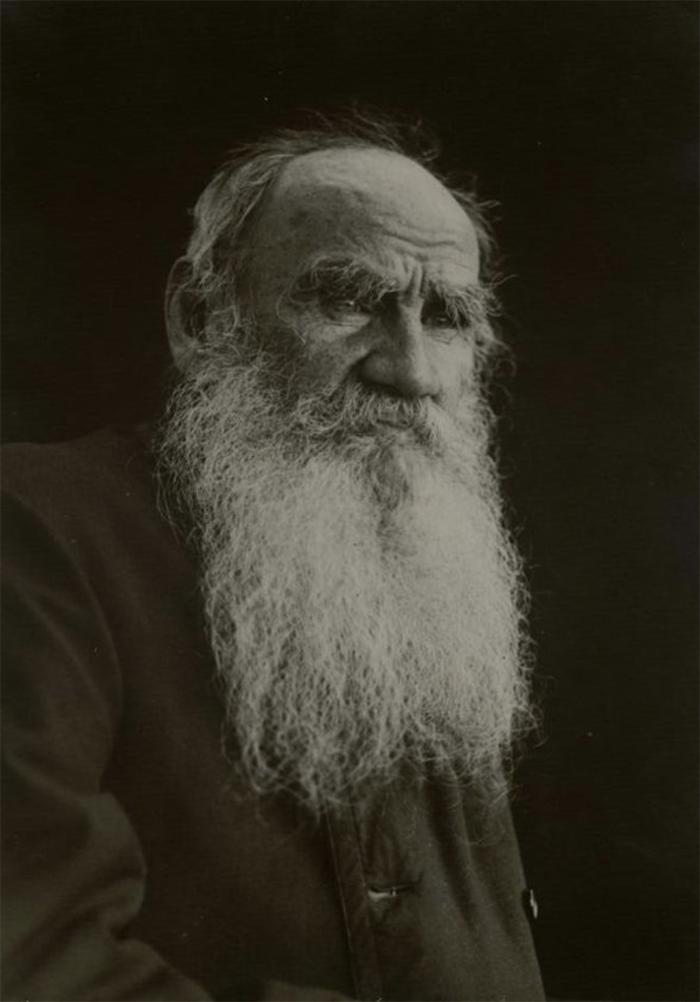
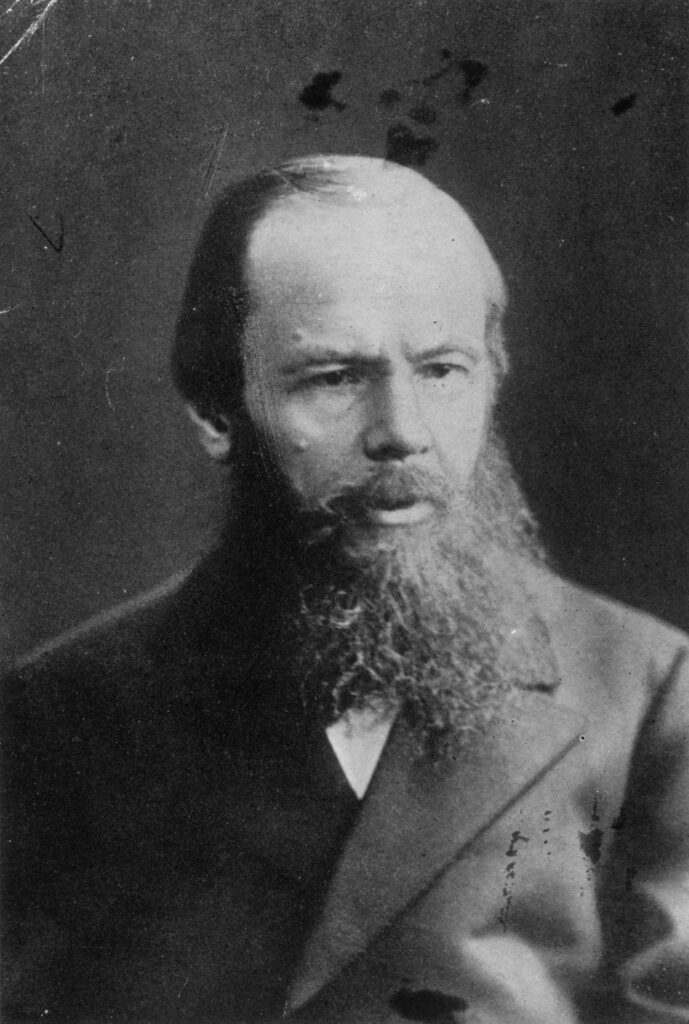
Unlike Leo Tolstoy, who was born into aristocratic privilege, or Fyodor Dostoevsky, whose life was marked by dramatic political persecution, Chekhov’s early years were shaped by financial hardship and responsibility.
His father operated a small grocery business that eventually failed, forcing the family into difficult circumstances.
While still young, Chekhov found himself balancing education, work, and family obligations. These experiences exposed him to the realities of everyday life and introduced him to the kinds of people who would later populate his stories.
Shopkeepers.
Teachers.
Clerks.
Doctors.
Families struggling to make ends meet.
Dreamers longing for something more.
The people Chekhov encountered during these years became the foundation of his literary world.
Rather than focusing on kings, generals, or aristocrats, he would become one of literature’s greatest chroniclers of ordinary humanity.
The Doctor Who Became a Writer
One of the most fascinating aspects of Chekhov’s life is that he never stopped practicing medicine.
While building his literary career, he studied to become a physician and spent years treating patients from every level of society.
His famous observation captures this dual identity perfectly:
“Medicine is my lawful wife and literature is my mistress.”
For Chekhov, medicine and writing were closely connected.
As a doctor, he listened to people.
He observed their fears.
He witnessed their hopes.
He encountered suffering, resilience, kindness, loneliness, and courage.
These experiences gave him an extraordinary understanding of human nature.
Many writers create memorable characters through imagination alone.
Chekhov drew upon years of observing real people confronting real problems.
The result was fiction that felt remarkably authentic.
His characters do not seem invented.
They seem encountered.
Why Chekhov’s Characters Feel So Real
One reason readers continue to connect with Chekhov is that his characters rarely fit into simple categories.
They are not heroes.
They are not villains.
They are people.
People who dream of better lives.
People who make mistakes.
People who fall in love.
People who struggle with disappointment.
People who wonder whether they have chosen the right path.
Chekhov understood that human beings are often contradictory.
We hope and doubt simultaneously.
We desire change while fearing it.
We imagine different futures while remaining trapped by present circumstances.
His stories capture these tensions with remarkable honesty.
Readers frequently recognize themselves in his characters because their concerns remain deeply familiar.
The details of life may change across generations.
The emotions often do not.
Finding Extraordinary Meaning in Ordinary Lives
This ability to uncover significance within everyday experiences is perhaps Chekhov’s greatest achievement.
Many stories rely upon dramatic events.
A murder.
A war.
A great adventure.
A shocking revelation.
Chekhov often relied upon something far simpler.
A conversation.
A chance encounter.
A relationship.
A quiet realization.
A moment when someone suddenly sees their life differently.
To some readers, these events may appear small.
Chekhov understood they are often the moments that matter most.
The decisions that shape our lives are not always dramatic.
The experiences we remember are not always extraordinary.
The deepest emotional truths often emerge during ordinary moments.
This insight transformed modern storytelling.
Chekhov demonstrated that a story did not need spectacular events to be powerful.
It simply needed to reveal something true.
Related Novels




Love, Longing, and Human Connection
Few writers explored human relationships with greater sensitivity than Chekhov.
His stories frequently examine love in all its complexity.
Not idealized love.
Real love.
Love complicated by circumstance.
Love interrupted by responsibility.
Love discovered too late.
Love mixed with hope, uncertainty, and regret.
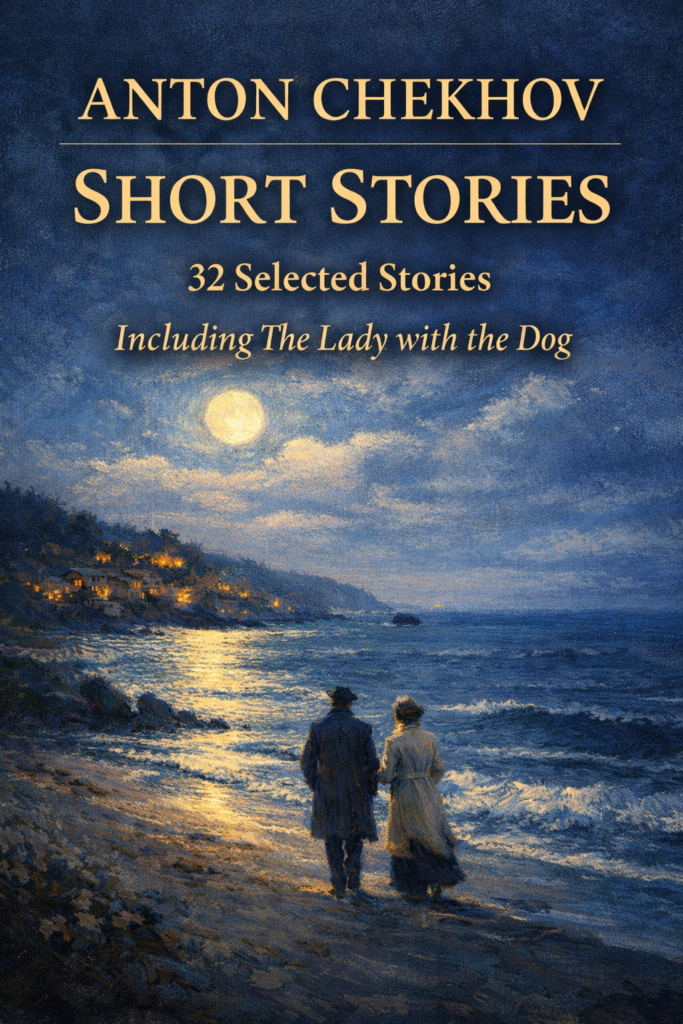
Perhaps nowhere is this more evident than in The Lady with the Dog, widely regarded as one of the greatest short stories ever written.
The story’s enduring appeal lies not in dramatic plot twists but in its emotional honesty. Chekhov understood that relationships are rarely simple and that the most meaningful connections often challenge our assumptions about ourselves.
Throughout his work, he returned repeatedly to themes of companionship, loneliness, desire, and the human need for connection.
These experiences remain as relevant today as they were in nineteenth-century Russia.
The Master of the Modern Short Story
Although Chekhov also wrote celebrated plays, including The Seagull, Uncle Vanya, Three Sisters, and The Cherry Orchard, his influence on the short story may be even greater.
Before Chekhov, many stories followed predictable patterns.
A problem appeared.
Events unfolded.
Everything was resolved.
Chekhov helped transform this approach.
He embraced ambiguity.
He allowed stories to reflect the uncertainties of real life.
Not every question received an answer.
Not every conflict found resolution.
Not every dream came true.
This approach felt remarkably modern.
Writers around the world continue to study Chekhov because he demonstrated that fiction could be subtle, realistic, and emotionally powerful without relying on conventional dramatic structures.
In many ways, the modern short story as we know it today owes an enormous debt to his innovations.
A Compassionate Observer of Humanity
One quality distinguishes Chekhov from many other great writers.
His compassion.
He observed human weakness with honesty, yet rarely with cruelty.
He understood that people often fail to become the versions of themselves they hope to be.
He understood disappointment.
He understood regret.
Yet he also understood kindness, resilience, humour, and hope.
This balance gives his work a distinctive warmth.
Even when his stories explore sadness or frustration, they rarely descend into cynicism.
Chekhov believed that people deserved understanding.
Readers often sense this compassion within his work.
It is one of the reasons his stories remain so moving.
Why Readers Still Turn to Chekhov Today
The world has changed dramatically since Chekhov’s lifetime.
Technology has transformed how we communicate.
Society has evolved.
Entire ways of life have disappeared.
Yet readers continue to find themselves within his stories.
Why?
Because people still experience the same emotions.
They still fall in love.
They still feel lonely.
They still dream of better futures.
They still struggle with uncertainty.
They still wonder whether they have made the right choices.
Chekhov’s stories endure because they illuminate these experiences with extraordinary honesty and insight.
The settings belong to another era.
The emotions belong to every era.
Related Authors
The Stories That Changed Literature
Chekhov’s influence extends far beyond his own lifetime.
Stories such as The Lady with the Dog, Ward No. 6, and The Bet remain widely read and admired. His plays continue to be performed throughout the world. Writers, playwrights, and filmmakers continue to draw inspiration from techniques he helped pioneer.
Yet perhaps his greatest legacy is simpler.
He taught readers to pay attention.
To notice the significance hidden within everyday life.
To recognize the emotional complexity of ordinary people.
To appreciate the moments that might otherwise pass unnoticed.
Conclusion
Anton Chekhov’s enduring achievement was not finding drama in extraordinary events.
It was revealing the extraordinary depth hidden within ordinary lives.
Through stories of love, hope, longing, disappointment, and human connection, he showed readers that even the smallest moments can carry profound meaning.
More than a century after his death, his work continues to resonate because it illuminates experiences that remain deeply familiar to us all.
His stories remind us that every life contains moments worth noticing.
Every person contains a story worth understanding.
And sometimes the most extraordinary truths are found in the most ordinary places.
A Writer Living with Mortality
One of the most poignant aspects of Chekhov’s life is that while he spent years treating the sick as a physician, he was also fighting an illness of his own.
Chekhov suffered from tuberculosis, a disease that claimed countless lives during the nineteenth century. As a doctor, he understood the illness better than most. He knew its symptoms. He understood its progression. And he was fully aware of the risks it posed to his own future.
Yet despite this knowledge, he continued to write, practice medicine, travel, and work with remarkable energy.
The awareness of mortality appears quietly throughout much of his fiction.
Unlike some writers who confront death through dramatic scenes or grand philosophical declarations, Chekhov often approached it with subtlety. His stories frequently remind readers that life is fragile, time is limited, and opportunities should not be taken for granted.
His characters often find themselves reflecting on roads not taken, relationships neglected, or dreams left unrealized. Beneath many of these stories lies an awareness that life moves forward whether we are ready for it or not.
This quiet understanding gives Chekhov’s work much of its emotional power.
He knew firsthand that life was precious.
And his stories encourage readers to recognize that truth for themselves.
The Journey to Sakhalin Island
In 1890, Chekhov undertook a journey that astonished many of his contemporaries.
Rather than remaining comfortably in the literary circles of Moscow or St. Petersburg, he travelled thousands of miles across Russia to Sakhalin Island, a remote penal colony located near Russia’s eastern frontier.
The journey was long, difficult, and often dangerous.
Most successful writers would never have considered such a trip.
Chekhov went willingly.
He wanted to see conditions for himself.
He wanted to meet the people living there.
He wanted to understand realities that many preferred to ignore.
During his visit, he interviewed thousands of prisoners, settlers, and families. He gathered detailed information about their lives and documented conditions with the thoroughness of both a doctor and a researcher.
The experience reinforced something that had always distinguished him as a writer.
His curiosity about people.
Chekhov did not merely observe humanity from a distance.
He sought to understand it.
Whether writing about a wealthy landowner, a struggling teacher, a prisoner, or a doctor, he approached people with empathy and genuine interest.
The journey to Sakhalin Island demonstrated that this compassion extended far beyond literature.
It was part of who he was.
Why Chekhov Feels So Modern
Many readers are surprised by how contemporary Chekhov’s stories feel.
Although he wrote more than a century ago, his work often seems remarkably modern.
Part of this comes from his style.
Chekhov avoided excessive melodrama.
He resisted simplistic moral lessons.
He understood that life rarely provides neat resolutions.
Questions often remain unanswered.
Relationships remain complicated.
People continue searching for happiness long after a story ends.
Modern readers recognize these realities immediately.
Chekhov’s stories frequently feel less like traditional nineteenth-century fiction and more like glimpses into real lives unfolding before us.
His influence can be found throughout modern literature, theatre, film, and television.
Many storytelling techniques that audiences now take for granted—including subtle character development, open-ended conclusions, and emotionally realistic dialogue—owe a great deal to Chekhov’s innovations.
In many respects, he helped shape the way stories are told today.
The Small Moments That Change Lives
One reason Chekhov’s work remains so powerful is that he understood an important truth.
Life is rarely transformed by dramatic events alone.
Often, the moments that shape us most appear insignificant at the time.
A conversation.
A realization.
A missed opportunity.
A chance meeting.
A decision made almost without thinking.
These are the moments that fascinated Chekhov.
His stories repeatedly demonstrate how seemingly ordinary experiences can alter the course of a person’s life.
A brief encounter may reveal a hidden truth.
A quiet reflection may expose years of dissatisfaction.
A simple conversation may change how someone sees themselves forever.
Chekhov recognized that the most meaningful moments are not always the most dramatic.
By drawing attention to these subtle turning points, he encouraged readers to look more closely at their own lives.
His stories remind us that significance is not reserved for extraordinary events.
Meaning can be found almost anywhere—if we are paying attention.
Why Readers Often Return to Chekhov Later in Life
Many readers discover Chekhov when they are young.
Others return to him years later and find an entirely different experience waiting for them.
This is one of the hallmarks of great literature.
The stories remain the same.
The reader changes.
Experiences that once seemed distant become familiar.
Characters who once appeared frustrating become understandable.
Moments that seemed ordinary reveal unexpected depth.
As people accumulate their own experiences of love, disappointment, ambition, hope, regret, and personal growth, Chekhov’s observations often become even more meaningful.
Readers begin to recognize themselves in his characters.
They understand the dreams that were postponed.
The opportunities that slipped away.
The hopes that persisted despite setbacks.
This ability to reward readers at different stages of life helps explain why Chekhov’s work continues to attract new audiences generation after generation.
His stories grow alongside the reader.
And with each return, they often reveal something new.
Articles
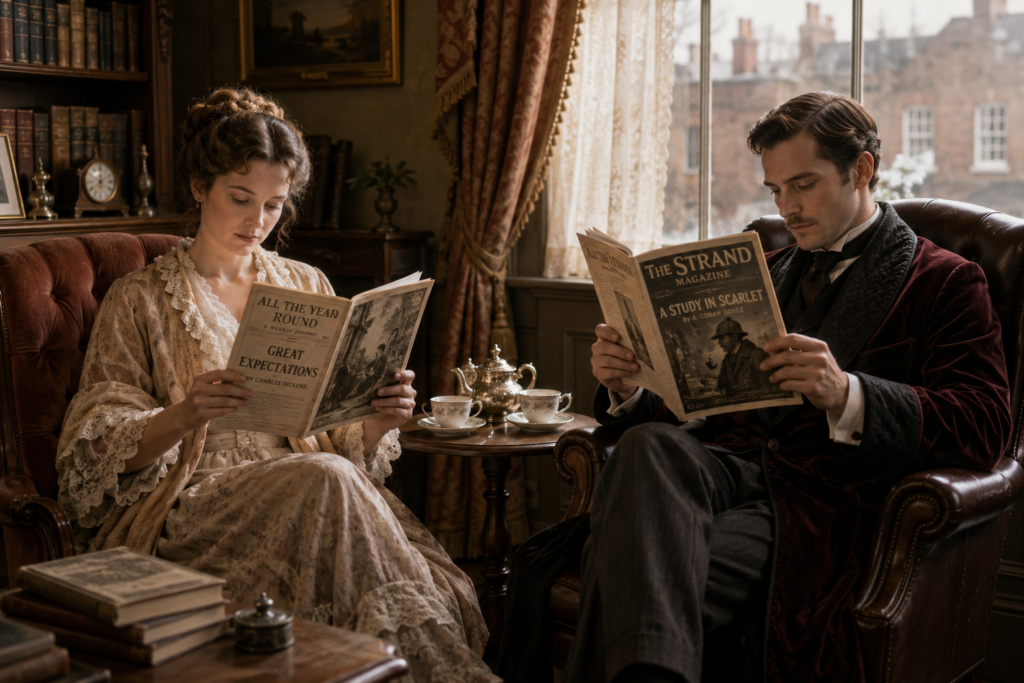
When Novels Were Released Like a TV Series

Classic Literature Quiz (Part 1): How Well Do You Know the Classics?

What Classic Horror Was Really Trying to Tell Us

Jane Austen vs the Brontë Sisters

Whodunit Better
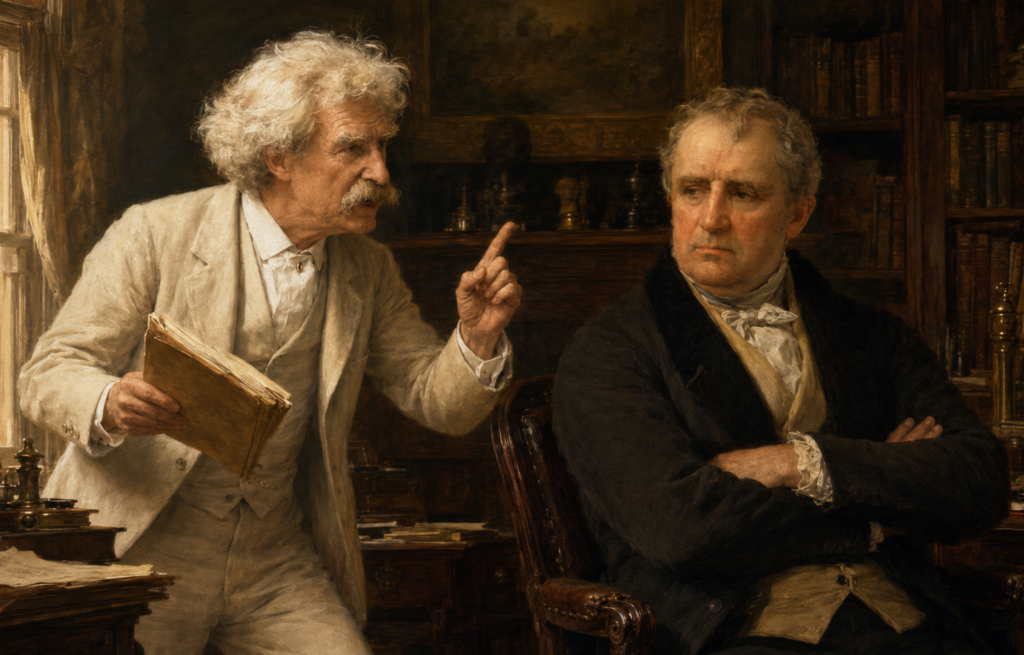
Why did Mark Twain not like James Fenimore Cooper?

Why I Hate Shakespeare

Have the Jane Austen Movies Replaced the Books?