
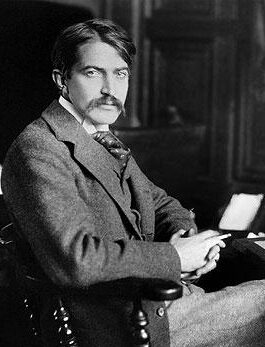
Stephen Crane:
Fear, Courage,
and the Moments That Define Us
Most people like to believe they know who they are.
We imagine how we would respond in moments of crisis. We picture ourselves acting bravely when faced with danger, remaining calm under pressure, or finding the strength to persevere when circumstances become difficult.
But how can we truly know?
What happens when fear takes hold?
What happens when uncertainty replaces confidence?
What happens when survival, pride, loyalty, or hope are put to the test?
These questions fascinated Stephen Crane throughout his short but remarkable life. More than a century after his death, readers continue to discover his work because he explored some of the most fundamental aspects of the human experience. His stories are not primarily about war, shipwrecks, violence, or disaster. They are about people. More specifically, they are about people confronting situations that force them to discover who they really are.
Whether writing about a young soldier facing battle, survivors struggling against the sea, or ordinary individuals confronting fear and uncertainty, Crane consistently returned to the same enduring question:
Who are we when life tests us?
A Writer Fascinated by Human Nature
Stephen Crane was born in 1871 and died in 1900 at the age of just twenty-eight. Despite his brief life, he produced a body of work that continues to influence readers and writers throughout the world.
Crane worked as a journalist before achieving literary success, and this background shaped his approach to storytelling. Journalism taught him to observe people closely. He became interested in how individuals behaved when confronted with difficult circumstances and how reality often differed from popular myths and assumptions.
Unlike many writers of his era, Crane rarely focused on idealised heroes.
He preferred flawed individuals.
People who doubted themselves.
People who made mistakes.
People who struggled with fear.
People who attempted to do the right thing despite uncertainty.
This focus gives his work a striking honesty. His characters often feel recognisable because they react in ways that resemble real human behaviour rather than romantic fiction.
Crane understood that courage, fear, pride, hope, and despair frequently exist side by side.
That insight lies at the heart of his greatest works.
Fear and Courage
Many stories celebrate courage.
Stephen Crane investigated it.
Rather than asking readers to admire brave individuals from a distance, he explored what courage actually feels like from the inside. He recognised that genuine courage is rarely simple. It often exists alongside fear, doubt, confusion, and uncertainty.
This perspective was unusual for its time.
Traditional adventure stories often portrayed heroes who appeared fearless. Crane was more interested in ordinary people confronting situations that frightened them.
His characters rarely possess complete confidence.
Instead, they struggle.
They hesitate.
They question themselves.
They worry about failure.
Yet they continue moving forward.
This approach feels remarkably modern because it reflects how most people experience difficult situations in their own lives.
Few individuals are completely fearless.
Most acts of courage occur despite fear, not in its absence.
Crane understood this truth and built many of his stories around it.
The Red Badge of Courage
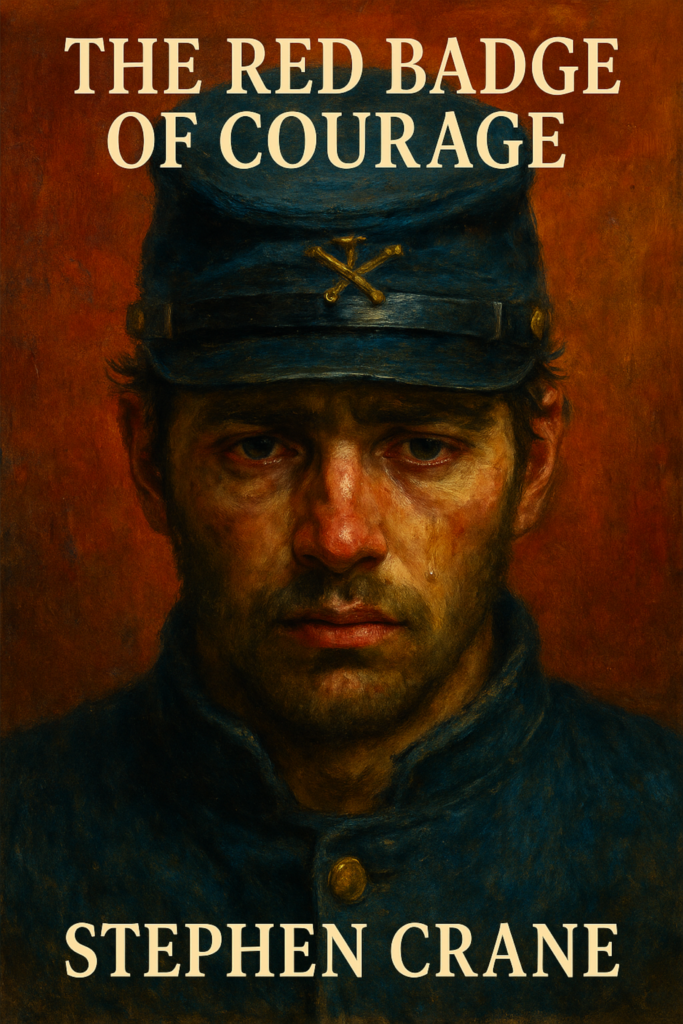
No work illustrates Crane’s understanding of fear and courage more powerfully than The Red Badge of Courage.
Often described as one of the greatest war novels ever written, the book remains widely read because it focuses on psychological reality rather than military spectacle.
Its protagonist, Henry Fleming, enters the American Civil War filled with dreams of glory and heroism. Like many young people, he imagines himself behaving bravely when confronted by danger.
Reality proves far more complicated.
As Henry faces the confusion and terror of battle, he is forced to confront difficult questions about fear, courage, shame, pride, and identity.
What makes the novel remarkable is that Crane refuses to provide easy answers.
Henry’s journey is deeply human.
He makes mistakes.
He experiences fear.
He struggles with self-doubt.
He gradually learns that courage is not as straightforward as he once believed.
Readers continue to connect with the novel because Henry’s experience extends far beyond the battlefield. Most people encounter moments in life when their assumptions about themselves are challenged. Most people discover that reality is more complex than they expected.
The novel remains powerful because it captures that universal experience with extraordinary honesty.
Human Nature Under Pressure
If there is a single theme that unites Crane’s greatest works, it is his fascination with human nature under pressure.
People reveal themselves when circumstances become difficult.
Not when life is comfortable.
Not when success comes easily.
But when fear, uncertainty, danger, or hardship arrive.
Crane repeatedly placed characters in situations that stripped away illusions and forced them to confront reality.
These moments often reveal unexpected strengths.
Sometimes they expose weaknesses.
Frequently they reveal both.
This interest in pressure and crisis explains why Crane’s stories continue to feel relevant. Modern readers may not experience Civil War battles or nineteenth-century shipwrecks, but they understand stress, uncertainty, fear, disappointment, and difficult decisions.
The settings may change.
Human nature does not.
The Open Boat and the Struggle for Survival
While The Red Badge of Courage remains Crane’s most famous work, many readers consider The Open Boat one of his finest achievements.
Based on Crane’s own experience surviving a shipwreck, the story follows several men struggling to reach safety after being cast adrift at sea.
On the surface, it is a tale of survival.
At a deeper level, it explores humanity’s relationship with an indifferent universe.
The men discover that nature is neither cruel nor compassionate.
It simply exists.
The sea does not care about their hopes, fears, dreams, or struggles.
Yet despite this indifference, the characters continue to fight for survival.
They continue to hope.
They continue to support one another.
This combination of realism and humanity gives the story its enduring power.
Crane acknowledges the harsh realities of life while also recognising the resilience that allows people to endure them.
Related Novels




Why Crane’s Stories Feel Modern
Many nineteenth-century authors feel tied to their historical period.
Stephen Crane often feels surprisingly contemporary.
One reason is his focus on psychology.
Rather than presenting simple heroes and villains, Crane explores uncertainty, ambiguity, and emotional complexity. His characters wrestle with internal conflicts that modern readers immediately recognise.
He was interested in perception.
Self-image.
Fear.
Pride.
The stories people tell themselves about who they are.
These concerns remain highly relevant today.
Readers continue to recognise themselves in Crane’s characters because he understood something essential about human behaviour: people are complicated.
They are capable of courage and weakness.
Confidence and insecurity.
Selflessness and selfishness.
Often at the same time.
This nuanced understanding helps explain why Crane’s work remains fresh more than a century after it was written.
Ordinary People in Extraordinary Moments
One of Crane’s greatest strengths as a writer is his ability to find significance in ordinary individuals.
His protagonists are rarely legendary heroes.
They are soldiers, survivors, workers, and everyday people.
What makes them memorable is not who they are before the crisis begins.
It is how they respond once the crisis arrives.
This approach makes Crane’s stories deeply relatable.
Readers do not need extraordinary lives to connect with his characters.
They simply need to understand fear, hope, uncertainty, and the desire to do the right thing.
Crane recognised that moments of pressure often reveal truths that remain hidden during ordinary times.
Those revelations continue to fascinate readers today.
Related Authors
Why Readers Still Discover Stephen Crane
The world has changed dramatically since Stephen Crane’s death in 1900.
Technology has transformed daily life.
Societies have evolved.
Entire generations have come and gone.
Yet readers continue to discover his work.
The reason is simple.
The emotions he explored remain universal.
People still face fear.
They still doubt themselves.
They still struggle to find courage.
They still wonder how they will respond when confronted by difficult circumstances.
Crane’s stories endure because they address these timeless experiences with honesty and insight.
Readers recognise themselves in his characters.
And through those characters, they often gain a deeper understanding of themselves.
The Myth of Heroism
One of Stephen Crane’s most significant achievements was his willingness to challenge traditional ideas about heroism.
For centuries, stories had often portrayed heroes as individuals who faced danger with unwavering confidence and certainty. They knew what was right. They acted decisively. Their courage appeared almost effortless.
Crane recognised that reality was rarely so simple.
Most people do not face difficult situations with complete confidence. They hesitate. They worry. They question themselves. Fear becomes part of the experience.
Rather than ignoring this reality, Crane placed it at the centre of his fiction.
This is one of the reasons The Red Badge of Courage remains so powerful. Henry Fleming is not a perfect hero. He is frightened. He doubts himself. He struggles to reconcile his ideals with reality.
Yet these flaws are precisely what make him compelling.
Readers recognise themselves in him.
Most people have experienced moments when they felt uncertain, overwhelmed, or afraid. Most people have wondered whether they would be capable of doing the right thing when circumstances became difficult.
Crane understood that courage is often misunderstood.
True courage is not the absence of fear.
It is the decision to continue despite fear.
It is the willingness to act when confidence is lacking.
It is the determination to move forward even when the outcome remains uncertain.
This insight feels remarkably modern because it reflects the way many people actually experience challenges in their own lives.
Whether confronting personal hardship, professional setbacks, family difficulties, or moments of genuine danger, courage rarely appears as a dramatic burst of heroism.
More often, it appears as persistence.
A decision.
A choice.
A refusal to surrender.
Crane’s work continues to resonate because it presents heroism in human terms.
His characters are not extraordinary because they are fearless.
They are extraordinary because they struggle with fear and continue anyway.
Crane’s Lasting Influence
Although Stephen Crane died at the age of twenty-eight, his influence on literature has been enormous.
Many of the qualities modern readers take for granted in contemporary fiction were still unusual when Crane began writing.
His emphasis on psychological realism.
His interest in flawed protagonists.
His willingness to question romantic myths.
His focus on how ordinary people experience extraordinary circumstances.
These qualities helped shape the development of modern literature.
Writers who followed Crane increasingly moved away from idealised heroes and simplistic narratives. Instead, they explored ambiguity, uncertainty, and emotional complexity.
In this sense, Crane helped open the door to a more realistic style of storytelling.
His influence can be seen in generations of writers who sought to portray human beings honestly rather than heroically.
Yet perhaps Crane’s greatest legacy lies elsewhere.
He reminded readers that literature is not merely about events.
It is about experience.
The battle matters because of what it reveals about the soldier.
The shipwreck matters because of what it reveals about the survivors.
The crisis matters because of what it reveals about the human heart.
This understanding gives Crane’s work a timeless quality.
Readers may never face a Civil War battlefield.
They may never find themselves adrift in a small boat at sea.
But they will face moments of uncertainty.
They will confront fear.
They will discover strengths and weaknesses they did not know they possessed.
In those moments, Crane’s stories continue to feel relevant because they address experiences that remain fundamentally human.
More than a century after his death, readers still turn to Stephen Crane because he understood something essential about life.
The moments that test us are often the moments that reveal us.
And it is in those moments that we discover who we truly are.
Where to Start with Crane
For many readers, The Red Badge of Courage remains the ideal introduction to Stephen Crane.
Its exploration of fear, courage, identity, and personal growth continues to resonate with new generations of readers.
Those interested in survival, resilience, and humanity’s relationship with nature may also wish to explore The Open Boat, one of the most acclaimed short stories in American literature.
Both works showcase Crane’s remarkable ability to transform specific situations into universal human experiences.
Conclusion
Stephen Crane’s lasting achievement was not simply writing about war, shipwrecks, or moments of crisis.
It was exploring what those moments reveal about people.
His stories endure because they confront questions that remain relevant to every generation.
How do we respond to fear?
What does courage really mean?
How do we find strength when circumstances become difficult?
What can moments of crisis teach us about ourselves?
Through works such as The Red Badge of Courage and The Open Boat, Crane demonstrated that the most important battles are often fought within the human heart.
More than a century later, readers continue to return to his work because those struggles remain timeless.
The settings may belong to the past.
The emotions do not.
That is why Stephen Crane remains one of the most compelling voices in American literature.