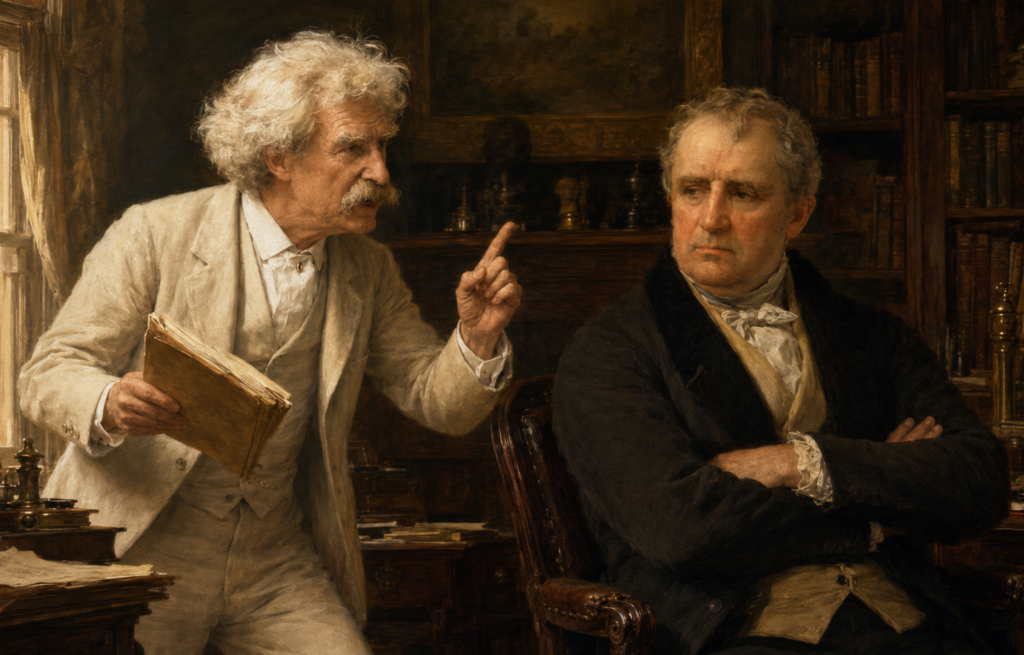
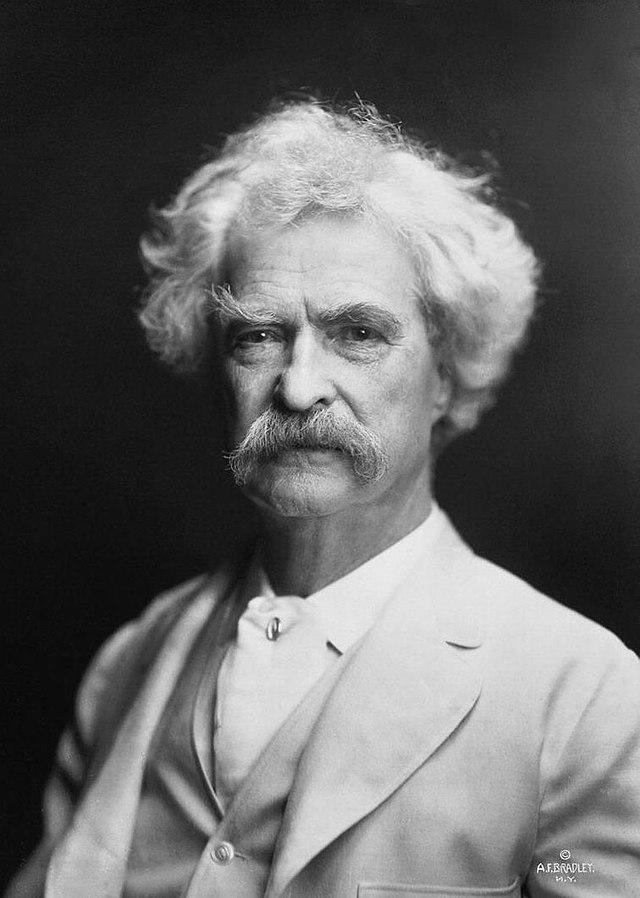









Mark Twain
The Storyteller Who Captured the Spirit of America
Few authors have become as closely associated with their nation as Mark Twain. More than a century after his death, his stories continue to be read by schoolchildren, studied by scholars, and enjoyed by readers around the world. His characters have become cultural icons. His observations remain remarkably relevant. His humor still provokes laughter.
Yet Twain’s significance extends far beyond the pages of The Adventures of Tom Sawyer or Adventures of Huckleberry Finn. He helped define what American literature could be. At a time when many writers looked toward Europe for inspiration, Twain found stories in America’s rivers, frontier towns, ordinary people, and unique voice. Through his work, he captured not only a nation but also the hopes, humor, contradictions, and ambitions of the people who lived within it.
From Samuel Clemens to Mark Twain
Mark Twain was born Samuel Langhorne Clemens on November 30, 1835, in the small town of Florida, Missouri. When he was four years old, his family moved to Hannibal, Missouri, a river town on the banks of the Mississippi that would later provide the inspiration for many of his most famous stories.
Twain’s childhood coincided with a transformative period in American history. The nation was expanding westward, steamboats traveled the great rivers, and frontier communities were developing into towns and cities. The Mississippi River served as one of the country’s great commercial highways, carrying people, goods, and ideas across vast distances.
After his father’s death, Clemens left school and began working as a printer’s apprentice. He later became a journalist and eventually achieved a childhood dream by training as a steamboat pilot. For several years he navigated the Mississippi, learning its channels, currents, hazards, and rhythms.
Those experiences left a lasting impression. When Clemens later began publishing humorous stories and articles, he adopted the pen name “Mark Twain,” a river term meaning two fathoms, or twelve feet, of water—a safe depth for navigation.
The name would become one of the most famous in literary history.
Related Novels









America Before Mark Twain
To understand Twain’s influence, it is important to understand the literary world he entered.
During the early nineteenth century, many American writers worked in the shadow of Britain. American literature certainly existed, but it often borrowed heavily from European traditions, styles, and subjects. British authors dominated the literary marketplace, and many readers considered European culture more sophisticated than anything produced in the United States.
American writers faced a challenge: how could they create literature that felt distinctly American?
Twain helped provide an answer.
Instead of writing about aristocrats, castles, and European society, he wrote about river towns, frontier settlements, miners, travelers, schoolchildren, and ordinary citizens. He embraced regional speech, local customs, and uniquely American experiences.
His stories sounded different because America itself sounded different.
Rather than imitating British literary voices, Twain allowed Americans to speak in their own language. Readers recognized themselves in his characters and their experiences. For the first time, many felt that American literature truly reflected American life.
The Mississippi River and the American Frontier
No influence shaped Twain more profoundly than the Mississippi River.
The river represented opportunity, adventure, commerce, and freedom. It connected distant communities and played a central role in the economic and cultural life of nineteenth-century America. To Twain, it was also a source of endless stories.
The Mississippi appears throughout his writing. It serves as the backdrop for Tom Sawyer, the setting for Huckleberry Finn, and the central subject of Life on the Mississippi. In many ways, the river became a symbol of America itself—vast, unpredictable, diverse, and constantly changing.
The frontier also shaped Twain’s perspective. His travels through the American West exposed him to prospectors, journalists, gamblers, merchants, politicians, and adventurers. These experiences supplied material for his humor and gave him insight into the ambitions and contradictions of a rapidly growing nation.
Unlike many writers who observed society from a distance, Twain experienced a remarkable variety of occupations and environments. He knew life on the river, life in small towns, life in mining camps, and life in major cities. This breadth of experience helped make his writing accessible to readers from many different backgrounds.
The Books That Made Him Famous
Twain first gained widespread recognition through his journalism and travel writing. Works such as The Innocents Abroad (1869) and Roughing It (1872) showcased his humor, storytelling ability, and talent for observation. Readers were drawn to his wit and his willingness to challenge conventional assumptions.
His reputation grew further with the publication of The Adventures of Tom Sawyer in 1876. Drawing heavily upon memories of his youth in Hannibal, the novel introduced readers to one of literature’s most beloved characters. Tom’s adventures, friendships, and mischief captured the imagination of readers and helped establish Twain as a major novelist.
The success of Tom Sawyer was followed by a remarkable series of books.
The Prince and the Pauper explored themes of justice, privilege, and social class through the story of two boys who exchange identities. Life on the Mississippi combined memoir, history, and travel writing to celebrate the river that had shaped Twain’s life. A Connecticut Yankee in King Arthur’s Court blended satire, fantasy, and social commentary in a story that remains remarkably inventive more than a century later.
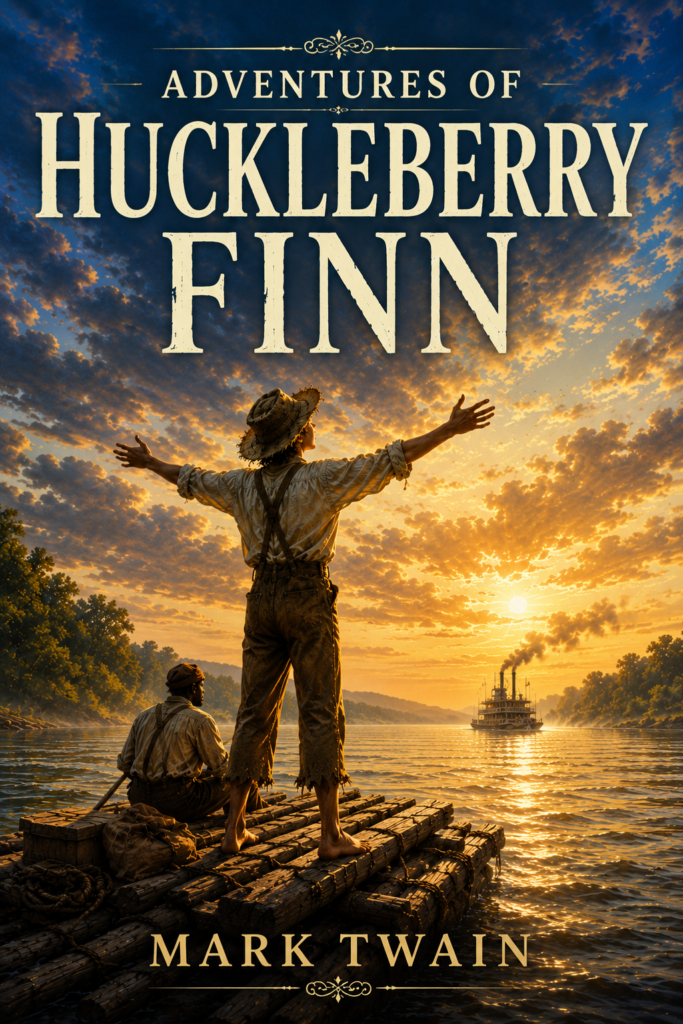
Then came Adventures of Huckleberry Finn.
Often regarded as Twain’s masterpiece, the novel follows Huck Finn and the escaped slave Jim on a journey down the Mississippi River. While readers continue to enjoy its adventure and humor, the book also confronts difficult questions about freedom, morality, prejudice, and conscience. Its influence on American literature has been enormous.
Many critics consider Huckleberry Finn one of the greatest American novels ever written. Ernest Hemingway famously claimed that all modern American literature came from this book. Whether or not one accepts that statement in its entirety, there is little doubt that Twain’s influence on later writers was profound.
More Than Humor: Twain the Social Critic
Although Mark Twain is often remembered as a humorist, reducing him to a writer of amusing stories overlooks an important part of his legacy.
Beneath the jokes, Twain frequently examined serious issues. His humor was often a tool for exposing hypocrisy, questioning authority, and challenging accepted beliefs. Readers laughed, but they were also encouraged to think.
Throughout his career, Twain commented on politics, social class, human greed, corruption, prejudice, and the contradictions he observed in American society. He possessed a remarkable ability to identify the gap between what people claimed to believe and how they actually behaved.
This talent can be seen in many of his works. The Prince and the Pauper examines the injustices of social privilege. A Connecticut Yankee in King Arthur’s Court satirizes both medieval society and certain assumptions about progress. Even Tom Sawyer, often viewed simply as a children’s adventure, contains subtle observations about education, religion, social expectations, and human nature.
His greatest social commentary may be found in Adventures of Huckleberry Finn. Through Huck’s friendship with Jim, Twain explored questions of morality and conscience in a society shaped by slavery and racial prejudice. The novel challenged readers to consider whether social customs and laws always align with what is right.
Twain rarely delivered sermons. Instead, he trusted readers to draw their own conclusions. His wit made difficult subjects approachable, while his storytelling ensured that his observations remained memorable.
This combination of entertainment and insight is one reason his work continues to feel relevant today.
Triumph, Tragedy, and Resilience
The public often saw Mark Twain as a man of endless humor and confidence, but his private life was marked by both extraordinary success and profound hardship.
By the late nineteenth century, Twain had become one of the most famous writers in the world. His books sold widely, his lectures attracted large audiences, and his name was recognized throughout the English-speaking world.
Yet success did not shield him from disappointment.
Twain made several business investments that proved disastrous. Most notably, he invested heavily in a typesetting machine that ultimately failed, contributing to severe financial difficulties. Despite earning substantial sums from his writing, he found himself burdened by debt.
Rather than seeking legal protection and walking away from his obligations, Twain embarked on an international lecture tour to repay his creditors. Traveling extensively through Europe, Australia, South Africa, and elsewhere, he worked tirelessly until every debt was paid in full.
The episode revealed a determination and sense of personal responsibility that earned widespread respect.
Personal tragedy also touched his life. Twain endured the deaths of several family members, including his wife Olivia and three of his four children. These losses deeply affected him and contributed to a darker tone in some of his later writings.
Readers who know only the cheerful adventures of Tom Sawyer are often surprised to discover the more reflective and sometimes pessimistic voice that emerged during Twain’s later years. Yet these experiences broadened his perspective and added depth to his understanding of the human condition.
His writings from this period reveal a man who had experienced both great joy and great sorrow, yet never lost his desire to understand the world around him.
The First Modern Celebrity Author
Today, authors frequently appear on television, social media, podcasts, and speaking tours. In Twain’s era, such widespread public visibility was far less common.
Yet Twain became something remarkably close to a modern celebrity.
His lecture tours drew enormous crowds. Audiences paid not only to hear his ideas but to experience his personality. He was a gifted public speaker whose timing, humor, and storytelling ability translated naturally from the page to the stage.
Photographs of Twain circulated widely. Newspapers reported on his travels, opinions, and public appearances. His distinctive white suit, bushy mustache, and expressive face became instantly recognizable.
In many respects, Twain transcended the role of author. He became a public figure whose observations on society, politics, and culture carried significant influence.
His fame extended well beyond the United States. Readers throughout Europe and other parts of the world eagerly followed his work. By the beginning of the twentieth century, he had become one of the most recognizable literary figures on the planet.
Few writers before him had achieved such a combination of literary success and public celebrity.
Related Authors
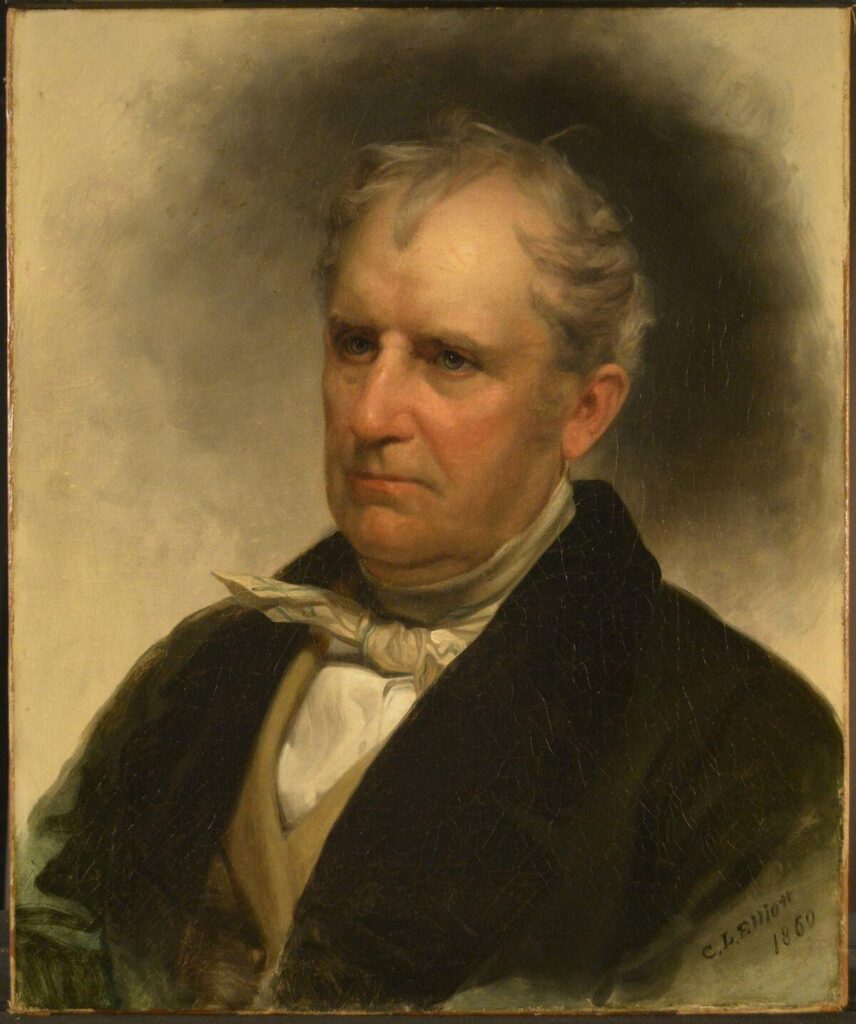
How Twain Changed American Literature
Mark Twain’s influence extends far beyond the books he wrote.
He helped reshape how American stories were told.
Prior to Twain, many writers favored formal literary language that reflected European traditions. Twain demonstrated that ordinary speech could be used effectively in serious literature. He captured regional dialects, local expressions, and the rhythms of everyday conversation with remarkable skill.
This commitment to authenticity gave his work a freshness that distinguished it from much of what had come before.
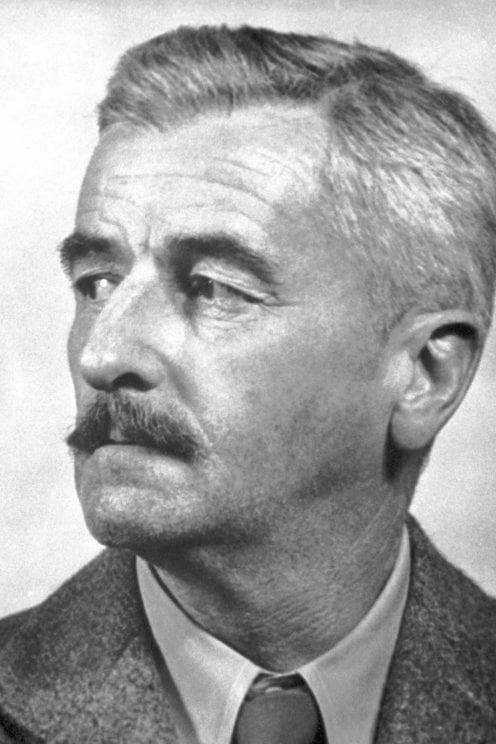
Future generations of writers would build upon this foundation. Authors such as William Faulkner, John Steinbeck, Ernest Hemingway, and many others benefited from the path Twain helped create. His willingness to embrace uniquely American settings, voices, and experiences expanded the possibilities of American fiction.
His influence can also be seen in the enduring popularity of character-driven storytelling. Tom Sawyer and Huck Finn are not remembered simply because of the adventures they experience. Readers remember them because they feel real.
Their flaws, dreams, fears, and strengths continue to resonate across generations.
Twain understood that great literature begins with believable people, and that insight remains as valuable today as it was in the nineteenth century.
Why Readers Still Love Mark Twain Today
Literary tastes change. Genres rise and fall. Countless once-popular authors fade from public memory.
Mark Twain has endured.
Part of the reason lies in his storytelling ability. His books are engaging, accessible, and entertaining. Readers become invested in his characters and eager to follow their journeys.
His humor also remains remarkably effective. While some historical references may require explanation, the human behavior he observed has changed very little. Vanity, ambition, curiosity, greed, kindness, friendship, and hope remain as familiar today as they were in Twain’s lifetime.
Perhaps most importantly, Twain understood people.
He recognized the contradictions that make human beings both frustrating and fascinating. He saw greatness and foolishness existing side by side. He appreciated the humor found in everyday life while remaining aware of its challenges and injustices.
As a result, his books continue to speak to modern readers.
Children enjoy the adventures.
Adults appreciate the wisdom.
Scholars explore the deeper themes.
Casual readers simply enjoy spending time with memorable characters and a master storyteller.
Few authors have managed to appeal so successfully to such a wide audience for such a long period of time.
The Storyteller Who Captured the Spirit of America
Mark Twain’s enduring popularity cannot be explained by any single book or achievement.
He was a humorist, novelist, journalist, lecturer, travel writer, social critic, and observer of human nature. He transformed memories of life along the Mississippi into stories that would become part of the American cultural landscape. He helped create a literary voice that sounded distinctly American at a time when the nation was still defining itself.
His characters continue to live in the imagination of readers around the world. His observations remain insightful. His stories remain entertaining.
More than a century after his death, Mark Twain still captures something essential about America—its optimism, its contradictions, its humor, its restlessness, and its belief that adventure might be waiting just beyond the next bend in the river.
That is why his books continue to be read.
That is why his characters continue to endure.
And that is why Mark Twain remains one of the greatest storytellers America has ever produced.
Articles