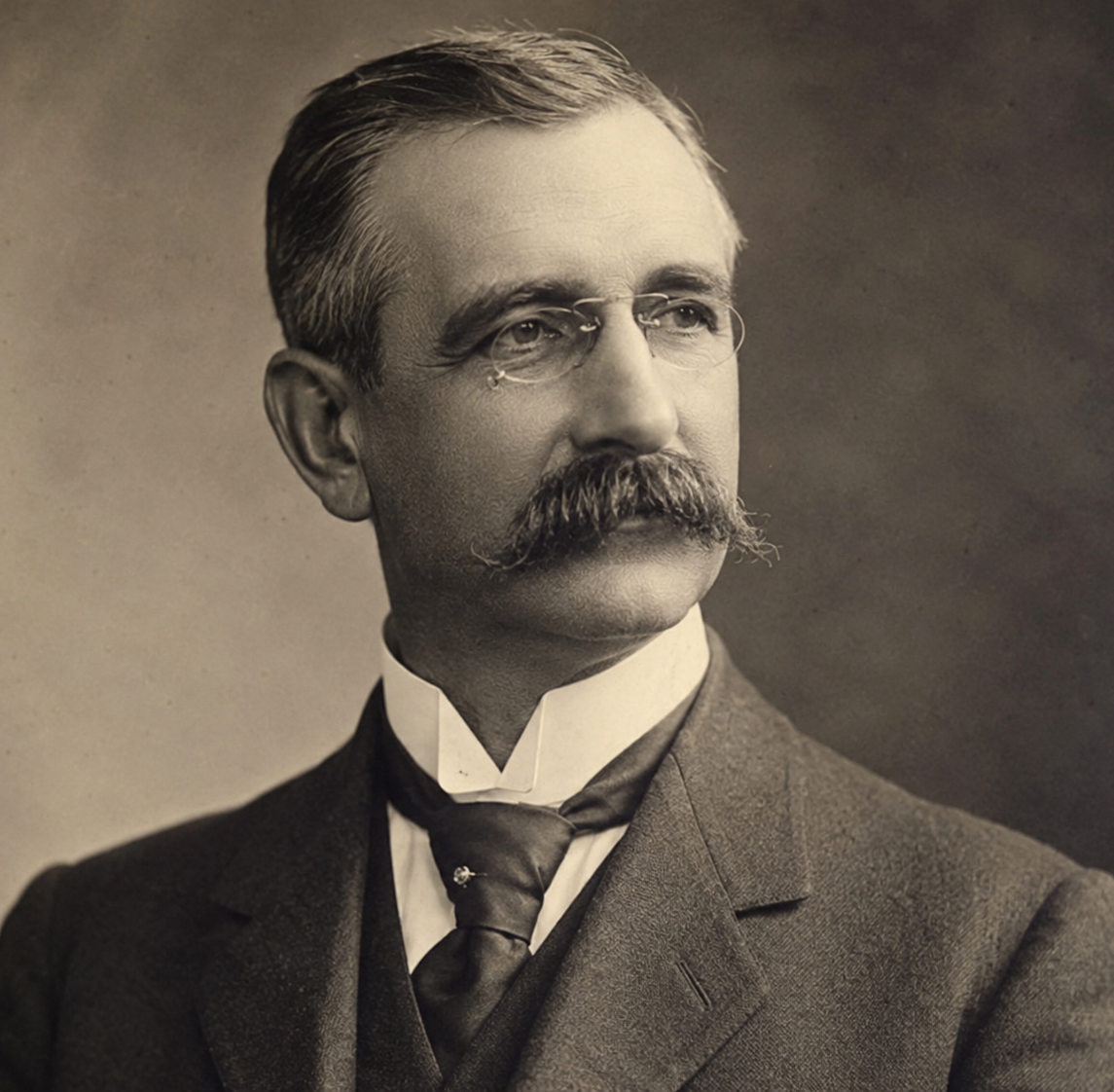









L. Frank Baum:
The Dreamer Who Created the Land of Oz
When most people hear the name L. Frank Baum, they immediately think of Dorothy, Toto, the Yellow Brick Road, and the Emerald City. Yet few realise that Baum did far more than write a single beloved children’s story. He created one of the first great fantasy worlds in modern literature—a magical land that would inspire generations of readers long before the worlds of Narnia, Middle-earth, or Hogwarts were imagined.
More than a century after Dorothy first arrived in Oz, Baum’s stories continue to enchant children and adults alike. His books have never gone out of print, his characters remain among the most recognisable in literature, and his vision of a world powered by imagination continues to capture the hearts of readers around the globe.
But who was the man behind the magic?
Growing Up with Big Dreams
Lyman Frank Baum was born on May 15, 1856, in Chittenango, New York. He was the seventh of nine children in a prosperous family. Unlike many famous authors, Baum did not grow up in poverty or hardship. His father was a successful businessman, and the family enjoyed a comfortable life.
From an early age, Baum displayed a vivid imagination. He loved stories, theatre, and make-believe. While other children dreamed of becoming soldiers or explorers, young Frank dreamed of creating worlds.
Books fascinated him, but so did performance. He enjoyed writing stories, staging plays, and entertaining others. Throughout his life, he remained convinced that imagination was one of life’s greatest gifts.
His family hoped he would pursue a more practical career, but Baum’s interests always pulled him toward creativity.
Related Novels

A Life of Many Adventures
Before becoming a famous author, Baum tried his hand at an astonishing variety of professions.
At different times he worked as:
- A newspaper editor
- A playwright
- A theatre manager
- A travelling salesman
- A store owner
- A publisher
- An actor
Few authors lived such a varied life before finding literary success.
Some of these ventures succeeded. Others failed spectacularly. Baum experienced both prosperity and financial difficulties. Yet throughout every setback, he continued writing.
The many people he met and places he visited helped shape his imagination. His experiences gave him a deep understanding of ordinary families, children, dreamers, and adventurers—qualities that would later find their way into the world of Oz.
The Birth of a New Kind of Fairy Tale
By the late nineteenth century, children’s literature was filled with traditional fairy tales.
Many of these stories were wonderful, but they often relied on frightening punishments, grim lessons, or heavy moral instruction. Baum believed children deserved something different.
He wanted to create stories that inspired wonder rather than fear.
Stories where magic existed simply for the joy of imagination.
Stories that entertained first and lectured second.
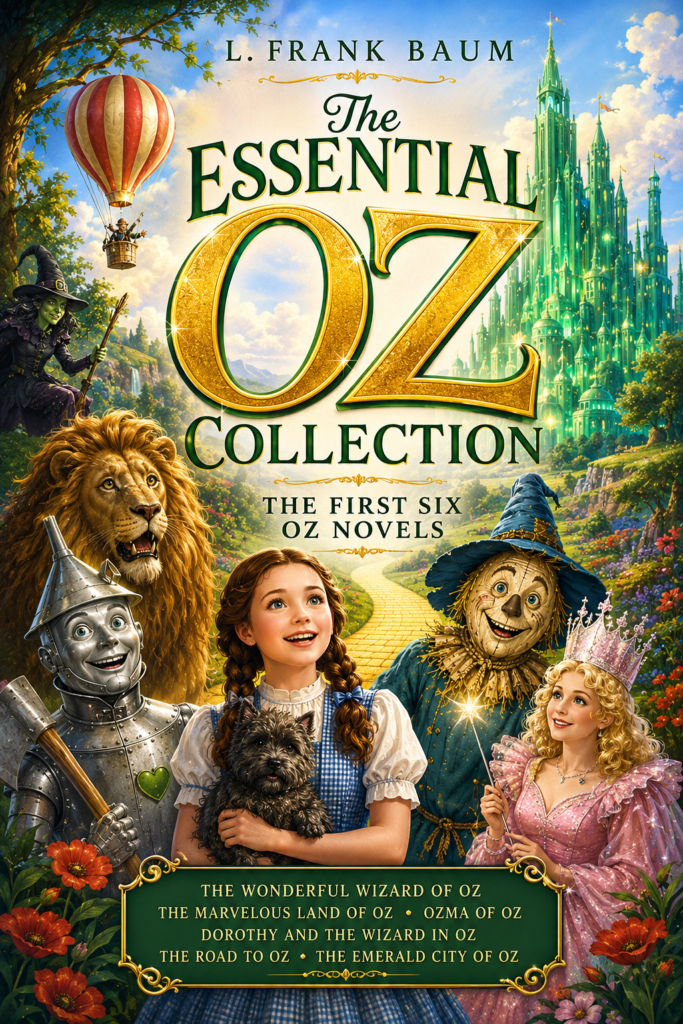
In 1900, he published a book called The Wonderful Wizard of Oz.
It told the story of an ordinary Kansas girl named Dorothy who is carried by a cyclone to a magical land filled with witches, talking Scarecrows, Tin Woodmen, and Cowardly Lions.
The book was an immediate success.
Children loved it.
Parents loved it.
Teachers loved it.
Readers wanted more.
Creating the Land of Oz
What made Oz different from other fantasy worlds of its time?
Partly, it was Baum’s optimism.
Unlike many fairy tales, Oz was not a dark or frightening place. Dangerous moments certainly existed, but the overall tone remained hopeful, colourful, and welcoming.
More importantly, Oz felt alive.
Every new corner of the map seemed to contain another remarkable discovery. Strange creatures, magical inventions, talking animals, and entirely new kingdoms appeared throughout the series.
Baum treated imagination as something to celebrate.
A Scarecrow could become wise.
A Tin Woodman could be kind.
A Lion could be brave despite being afraid.
A mechanical man could become a trusted friend.
The rules of ordinary life simply did not apply.
Readers were invited to wonder what might happen next—and that sense of possibility remains one of Oz’s greatest strengths today.
Dorothy: A Different Kind of Hero
One reason Oz has remained popular for so long is Dorothy herself.
She was very different from many heroes of her era.
Dorothy is not a warrior.
She possesses no magical powers.
She does not defeat enemies through strength or violence.
Instead, she succeeds through kindness, determination, common sense, and compassion.
Children could easily imagine themselves in Dorothy’s place.
Adults admired her courage and generosity.
More than a century later, she remains one of literature’s most enduring young heroines.
Beyond the Yellow Brick Road
Many readers know only the first Oz book.
What surprises them is how much larger the world became.
Following the success of The Wonderful Wizard of Oz, Baum returned to the magical land again and again, eventually writing fourteen Oz novels.
Each book expanded the world:
- New countries
- New characters
- New magical creatures
- New adventures
Readers were introduced to unforgettable figures such as Princess Ozma, Jack Pumpkinhead, Tik-Tok, the Patchwork Girl, the Shaggy Man, and many others.
The series gradually evolved into one of literature’s first fully developed fantasy universes.
Long before modern fantasy franchises became common, Baum was creating an interconnected world that readers could revisit year after year.
Related Authors
From Book to Cultural Icon
In 1939, twenty years after Baum’s death, The Wizard of Oz was adapted into what would become one of the most famous films ever made.
The movie introduced Dorothy, Toto, the Scarecrow, the Tin Woodman, and the Cowardly Lion to millions of new viewers.
Songs such as “Over the Rainbow” became cultural landmarks.
The Yellow Brick Road entered popular imagination.
The Emerald City became instantly recognisable around the world.
For many people, the film served as their first introduction to Oz.
Yet the movie represents only a small part of the magical world Baum created.
Behind the familiar story lies an entire series of adventures waiting to be discovered.
A Legacy That Endures
L. Frank Baum passed away in 1919, but his influence continues to be felt today.
Modern readers often take fantasy worlds for granted. Before Oz, however, few authors had created such a large, imaginative, and welcoming fictional universe specifically for children.
Baum demonstrated that children’s stories could be imaginative, adventurous, and joyful while still being meaningful.
His books helped shape the future of fantasy literature.
More importantly, they gave generations of children permission to dream.
Why Readers Still Love Baum Today
The world has changed dramatically since Baum first published The Wonderful Wizard of Oz in 1900.
Technology has transformed everyday life.
New forms of entertainment compete for children’s attention.
Yet Oz continues to thrive.
Why?
Because the qualities that made the books special have never gone out of style.
Children still love adventure.
Families still value stories that encourage imagination.
Readers still enjoy characters who demonstrate kindness, loyalty, courage, and friendship.
The Land of Oz reminds us that wonder can be found almost anywhere if we are willing to look for it.
Discover the Original Oz Adventures
More than one hundred and twenty-five years after Dorothy first stepped onto the Yellow Brick Road, readers continue to follow her into one of literature’s most beloved fantasy worlds.
Whether you are revisiting Oz after many years or discovering it for the very first time, Baum’s stories remain as magical, imaginative, and welcoming as ever.
The journey begins with a single step down the Yellow Brick Road—but the adventure lasts a lifetime.
Articles