








Why did Mark Twain not like
James Fenimore Cooper?
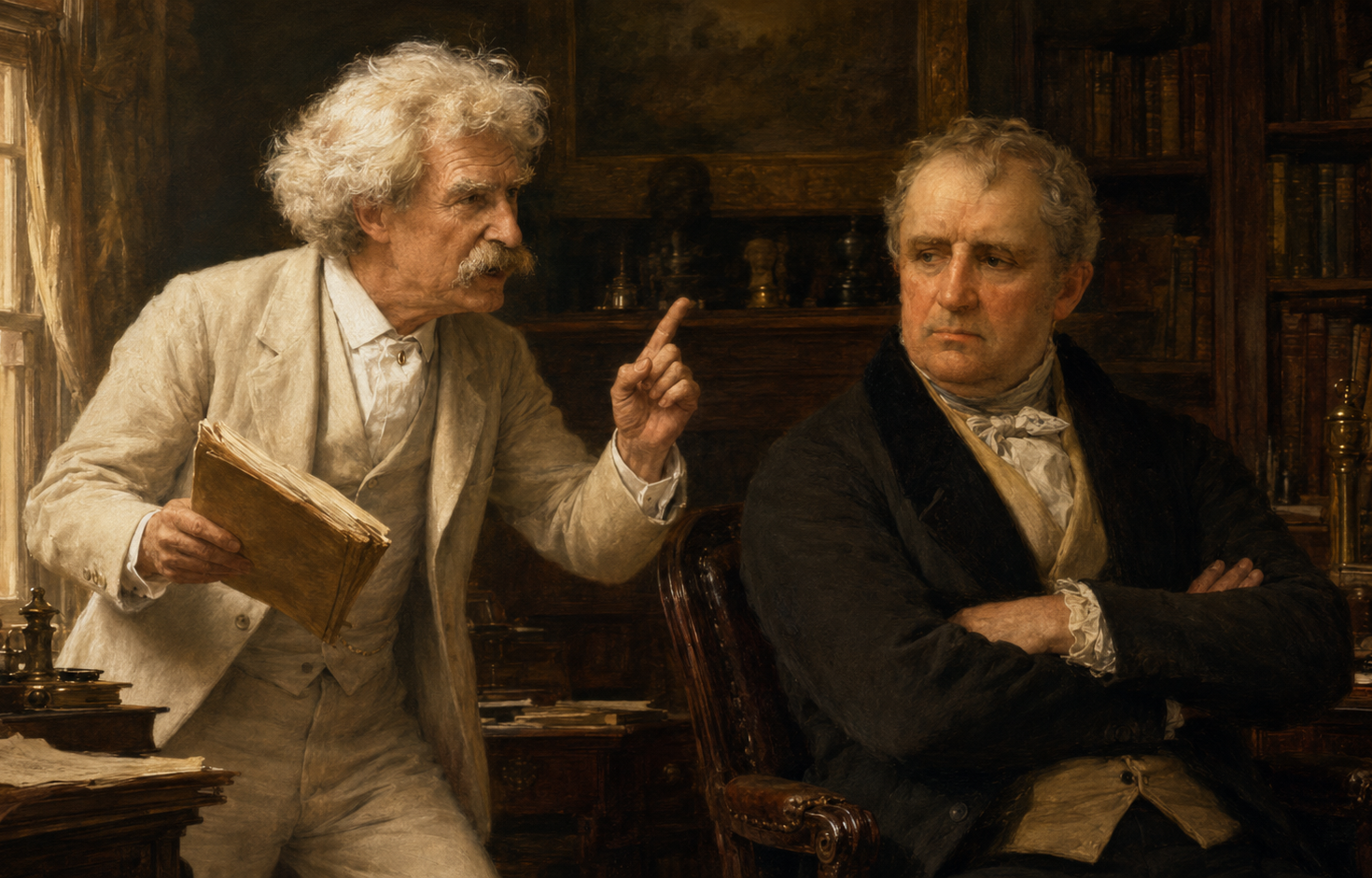
Few authors have ever received a literary attack as funny, merciless or enduring as the one Mark Twain directed at James Fenimore Cooper. In his 1895 essay *Fenimore Cooper’s Literary Offenses*, Twain accused one of America’s most celebrated novelists of improbable storytelling, artificial dialogue, careless language and a near-total disregard for the basic rules of fiction.
Twain’s assault was so effective that it continues to shape Cooper’s reputation more than a century later. Many readers who have never opened *The Deerslayer* or *The Pathfinder* have nevertheless heard that Cooper was long-winded, unrealistic and incapable of recognising how people actually spoke.
But why did Twain dislike Cooper’s writing so intensely? Was this a personal feud between two famous American authors, a serious disagreement about the craft of fiction, or simply an irresistible opportunity for one of literature’s greatest humorists?
The answer contains elements of all three—except for the personal feud. Cooper died before Twain had begun his literary career. What separated them was not a private quarrel, but two profoundly different ideas about how American stories should be told.
It was never a personal rivalry
James Fenimore Cooper died in 1851, when Samuel Clemens—the future Mark Twain—was only fifteen years old. The two men never competed for readers, exchanged hostile letters or confronted one another in public. By the time Twain became a nationally recognised writer, Cooper had already been established for decades as one of the founding figures of American literature.
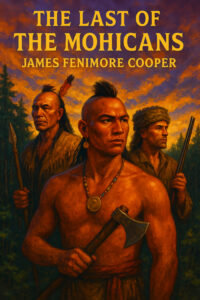
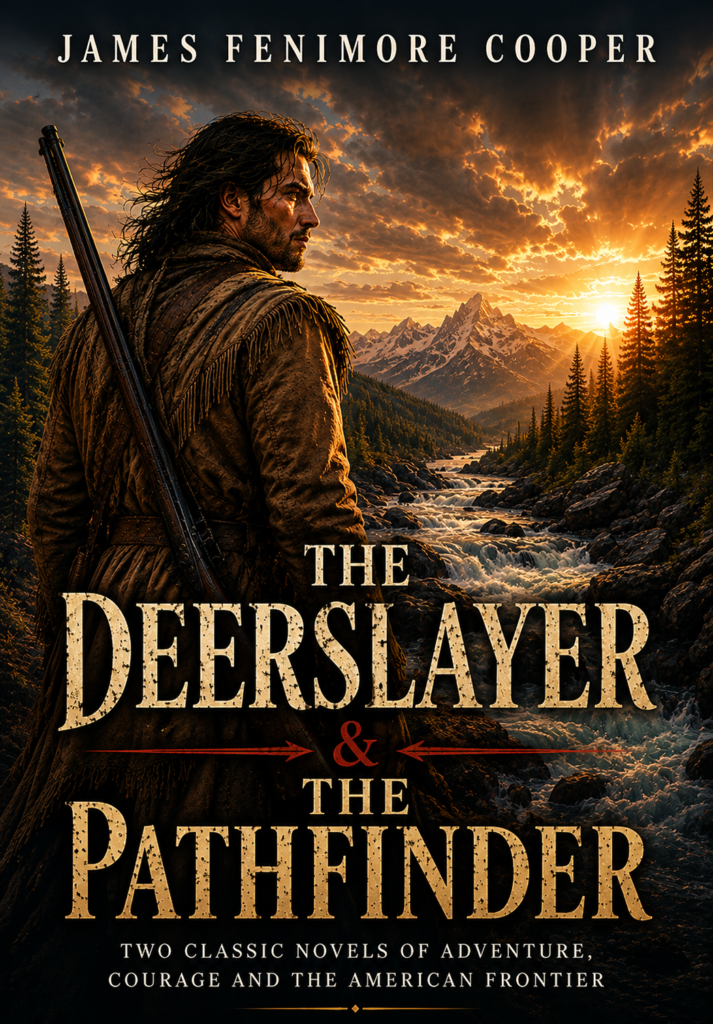
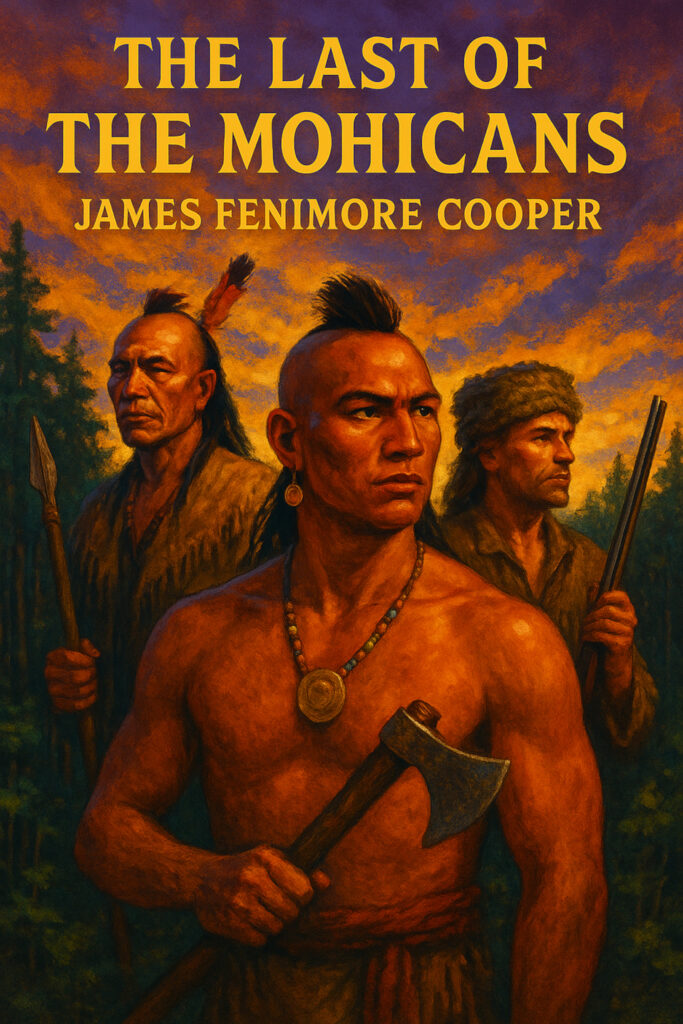
Cooper’s historical romances had introduced readers throughout the world to the forests, frontiers and conflicts of early America. *The Last of the Mohicans*, *The Pathfinder* and *The Deerslayer* transformed the wilderness into the setting for a distinctly American mythology. Natty Bumppo—also known as Hawkeye, the Pathfinder, Leatherstocking and Deerslayer—became one of the country’s first great fictional heroes.
Twain therefore was not attacking an obscure or forgotten novelist. He was challenging a literary monument.
That distinction is important. Twain’s real targets included not only Cooper, but also the professors and critics who continued to praise him. At the beginning of *Fenimore Cooper’s Literary Offenses*, Twain mockingly suggests that several eminent admirers could not possibly have read Cooper carefully. His essay was an attack on inherited literary authority as much as it was an evaluation of one author’s novels.

Cooper’s “literary offenses”
Twain published Fenimore Cooper’s Literary Offenses in the North American Review in July 1895. Although presented as literary criticism, the essay is unmistakably a comic performance. Twain announces that Cooper committed “114 offenses against literary art” within just two-thirds of a page and violated eighteen of the nineteen rules governing romantic fiction.
The numbers were deliberately absurd, but the objections behind them were genuine.
Twain believed that a story should go somewhere, that its episodes should contribute to its development and that its characters should have a convincing reason to exist. People in fiction should behave consistently, speak like recognisable human beings and perform actions that are physically possible. An author should provide necessary information, avoid unnecessary words and choose “the right word, not its second cousin.”
According to Twain, Cooper repeatedly failed these tests.
He complained that Cooper’s plots depended upon coincidences and impossible escapes. He ridiculed scenes in which characters demonstrated implausible feats of marksmanship, tracking or wilderness survival. He objected to conversations that wandered far beyond their purpose and to characters whose speech could change abruptly from ornate formality to crude dialect.
Most of all, Twain disliked imprecision. Cooper might bring a reader close to understanding what had happened without describing it clearly enough to form a convincing mental picture. To Twain, whose humour frequently depended upon the exact placement of a word, this was not a minor defect. It was a fundamental failure of craftsmanship.
The river pilot versus the frontier romancer
Twain’s background helps explain why Cooper’s physical improbabilities irritated him so much.
Before becoming a famous author, Twain had worked as a steamboat pilot on the Mississippi River. A pilot needed to understand currents, distances, depths, landmarks and the movement of large vessels with extraordinary precision. A small error in judgement could destroy a boat or kill its passengers.
Twain therefore had little patience when a writer treated the physical world as though it could be rearranged whenever a plot required it. In Fenimore Cooper’s Literary Offenses, he examines an elaborate scene involving a floating vessel, overhanging branches and attacking warriors, asking readers to imagine whether the movements Cooper describes could actually occur. His conclusion is that Cooper has sacrificed physical possibility for dramatic effect.
This was a recurring difference between the two authors. Cooper used the landscape primarily as the setting for romance and myth. Twain regarded landscape as something concrete: it possessed currents, distances, dangers and consequences. Cooper wanted the forest to feel heroic. Twain wanted the river—or the forest—to behave like a real place.
That does not automatically make Twain the superior observer in every instance. Cooper had extensive knowledge of central New York and had served at sea, while Twain was quite capable of exaggerating evidence when a joke demanded it. Nevertheless, their contrasting attitudes toward physical detail lay near the heart of Twain’s criticism.
Romanticism against realism
The larger disagreement was between two literary eras.
Cooper belonged to the Romantic tradition of the early nineteenth century. His fiction featured heroic individuals, elevated language, perilous adventures, dramatic coincidences and a wilderness charged with moral and symbolic meaning. His characters did not always speak as ordinary Americans spoke because they inhabited a heightened world of historical romance.
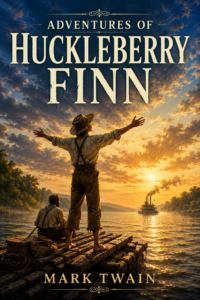
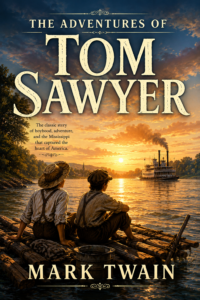
Twain emerged from a later tradition that increasingly valued realism. He favoured close observation, regional voices, colloquial language and characters shaped by ordinary human weaknesses. In The Adventures of Tom Sawyer and Adventures of Huckleberry Finn, the rhythms of American speech became part of the storytelling itself. Twain did not merely write about American life; he allowed Americans who were often excluded from elevated literature to speak in their own voices.
When Twain criticised Cooper’s characters for sounding artificial, he was therefore making a broader declaration about American fiction. The country no longer needed to imitate the manners and language of European romance. Its literature could arise from the speech, humour and contradictions of American life.
Twain’s attack on Cooper can consequently be read as one generation overthrowing another. The Romantic frontier hero was being confronted by the sceptical voice of post-Civil War America.
Twain’s changing view of the American frontier
Twain had not always rejected the world Cooper created. Like many young American readers, he had once been captivated by romantic stories about the frontier and its Indigenous inhabitants.
His experiences in the West changed that response. While travelling through Nevada and the surrounding territories, Twain encountered communities that bore little resemblance to the noble and highly stylised figures he associated with Cooper’s novels. In Roughing It, he recalled having been “a disciple of Cooper and a worshipper of the Red Man” before experience shattered the romantic picture.
The Mark Twain Project identifies this disillusionment as one source of his growing hostility toward Cooper’s frontier mythology.
This aspect of the disagreement requires care. Twain believed that firsthand experience had replaced Cooper’s fantasy with reality, but Twain’s own descriptions of Native Americans could be deeply prejudiced and dehumanising. His rejection of the “noble savage” stereotype did not necessarily produce a fairer or more accurate representation. Instead, he sometimes replaced one damaging stereotype with another.
Cooper’s treatment of Indigenous characters also deserves more careful examination than Twain allowed. Although his novels contain romantic conventions and assumptions characteristic of their period, they frequently explore dispossession, cultural conflict and the destructive advance of settlement. Chingachgook, Uncas and other Indigenous characters are not simply decorative additions to wilderness adventures. They occupy an essential place in Cooper’s tragic vision of American history.
Twain saw false romanticism. Modern readers may also see an author attempting—imperfectly and from within the limitations of his time—to confront what was being lost as the frontier expanded.
Was Twain’s criticism fair?
Twain identified genuine weaknesses in Cooper’s writing. Cooper could be verbose. His dialogue could sound painfully formal to modern ears, and some of his action scenes strain credibility. His characters occasionally explain what readers have already understood, while his plots can depend heavily upon coincidence.
Yet Twain was not an impartial critic. He selected vulnerable passages, removed them from the atmosphere of the larger novels and applied the standards of realism to works conceived as romance. He also exaggerated every weakness because exaggeration was the engine of his comedy.
Cooper scholars have argued that Twain sometimes misunderstood, distorted or deliberately simplified the passages he attacked. The James Fenimore Cooper Society’s examination of the dispute shows that several of Cooper’s alleged errors become more defensible when restored to their complete narrative context.
This does not make Twain’s essay unsuccessful. It means that Fenimore Cooper’s Literary Offenses should be read partly as satire. Twain is playing the exasperated reader and unforgiving writing instructor, turning every awkward phrase into evidence for a literary prosecution. Cooper is the defendant, but the performance is designed for the amusement of the jury.
Indeed, the essay’s survival demonstrates Twain’s extraordinary power. A clever critical argument might have influenced Cooper’s reputation for several years. Twain’s jokes have influenced it for more than a century.
Did Twain truly think Cooper had no value?
For all the apparent hostility of Fenimore Cooper’s Literary Offenses, Twain’s opinion was more complicated than simple contempt.
In a 1906 autobiographical dictation, Twain considered how few nineteenth-century American writers had produced books capable of surviving for more than forty-two years. The first name on his short list was Fenimore Cooper. The comment, preserved by the Mark Twain Project, amounts to a reluctant acknowledgement of Cooper’s durability.
Twain could ridicule Cooper’s technique while recognising his historical importance. Cooper had helped establish the American novel, created an enduring frontier hero and produced stories that remained alive in the public imagination. Twain might have considered many passages badly written, but he could not dismiss the cultural achievement.
There may even have been an element of creative kinship beneath the mockery. Both authors were fascinated by the tension between civilisation and freedom. Both created characters who stood partly outside respectable society. Natty Bumppo retreats from the advancing settlement; Huck Finn intends to “light out for the Territory.” Neither character can be comfortably contained by the supposedly civilised world.
Twain rejected Cooper’s methods, but he continued to explore some of Cooper’s most important American themes.
Two competing visions of America
Mark Twain did not dislike James Fenimore Cooper because of a personal grievance. He disliked what Cooper’s writing represented: artificial dialogue, romantic exaggeration, careless description and a literary establishment willing to praise famous books without examining them closely.
Yet the ferocity of Twain’s attack can conceal how much the two writers shared. Cooper transformed the American wilderness into legend. Twain returned to that legend and challenged it with scepticism, vernacular speech and realism. Cooper asked what civilisation destroys as it advances. Twain asked whether that civilisation deserved its respectable name.
Their disagreement therefore reaches far beyond questions of wordiness or improbable action. It represents a continuing argument over American literature itself. Should fiction elevate the nation into romance, or expose it through realism? Should the wilderness become a stage for heroic mythology, or should it obey the inconvenient facts of geography and human nature?
Twain undoubtedly won the argument in the popular imagination. His attack remains funnier and more widely quoted than almost any defence Cooper ever received. But Cooper’s novels have survived too—just as Twain grudgingly admitted they would.
The best way to understand their quarrel is not to choose one author and discard the other. It is to read them together: Cooper creating the American frontier myth, and Twain gleefully taking it apart.
Related Novels
Articles

Have the Jane Austen Movies Replaced the Books?
100 Editions, Countless Discoveries

Classic Literature Quiz (Part 1): How Well Do You Know the Classics?

Jane Austen vs the Brontë Sisters
Whodunit Better

Why I Hate Shakespeare

Why Jane Austen Remains So Popular

What Classic Horror Was Really Trying to Tell Us
When Novels Were Released Like a TV Series