
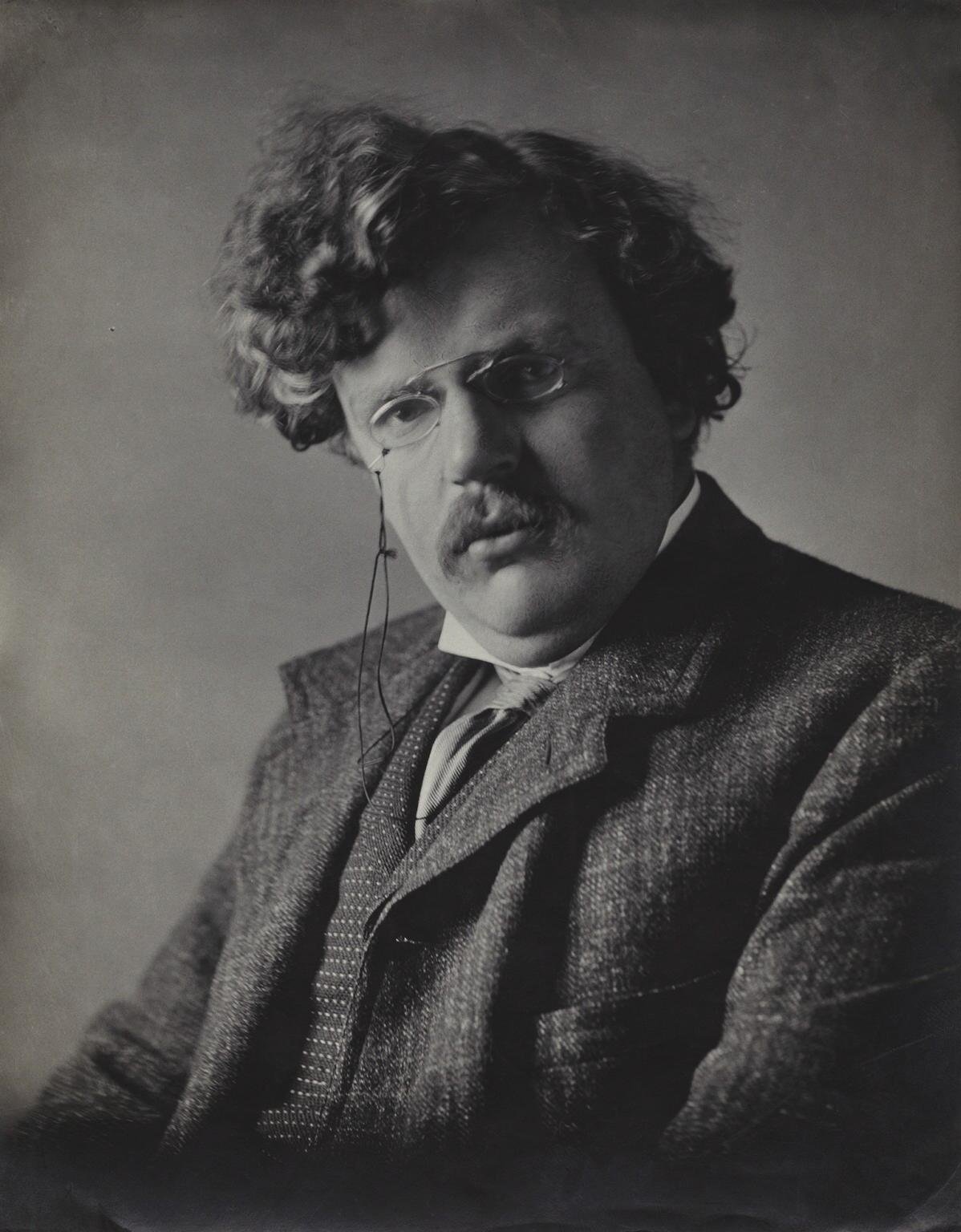









G. K. Chesterton
The Writer Who Found Mystery in Everything
G. K. Chesterton: The Writer Who Found Mystery in Everything
There are writers whose worlds seem to belong entirely to the past: their manners are old-fashioned, their arguments belong to vanished debates, and their names survive chiefly on classroom lists. G. K. Chesterton is not one of them.
A century after his most famous stories first appeared, Chesterton still feels startlingly alive. He can be funny, extravagant, argumentative, unsettling, and unexpectedly moving—often within the same page. His fiction is full of priests, policemen, poets, anarchists, thieves, dreamers, and apparently ordinary people who turn out to be far stranger than they first appear. His essays range across politics, religion, art, crime, fairy tales, and daily life. Above all, he possessed an unusual gift: the ability to make familiar things feel astonishing again.
For Chesterton, a lamppost, a locked door, a country village, a police officer, or a child’s story could become the starting point for a much larger question. What do we really see? What do we overlook? What does a sensible explanation fail to explain?
That spirit is the key to his enduring appeal. Whether readers come to him for the gentle brilliance of Father Brown, the nightmare adventure of The Man Who Was Thursday, or his essays and criticism, they encounter a writer who believed that the world was more mysterious—not less mysterious—because it was real.
A Writer of Many Forms
Gilbert Keith Chesterton was born in London in 1874. He began his working life in publishing and journalism, and journalism remained central to his identity throughout his career. He wrote columns, reviews, essays, poems, biographies, novels, plays, criticism, religious works, and detective stories with remarkable energy. By the time of his death in 1936, he had produced an enormous body of writing and become one of the most recognisable literary voices in Britain.
Chesterton’s appearance was memorable: tall, heavily built, often dressed in a cape and broad-brimmed hat, and frequently depicted with a swordstick. Yet the public image can obscure the discipline behind the work. He was a professional writer in the fullest sense—constantly reading, responding, reviewing, debating, and publishing. His prose was shaped by the pace of the newspaper column, but it was never merely hurried. He developed a style that could turn quickly, make a joke, set a trap for the reader’s assumptions, and arrive at an idea from an unexpected direction.
He is often called the “prince of paradox,” and the description fits. Chesterton delighted in statements that sounded contradictory before proving surprisingly sensible. He might suggest that a man was healthiest when he realised how strange the world was, or that tradition was not the worship of the past but a way of allowing the dead a voice in the conversation. The point was not cleverness for its own sake. He used paradox to break the reader out of habit.
In Chesterton’s writing, common sense is never the same thing as complacency. The person who thinks he already understands everything is often the least capable of seeing what is in front of him.
The Ordinary World, Made Strange
Chesterton’s central imaginative power lies in his ability to restore a sense of wonder to ordinary life.
Modern readers may know this feeling from detective fiction. A familiar room becomes a crime scene. A casual remark becomes a clue. A respectable neighbour becomes a suspect. What appeared settled suddenly becomes uncertain. Chesterton understood that mystery does not need to be imported from some distant Gothic castle or exotic landscape. It can be found in a suburban garden, a quiet church, a snow-covered street, or the expression on a person’s face.
But Chesterton went further than the conventional puzzle story. He was interested not only in who did it, but in why people deceive themselves, why they make evil seem reasonable, and why an apparently small moral choice can grow into a catastrophe. His mysteries are about criminal acts, certainly, but they are also about human blindness.
This is one reason his work retains its freshness. He did not write characters as diagrams moving through a plot. Even when they are comic or exaggerated, they are driven by pride, fear, loneliness, greed, vanity, love, despair, or the desire to be admired. Chesterton’s villains are rarely just mechanisms for supplying clues. They are people who have chosen to see the world wrongly.
That gives his best stories an unusual combination of lightness and seriousness. They may begin with a joke or an absurd situation, but beneath the comedy lies a sharp interest in conscience and consequence.
Father Brown: Detection Through Understanding
Chesterton’s most famous creation is Father Brown, the small, unassuming Catholic priest who first appeared in 1910 and went on to star in more than fifty stories.
At first glance, Father Brown does not look like a great detective. He is not glamorous, aristocratic, or physically impressive. He has none of Sherlock Holmes’s theatrical flair, scientific equipment, or carefully cultivated eccentricity. He does not dominate a room. He often seems absent-minded or ordinary enough to be ignored.
That is precisely why he is so effective.
Father Brown’s method is based on an understanding of human nature. He notices what people say, what they avoid saying, what they want others to believe, and what a guilty conscience may do to disguise itself. He solves crimes not because he imagines himself above criminals, but because he believes he can understand how temptation, fear, and self-justification work from the inside.
His famous principle is unsettlingly simple: to understand a criminal act, one must be willing to imagine committing it. This is not sympathy for wrongdoing. It is a refusal to treat evil as something practised only by distant monsters. Father Brown recognises that the line between virtue and vice passes through ordinary human lives.
That makes the stories different from many detective tales of the period. The puzzle matters, but the solution is rarely only mechanical. A Father Brown story may involve an impossible disappearance, a concealed identity, a locked room, a false alibi, or a spectacular trick. Yet the deepest revelation often concerns the person who needed the trick to work.
For readers, this produces a distinctive kind of satisfaction. The solution does not merely rearrange the facts; it changes the meaning of the story. Something that appeared supernatural becomes human, though not necessarily reassuring. Something that seemed obvious becomes questionable. A small detail, ignored because it appeared unimportant, suddenly carries moral weight.
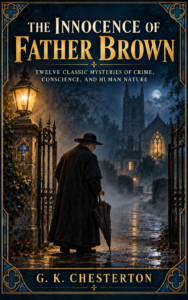
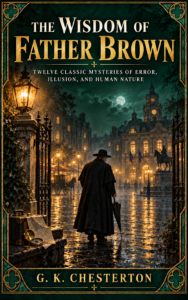
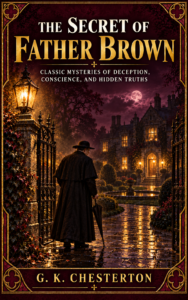
The Father Brown Collections: Where to Begin
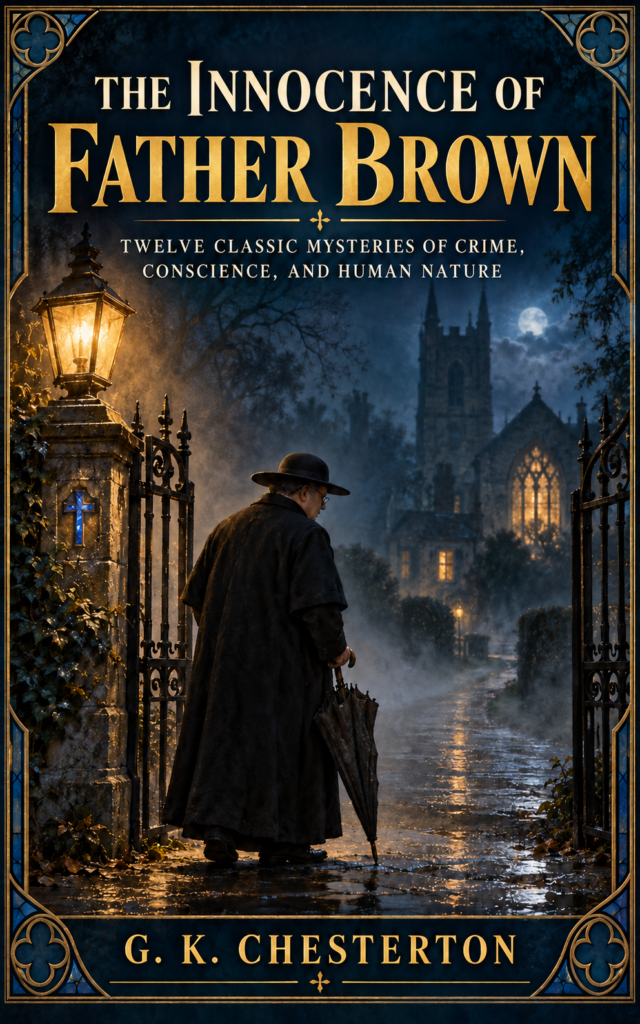
The best place to begin is The Innocence of Father Brown. Despite the title, it is not naïve. The word “innocence” points to Father Brown’s humility and clarity of vision: he is not dazzled by wealth, fashion, reputation, or appearances. The collection introduces the essential pattern of the stories—strange crimes, carefully hidden truths, and a detective whose gentleness should never be mistaken for simplicity.
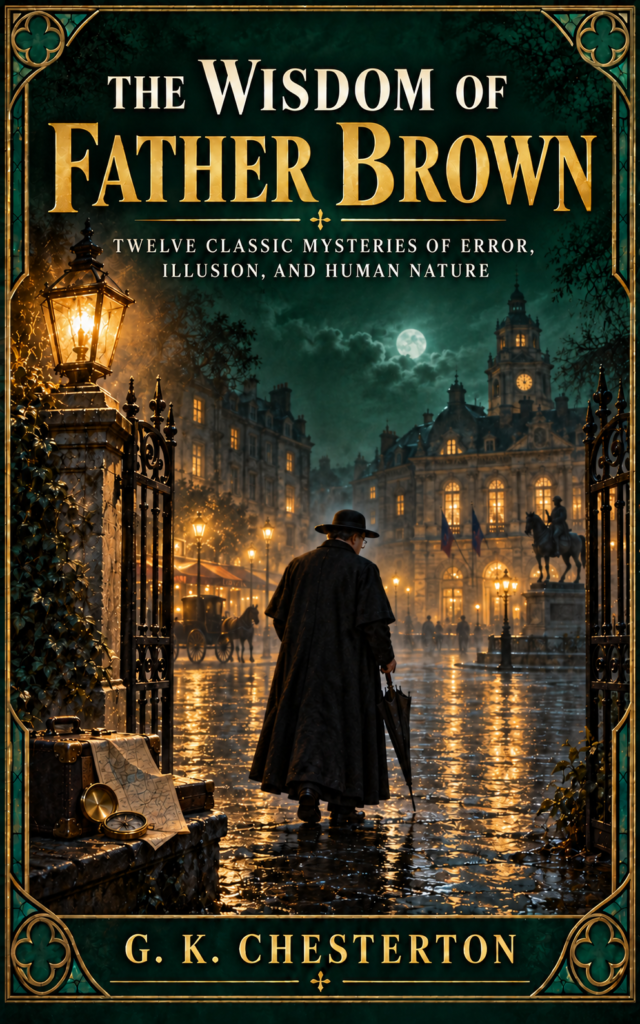
The Wisdom of Father Brown widens the range. The mysteries become more varied in setting and atmosphere, and Father Brown’s insight into error, illusion, and pride becomes even more pronounced. These are stories in which social status, money, performance, and public image can become disguises as deceptive as any mask.
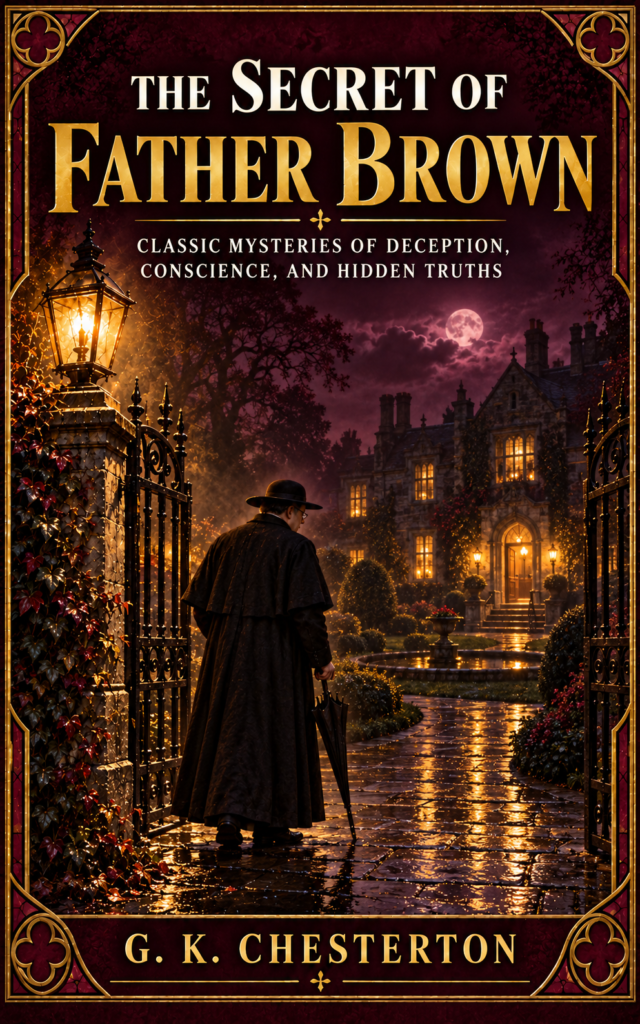
The Secret of Father Brown takes readers further into the moral and psychological heart of the character. The “secret” is not a special device or a detective’s trick. It is Father Brown’s willingness to look honestly at the darkness people are capable of—and to hold that knowledge without becoming cynical.
Together, the collections reveal why Father Brown has lasted. Chesterton created a detective who is memorable not because he is invulnerable, but because he is humane. The stories offer cleverness and surprise, yet they also ask readers to consider mercy, repentance, and the danger of judging others too quickly.
The Man Who Was Thursday: When a Thriller Becomes a Nightmare
If Father Brown represents Chesterton at his most quietly observant, The Man Who Was Thursday reveals him at his wildest.
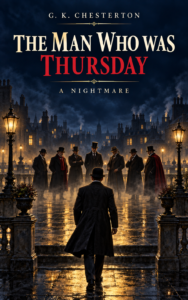
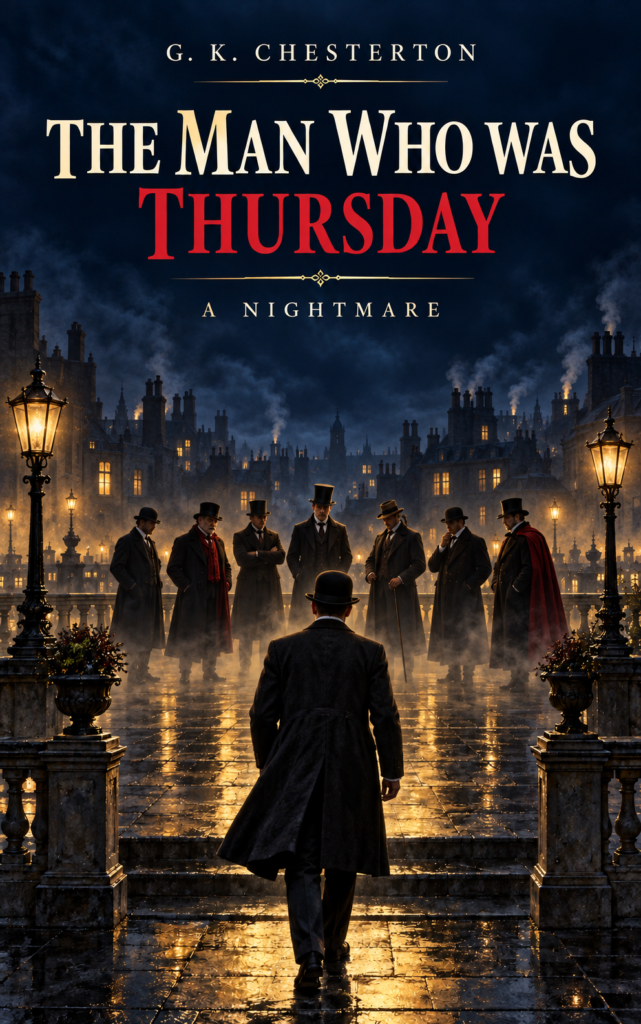
First published in 1908, the novel begins as a political thriller. Gabriel Syme, a poet who is also an undercover policeman, infiltrates a secret council of anarchists. Its members are known only by the days of the week. Syme becomes “Thursday” and finds himself drawn into a world of disguises, pursuits, threats, and increasingly impossible reversals.
That premise alone would make for an entertaining adventure. Chesterton, however, has other plans.
As the novel unfolds, every certainty begins to collapse. Characters reveal unexpected identities. The hunters may be hunted. The apparent enemies may not be what they seem. The city itself becomes dreamlike: London streets, parks, rooftops, and public squares turn into stages for a chase that is both exhilarating and deeply unnerving.
The result is difficult to classify. The Man Who Was Thursday is part spy novel, part comic adventure, part philosophical fable, and part nightmare. Its central question is not simply whether Syme will survive. It is whether the world has any intelligible order at all.
That is why the novel continues to fascinate readers who might not normally seek out Edwardian fiction. It moves with the energy of a thriller, but its unease is recognisably modern. It understands the fear that reality may be more chaotic than it appears—and then asks whether chaos itself might conceal an order too large for human beings to grasp.
Readers approaching Chesterton through Father Brown may be surprised by Thursday. There is humour in both, and both depend on reversals, but the mood is very different. Father Brown restores proportion. Thursday deliberately destroys it before attempting to rebuild it. One shows how a person’s secret may be uncovered; the other makes the whole world feel like a secret.
Chesterton’s Craft: Surprise With a Purpose
Chesterton’s plots are inventive, but plot alone does not explain his appeal. Many writers can produce a twist. Chesterton makes the twist feel like a change in perspective.
He often begins with a confident assumption and then turns it upside down. The sensible character is foolish. The fool is perceptive. The criminal looks innocent. The respectable figure is corrupt. The frightening event has a rational cause—but that cause reveals something more disturbing about human behaviour. Or, in The Man Who Was Thursday, the rational explanation may be stranger than the mystery it replaces.
This technique gives his writing a remarkable forward pull. Readers continue not only because they want an answer, but because they sense that their original understanding is incomplete.
His sentences work in a similar way. Chesterton’s prose is full of contrasts: large and small, serious and comic, sacred and ridiculous, logical and absurd. A pompous claim may be punctured by a practical observation. A joke may open into a genuine philosophical question. He does not separate ideas from entertainment. His ideas arrive as scenes, arguments, images, and surprises.
For readers new to him, this is worth remembering: Chesterton is not always a writer to rush. His stories move quickly, but his sentences often repay a moment’s pause. The apparent detour may contain the key idea. The comic aside may reveal the theme. A line that sounds deliberately excessive may be making the most precise point on the page.

A Legacy That Reaches Beyond Mystery
Chesterton’s influence is larger than the Father Brown stories, though those stories remain his most accessible and enduring contribution to popular fiction.
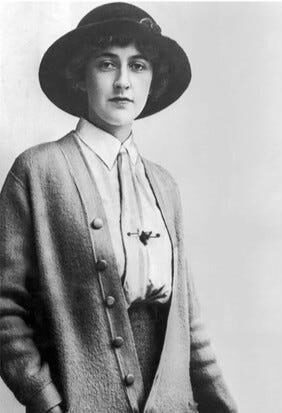
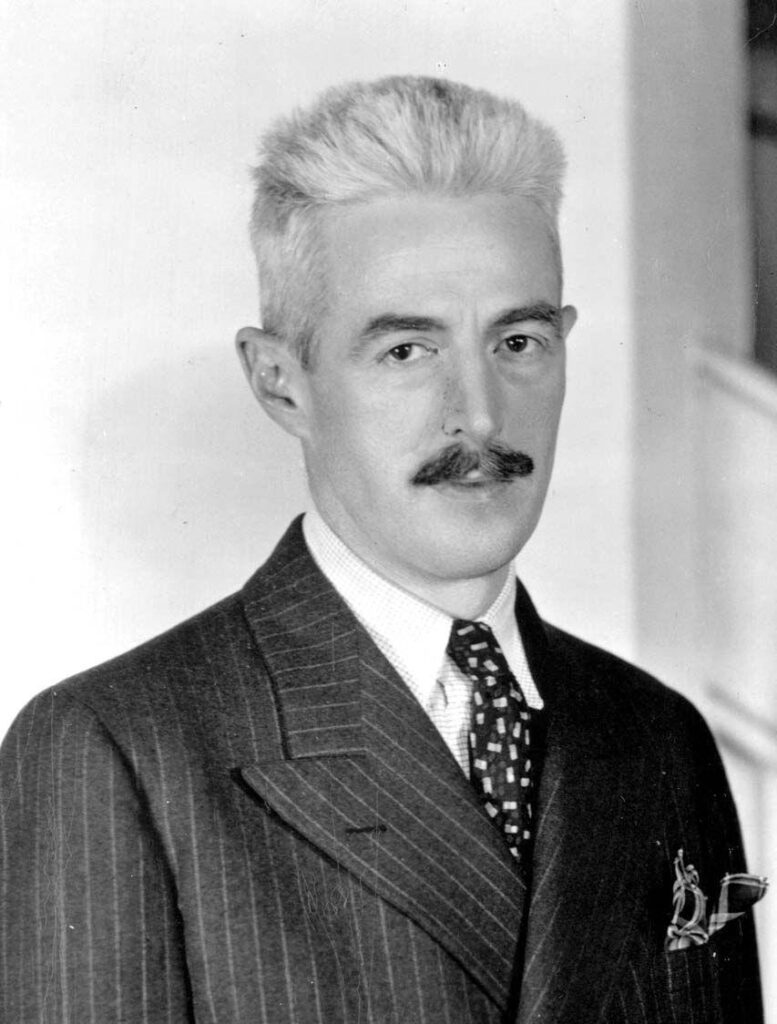
He helped shape the development of the modern detective story by showing that crime fiction could be intellectually playful without becoming emotionally empty. The Father Brown tales influenced later writers who understood that detection could involve psychology, morality, atmosphere, and character—not merely forensic procedure. Chesterton was also the first president of the Detection Club, the celebrated association of British mystery writers that included figures such as Agatha Christie and Dorothy L. Sayers.
Beyond detective fiction, The Man Who Was Thursday has left its mark on generations of writers drawn to dreamlike thrillers, metaphysical mysteries, and stories in which conspiracy becomes a question about reality itself. Its influence can be felt wherever detective fiction crosses into the surreal, the philosophical, or the nightmarish.
Chesterton also remains an important essayist and critic. Even readers who disagree with him can admire the force of his attention. He was capable of writing about a nursery rhyme, a newspaper headline, a political slogan, or a popular novel as though it mattered. For him, the imagination was not an escape from reality. It was a means of seeing reality more clearly.
Reading Chesterton Critically
A serious appreciation of Chesterton should also acknowledge the parts of his legacy that are difficult and harmful. Some of his public writing contains anti-Semitic stereotypes and rhetoric. These passages are not harmless eccentricities of style, and they should not be excused or ignored because of the brilliance of his fiction or essays elsewhere.
Chesterton’s work is best read with both openness and judgement: open to its humour, imagination, moral seriousness, and literary power; alert to the prejudices and assumptions that deserve criticism. Reading a classic critically does not mean refusing its achievements. It means recognising that great gifts of language and imagination do not make a writer right about everything.
That complexity is part of why Chesterton remains worth discussing. He was a writer of extraordinary vitality and contradiction—a defender of wonder who could be narrow in some of his social attitudes; a master of generosity in fiction whose public language could fail that same standard. Readers need not choose between admiration and honesty. They can bring both.

Where to Begin
For readers who want classic mystery stories with clever solutions and an unusual detective at their centre, begin with The Innocence of Father Brown. It is the clearest introduction to Father Brown’s world and to Chesterton’s special mixture of puzzle, humour, and moral insight.
For readers who enjoy crime fiction but want something stranger and more psychologically adventurous, continue with The Wisdom of Father Brown and The Secret of Father Brown. These collections show how far Chesterton could stretch the detective form while keeping it entertaining.
For readers drawn to suspense, secret societies, philosophical thrillers, or unsettling dream logic, begin with The Man Who Was Thursday. It is one of the most distinctive adventure novels of its period—and one of the hardest to forget.
Whichever path you choose, expect to be surprised. Chesterton’s great subject is the world we think we know. His great talent is making us see that it is deeper, stranger, funnier, and more morally demanding than we had imagined.
That is why his best work endures. It does not ask readers merely to solve a mystery. It asks them to notice that they are already living inside one.
Why did Mark Twain not like James Fenimore Cooper?

What Classic Horror Was Really Trying to Tell Us

Whodunit Better

Have the Jane Austen Movies Replaced the Books?

Classic Literature Quiz (Part 1): How Well Do You Know the Classics?

Why I Hate Shakespeare

100 Editions, Countless Discoveries

Why Jane Austen Remains So Popular

Jane Austen vs the Brontë Sisters
When Novels Were Released Like a TV Series