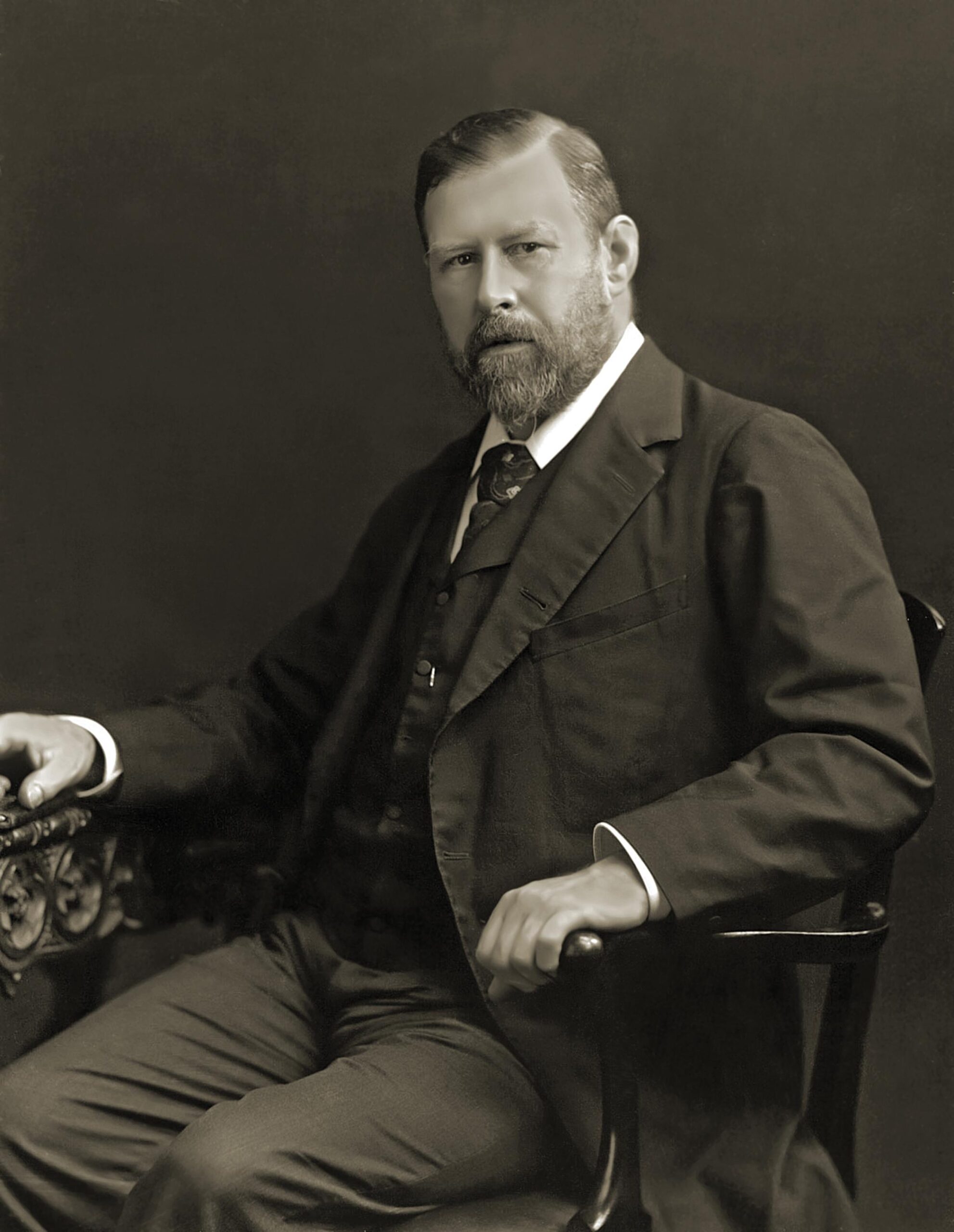









The Man Behind Dracula:
Bram Stoker’s Unexpected Story
Few fictional characters are more recognizable than Dracula.
More than a century after his first appearance, the mysterious Count from Transylvania remains one of the most famous figures in all of literature. He has appeared in countless films, television series, novels, comic books, and stage productions. His influence can be found everywhere from Gothic horror to modern vampire fiction.
Yet while millions of people know Dracula, far fewer know the story of the man who created him.
Unlike many famous authors, Bram Stoker was not a literary celebrity. He was not known primarily as a novelist during most of his life. He did not achieve widespread fame from his books, nor did he live to see the extraordinary cultural impact that Dracula would eventually have.
Instead, much of his life was spent working behind the scenes in the theatrical world of Victorian London.
His path to literary immortality was anything but predictable.
The story of Bram Stoker is filled with surprising twists, remarkable friendships, artistic ambition, and years of careful research. Understanding his life reveals not only how Dracula came into existence, but also why the novel continues to captivate readers more than a century later.
The Sickly Child Who Defied Expectations
Abraham “Bram” Stoker was born in Dublin, Ireland, in 1847.
His early years were marked by a challenge that would have discouraged many people.
As a child, Stoker suffered from a mysterious illness that left him largely confined to bed for much of his youth. Doctors struggled to explain the condition, and for years it appeared that he might never enjoy a normal, active life.
During this period, stories became his companions.
Family members entertained him with tales, folklore, legends, and imaginative adventures. Books provided an escape from the limitations imposed by his illness.
Later in life, Stoker recovered fully and became remarkably athletic. He attended Trinity College Dublin, where he excelled academically and participated in sports.
The transformation was extraordinary.
The boy who had once spent years confined indoors became a successful student and accomplished young man.
Yet those early years left a lasting impression.
Many scholars believe that his childhood experiences contributed to his fascination with vulnerability, fear, resilience, and the unknown—qualities that would later play important roles in his fiction.
A Career Few Readers Expect
Most people assume that Bram Stoker spent his life writing novels.
The reality is far more surprising.
After graduating from Trinity College, Stoker worked as a civil servant in Dublin while pursuing his interests in journalism and theatre criticism.
He developed a reputation as a thoughtful and perceptive reviewer.
One review, in particular, would change the course of his life.
In 1876, Stoker wrote a glowing assessment of a performance by the celebrated actor Henry Irving.
Unlike many public figures, Irving took the time to thank him personally.
The two men met.
A friendship quickly developed.
That friendship would ultimately shape the rest of Stoker’s career.
The Actor Who Changed Everything
Henry Irving was one of the most famous actors in Britain.
Charismatic, ambitious, and immensely talented, he dominated the Victorian stage.
Stoker admired him deeply.
Before long, Irving offered him a position that would transform his life.
Stoker became Irving’s business manager and moved to London to help oversee the Lyceum Theatre.
The job was demanding.
For nearly three decades, Stoker devoted enormous energy to managing productions, organizing tours, handling business affairs, and supporting Irving’s career.
The position brought him into contact with some of the most influential cultural figures of the age.
Writers, actors, politicians, artists, and intellectuals passed through the Lyceum’s doors.
The theatre became a gateway into the heart of Victorian cultural life.
Although the work consumed much of his time, it also provided valuable experiences that would later influence his fiction.
Theatrical storytelling, dramatic atmosphere, memorable characters, and suspenseful pacing all became important elements of his writing.
Many readers can still see traces of the theatre in Dracula, a novel filled with dramatic entrances, vivid scenes, and unforgettable moments of tension.
Related Novels
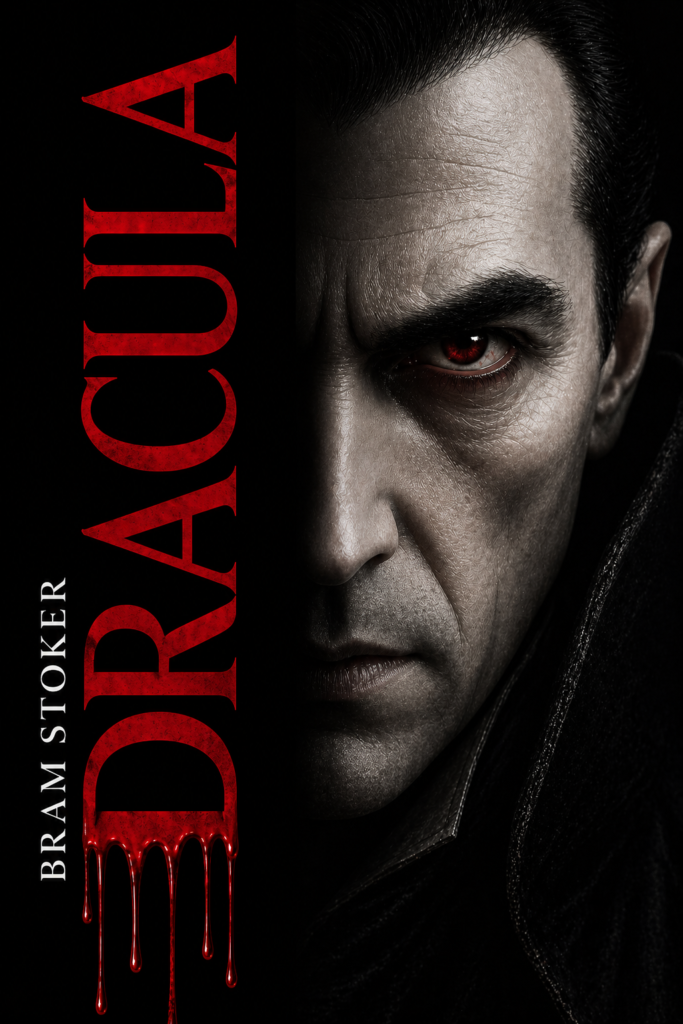
Dracula
The Island of Doctor Moreau
Jekyll and Hyde
The Essential H. P. Lovecraft Collection
The King in Yellow
The Invisible Man
Frankenstein
The Picture of Dorian Grey
Victorian London and the Age of Anxiety
The world in which Bram Stoker lived was one of extraordinary change.
Scientific discoveries were transforming society.
Cities were expanding rapidly.
New technologies appeared with astonishing speed.
Traditional beliefs often seemed under pressure from modern ideas.
At the same time, Victorian society harbored deep anxieties.
People worried about crime, disease, immigration, social change, and challenges to established values.
These concerns found their way into literature.
Writers increasingly explored themes of fear, uncertainty, and the unknown.
Stoker absorbed these influences throughout his life.
He was fascinated by folklore, history, travel, science, and supernatural legends.
Over time, these interests would combine in ways he could scarcely have imagined.
The Long Road to Dracula
Contrary to popular belief, Dracula was not written quickly.
The novel emerged from years of research and preparation.
Stoker read extensively about Eastern Europe, folklore, vampire legends, history, and local traditions. He filled notebooks with observations, ideas, names, and historical details.
Among the figures who influenced his thinking was Vlad III of Wallachia, often known as Vlad the Impaler. Although the connection between the historical ruler and Stoker’s fictional Count is often exaggerated, the name “Dracula” itself helped inspire the character.
More important than any single historical source was Stoker’s ability to combine numerous influences into something entirely new.
Vampire legends already existed.
Gothic fiction already existed.
Stories of supernatural terror already existed.
What Stoker created was something larger than the sum of its parts.
He created Dracula.
When the novel was finally published in 1897, few people could have predicted its future significance.
It was successful and generally well received, but it did not immediately dominate popular culture.
That transformation would come later.
Why Dracula Was Different
Readers today sometimes forget how unusual Dracula was when it first appeared.
Victorian audiences were familiar with Gothic castles, supernatural tales, and mysterious villains. Yet Stoker combined these familiar elements in a way that felt startlingly modern.
Rather than telling the story through a traditional narrator, he assembled the novel through letters, diary entries, newspaper clippings, telegrams, and personal accounts.
The result was remarkably effective.
Readers experience events as the characters experience them. Information arrives gradually. Mysteries deepen before they are explained. Tension builds as separate pieces of the puzzle begin to connect.
This structure gives Dracula much of its enduring power.
Even modern readers who know the broad outline of the story often find themselves drawn into its atmosphere and suspense.
More importantly, Stoker transformed the vampire from a creature of folklore into a fully realized literary villain.
Count Dracula is intelligent.
He is patient.
He is calculating.
He is capable of planning years in advance.
His threat extends far beyond physical danger.
He represents corruption, manipulation, and the gradual spread of darkness into ordinary lives.
The Count remains compelling because he is both frightening and fascinating.
That combination helped establish the template for countless villains who would follow.
Dracula Is About More Than a Vampire
One reason Dracula has endured is that the novel’s true themes extend far beyond supernatural horror.
At first glance, the story appears simple.
An ancient vampire threatens innocent people, and a group of determined individuals attempts to stop him.
Beneath that premise, however, Stoker explores deeper ideas about courage, loyalty, sacrifice, and the struggle between good and evil.
Unlike many modern horror stories, Dracula is not primarily about helpless victims.
It is about ordinary people finding extraordinary strength.
Jonathan Harker survives imprisonment in Dracula’s castle.
Mina Harker demonstrates intelligence, resilience, and remarkable courage.
Dr. Seward, Arthur Holmwood, Quincey Morris, and Professor Van Helsing each risk their safety to confront a terrifying threat.
Their success depends not on supernatural powers but on determination, friendship, and mutual trust.
This focus on heroism gives the novel much of its emotional power.
Readers do not simply fear Dracula.
They care about the people fighting against him.
That investment transforms the story from a simple tale of horror into a powerful narrative about human character.
Related Authors
Courage, Friendship, and Sacrifice
Perhaps the most overlooked aspect of Dracula is its optimism.
The novel contains darkness, fear, and tragedy, but it also celebrates some of humanity’s best qualities.
The characters repeatedly place the welfare of others ahead of their own interests.
They demonstrate loyalty under pressure.
They refuse to surrender even when the odds seem overwhelming.
Again and again, Stoker emphasizes the importance of friendship and cooperation.
No single individual defeats Dracula.
Victory becomes possible only because a group of people unite behind a common purpose.
This message helps explain why the novel continues to resonate.
The conflict may involve vampires, but the values at its center remain deeply human.
Readers recognize the courage required to confront fear.
They admire the willingness to sacrifice for others.
They understand the importance of standing together against threats that appear impossible to overcome.
These themes feel just as meaningful today as they did in 1897.
The Legacy Bram Stoker Never Saw
One of the most surprising aspects of Bram Stoker’s story is that he never fully witnessed Dracula’s transformation into a cultural phenomenon.
When Stoker died in 1912, Dracula was respected and reasonably successful, but it had not yet become the global icon we know today.
The explosion came later.
Stage adaptations expanded the story’s audience.
Then came films.
Actors such as Bela Lugosi and Christopher Lee introduced Dracula to entirely new generations of viewers.
The Count became one of the most recognizable fictional characters ever created.
Books, films, television series, comic books, and video games continued to reinterpret the character throughout the twentieth and twenty-first centuries.
Today, countless vampire stories owe something to Bram Stoker’s imagination.
In many ways, Dracula achieved the immortality that his creator never could.
Yet there is a certain irony in this success.
The vampire became famous around the world.
The man who created him often remained in the shadows.
That is one reason Stoker’s life remains so fascinating.
Behind one of literature’s most famous monsters stood a hardworking theatre manager, researcher, husband, father, and writer who spent years carefully crafting the story that would define his legacy.
Why Readers Still Return to Dracula
More than a century after its publication, Dracula continues to attract new readers.
Part of the appeal is undoubtedly its influence.
People want to experience the novel that helped shape modern horror.
Others are drawn by the Gothic atmosphere, the suspense, or the legendary villain.
Yet influence alone does not explain the novel’s longevity.
Many once-popular books fade with time.
Dracula endures because it remains an excellent story.
The pacing still works.
The mystery remains engaging.
The characters remain memorable.
The themes remain relevant.
Most importantly, the novel continues to offer something many readers seek: the opportunity to watch ordinary people confront extraordinary evil.
That struggle remains timeless.
Whether the threat takes the form of a vampire, a personal challenge, or a broader social problem, the story’s message remains powerful.
Courage matters.
Friendship matters.
Hope matters.
These ideas resonate across generations.
The Man Behind the Legend
Today, Bram Stoker’s name is inseparable from Dracula.
Yet his life was far richer and more surprising than many readers realize.
He began as a sickly child whose future seemed uncertain.
He became a scholar, journalist, theatre manager, and novelist.
He spent decades working behind the scenes while quietly developing the story that would ultimately secure his place in literary history.
He never lived to see the full impact of his creation.
Yet few authors have left a greater mark on popular culture.
Understanding Bram Stoker helps us appreciate Dracula more fully.
The novel did not emerge from nowhere.
It was shaped by a lifetime of experiences, interests, observations, and careful research. It reflects the anxieties of Victorian society, the influence of the theatrical world, and the imagination of a writer fascinated by both history and human nature.
Readers may first approach Dracula expecting a famous vampire story.
What they discover is a gripping Gothic adventure filled with suspense, courage, sacrifice, and unforgettable characters.
And behind that story stands Bram Stoker—a man whose unexpected journey gave the world one of literature’s most enduring legends.
Articles
Have the Jane Austen Movies Replaced the Books?

What Classic Horror Was Really Trying to Tell Us
Whodunit Better
Why Jane Austen Remains So Popular

100 Editions, Countless Discoveries
Why did Mark Twain not like James Fenimore Cooper?

Jane Austen vs the Brontë Sisters
When Novels Were Released Like a TV Series

Why I Hate Shakespeare

Classic Literature Quiz (Part 1): How Well Do You Know the Classics?