
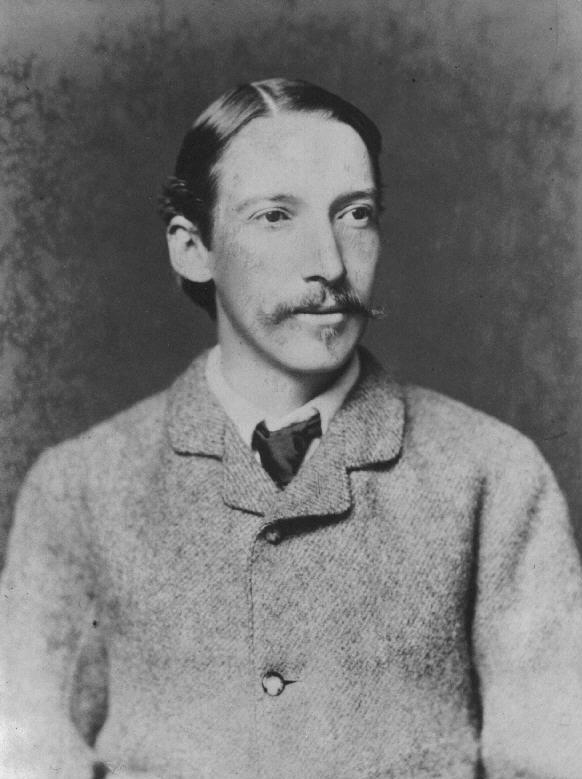









Robert Louis Stevenson:
The Writer with Two Literary Identities
Few authors have created literary worlds as different as Robert Louis Stevenson.
In one, readers set sail in search of buried treasure, encounter mutinous pirates, and meet Long John Silver—one of the most charismatic rogues in all of literature.
In the other, they walk the fog-shrouded streets of Victorian London beside Edward Hyde, a figure so disturbing that his very name has become synonymous with humanity’s darker side.
Adventure and horror.
Treasure and terror.
Long John Silver and Mr Hyde.
At first glance, these worlds seem to have little in common. Yet both emerged from the imagination of the same man.
In many ways, Stevenson possessed two literary identities of his own. One was drawn to adventure, exploration, and the excitement of the unknown. The other was fascinated by morality, temptation, and the hidden darkness that exists within human nature.
Together, these two sides of his imagination helped create some of the most enduring stories ever written.
The remarkable thing is that Stevenson’s life reflected many of these same contrasts. He was often ill but endlessly adventurous. He struggled with poor health yet traveled across the world. He wrote stories beloved by generations of young readers while also producing some of the most psychologically complex fiction of the Victorian era.
To understand Robert Louis Stevenson, it helps to understand both of his literary identities—and how they combined to make him one of the most versatile and fascinating writers of the nineteenth century.
Related Novels
A Sickly Child with an Extraordinary Imagination
Robert Louis Stevenson was born in Edinburgh, Scotland, in 1850.
From an early age, illness became a constant companion.
Throughout much of his childhood, Stevenson suffered from serious respiratory problems that frequently confined him to bed. Doctors of the era struggled to understand his condition, and periods of sickness often interrupted his education and daily life.
For many children, such limitations would have been discouraging.
For Stevenson, they became an opportunity.
Unable to participate fully in the physical world around him, he developed an extraordinary imagination. Stories, books, and daydreams filled the hours that illness left empty.
The tales he heard during childhood would leave a lasting impression.
Adventure stories, folklore, legends, and tales of distant lands all helped shape the young writer’s imagination.
Years later, these influences would reappear in his fiction.
The adventurous spirit that drove Treasure Island and the fascination with mystery that shaped Dr Jekyll and Mr Hyde can both be traced back to the imagination of a boy who spent countless hours exploring worlds that existed only in stories.
Rejecting the Life Planned for Him
Stevenson came from a respectable and successful family.
His father hoped he would follow a practical career.
Initially, Stevenson studied engineering.
The choice made sense. His family had a long history of designing and building lighthouses, an important profession in nineteenth-century Scotland.
There was only one problem.
Stevenson hated it.
Although intelligent and capable, he felt little passion for engineering. Eventually, he switched to law and qualified as an advocate.
Yet even this achievement failed to satisfy him.
His true interest was writing.
The decision to pursue a literary career disappointed some members of his family and carried significant risks. Success was far from guaranteed.
Nevertheless, Stevenson chose to follow his own path.
The decision would shape the rest of his life.
Adventure Beyond the Page
Although poor health remained a challenge, Stevenson refused to let it define him.
Throughout adulthood, he traveled extensively in search of climates that might improve his condition.
His journeys took him across Europe, North America, and eventually the South Pacific.
Travel broadened his perspective and provided endless inspiration.
Unlike many writers who lived relatively settled lives, Stevenson experienced a remarkable variety of places, cultures, and people.
The sense of movement and discovery found throughout his adventure stories reflects these experiences.
He understood the excitement of setting out into the unknown because he had done so himself.
This adventurous spirit would later become one of the defining features of Treasure Island.
The Birth of Treasure Island
Of all Stevenson’s works, Treasure Island may be the one most responsible for shaping how modern readers imagine pirates.
Before Stevenson, pirate stories existed.
After Stevenson, the image of the pirate became almost impossible to separate from Long John Silver.
The novel began in a surprisingly simple way.
While entertaining his stepson, Stevenson sketched a treasure map.
The map sparked his imagination.
Soon, characters, adventures, and conflicts began to emerge.
What followed became one of the most beloved adventure stories ever written.
Readers joined young Jim Hawkins as he embarked on a dangerous voyage in search of buried treasure. Along the way, they encountered mutiny, deception, courage, and one of literature’s most memorable antiheroes.
Long John Silver remains fascinating because he resists easy classification.
He is charming and threatening.
Loyal and treacherous.
Friendly and dangerous.
Readers often find themselves liking him even when they know they should not trust him.
That complexity helps explain why the character has endured for generations.
More broadly, Treasure Island captures something universal: the excitement of adventure.
It speaks to the desire to explore, to discover, and to step beyond the boundaries of ordinary life.
The novel’s influence extends far beyond literature.
Much of what modern audiences associate with pirates—treasure maps, hidden gold, tropical islands, and colorful rogues—owes a debt to Stevenson’s imagination.
The Dream That Created Mr Hyde
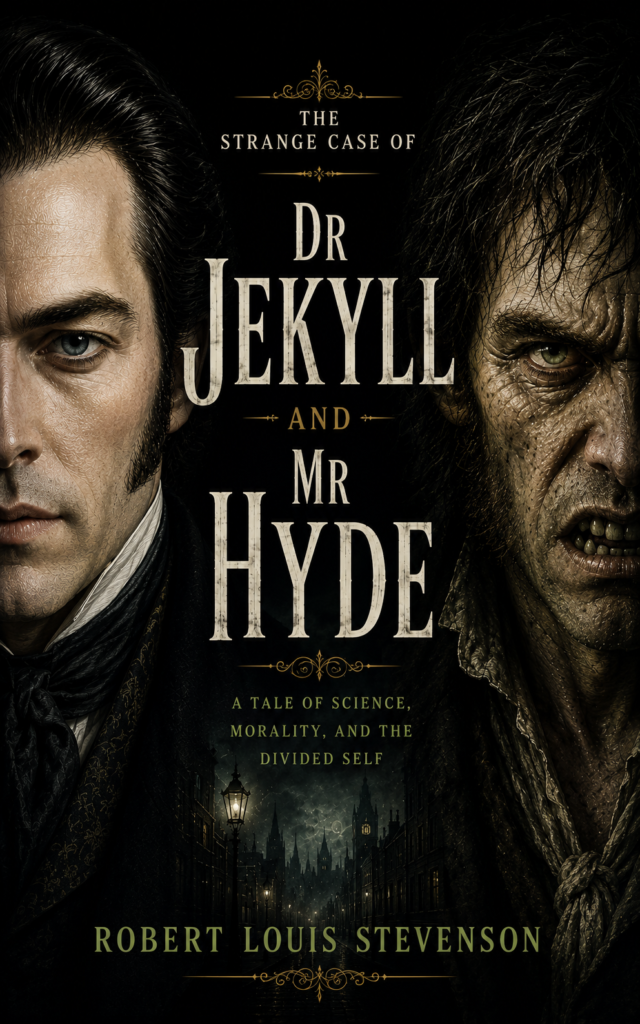
If Treasure Island represents one side of Stevenson’s literary personality, The Strange Case of Dr Jekyll and Mr Hyde represents the other.
The story’s origin has become almost as famous as the novel itself.
According to family accounts, Stevenson conceived key elements of the story during a vivid dream.
His wife later recalled hearing him cry out during the night and waking him, only for Stevenson to complain that she had interrupted a particularly fascinating nightmare.
That dream eventually evolved into one of the most influential works of psychological horror ever written.
Published in 1886, Dr Jekyll and Mr Hyde quickly captured the public imagination.
Unlike the swashbuckling adventure of Treasure Island, this novel explored something far darker.
Its central question remains unsettling:
What if the greatest danger does not come from outside us, but from within?
Why Jekyll and Hyde Still Feels Modern
More than a century after its publication, The Strange Case of Dr Jekyll and Mr Hyde remains remarkably relevant.
Part of its appeal lies in its suspense and mystery. Stevenson masterfully builds tension as readers slowly uncover the truth behind the strange relationship between the respected Dr. Jekyll and the sinister Mr. Hyde.
Yet the novel’s lasting power comes from something deeper.
At its heart, Jekyll and Hyde explores a conflict that exists within every human being.
Most people have experienced moments when they felt torn between competing desires, responsibilities, or impulses. The struggle between our better instincts and our darker temptations is universal.
Stevenson transformed that internal conflict into a story.
Rather than treating good and evil as external forces, he located them within the same individual.
The result was revolutionary.
The novel suggested that the line between virtue and vice might be far thinner than people wished to believe.
That idea remains as compelling—and unsettling—today as it was in Victorian London.
The Duality of Human Nature
The concept of duality lies at the center of Stevenson’s most famous horror story.
Dr. Jekyll is respected, intelligent, and successful.
Mr. Hyde is cruel, selfish, and increasingly violent.
Yet they are not opposites in the traditional sense.
They are two aspects of the same person.
This insight gives the novel much of its enduring fascination.
Stevenson understood that human beings are complicated.
People are rarely entirely good or entirely bad. Most individuals contain conflicting desires, strengths, weaknesses, ambitions, and fears.
By separating these elements into two distinct identities, Stevenson created a story that functions as both a Gothic thriller and a profound exploration of psychology.
Long before modern psychology became widely understood, Stevenson was asking questions that continue to resonate.
How well do we truly know ourselves?
Can we escape our flaws?
What happens when temptation is no longer restrained?
These questions help explain why Jekyll and Hyde remains one of the most discussed works of Victorian literature.
Two Literary Identities, One Author
At first glance, Treasure Island and Dr Jekyll and Mr Hyde seem to have little in common.
One is filled with sea voyages, hidden treasure, and adventurous young heroes.
The other explores secrecy, temptation, and the darkness lurking beneath respectable society.
Yet both reveal important aspects of Stevenson’s imagination.
In Treasure Island, he celebrated adventure, courage, discovery, and the thrill of venturing into the unknown.
In Jekyll and Hyde, he examined morality, identity, and the hidden complexities of human nature.
Together, these novels demonstrate an extraordinary range.
Many writers become associated with a single style or genre.
Stevenson succeeded in creating masterpieces in two very different forms of storytelling.
Even more impressively, both books continue to attract readers more than a century later.
Few authors can claim such versatility.
How Adventure and Darkness Connect
The more closely one examines Stevenson’s work, the more apparent it becomes that his two literary identities were not entirely separate.
Adventure and darkness often coexist.
Both involve journeys into the unknown.
In Treasure Island, the unknown lies beyond the horizon.
In Jekyll and Hyde, it lies within the human soul.
Both stories explore risk.
Both involve discovery.
Both place ordinary people in extraordinary circumstances.
Most importantly, both reveal character.
Jim Hawkins discovers what kind of person he can become when faced with danger.
Dr. Jekyll discovers what kind of person he becomes when freed from moral restraint.
Viewed this way, Stevenson’s most famous works are not opposites at all.
They simply explore different kinds of exploration.
One maps the outer world.
The other maps the inner one.
Related Authors

A New Life in the South Pacific
As Stevenson’s health continued to fluctuate, he increasingly sought warmer climates.
His travels eventually led him to the South Pacific, where he settled in Samoa.
There, he found a community that welcomed him.
Far from the literary circles of Britain, Stevenson became deeply involved in local affairs and earned considerable respect among the Samoan people.
He continued writing prolifically while enjoying a degree of freedom and contentment that had often eluded him earlier in life.
Visitors frequently remarked upon his warmth, generosity, and enthusiasm.
The image contrasts sharply with the darkness associated with Jekyll and Hyde.
Yet this contrast serves as another reminder of Stevenson’s complexity.
Like his fiction, his life contained multiple dimensions.
He was a storyteller, traveler, critic, essayist, adventurer, and observer of human nature.
In 1894, at only forty-four years of age, Stevenson died suddenly in Samoa.
His death was widely mourned.
Although his life was relatively short, his literary legacy was already secure.
Why Readers Still Love Stevenson Today
More than a century after his death, Robert Louis Stevenson continues to attract readers of all ages.
Part of this appeal comes from his storytelling ability.
Few writers combine excitement, atmosphere, and memorable characters as effectively as Stevenson.
His books remain highly readable.
The adventures still thrill.
The mysteries still intrigue.
The characters still feel alive.
Yet technical skill alone does not explain his enduring popularity.
Stevenson understood something fundamental about people.
Whether writing about pirates searching for treasure or scientists confronting their darker selves, he explored desires, fears, ambitions, and choices that remain deeply human.
Readers recognize themselves in his stories.
They understand the excitement of adventure.
They understand the pull of temptation.
They understand the struggle to make difficult decisions.
These emotional truths help explain why his works continue to resonate across generations.
The Legacy of Long John Silver and Mr Hyde
Many literary characters achieve popularity for a time before fading into obscurity.
Long John Silver and Mr Hyde have endured.
Silver remains one of literature’s greatest rogues—a villain who is intelligent, charismatic, and impossible to forget.
Mr. Hyde remains one of literature’s most disturbing figures, embodying fears about identity, morality, and self-control.
Together, they represent two of the most influential characters ever created.
Their continued presence in popular culture speaks to Stevenson’s remarkable imagination.
More importantly, they reveal his ability to understand human nature from very different perspectives.
One invites readers to dream of adventure.
The other forces them to confront uncomfortable truths.
Both continue to fascinate.
The Writer with Two Literary Identities
Few authors have left behind a legacy as diverse as Robert Louis Stevenson’s.
He gave readers thrilling adventures and psychological nightmares.
He created unforgettable heroes, villains, rogues, and monsters.
He explored both the excitement of the outer world and the mysteries of the inner one.
In many ways, the title of this article captures the essence of his achievement.
Robert Louis Stevenson truly was a writer with two literary identities.
One side of his imagination sailed in search of treasure.
The other wandered the fog-shrouded streets of Victorian London.
Together, those two identities produced works that continue to entertain, challenge, and inspire readers around the world.
More than a century after his death, Stevenson remains proof that great literature can be both exciting and profound, adventurous and thoughtful, entertaining and meaningful.
Whether readers are drawn to the high seas of Treasure Island or the unsettling mysteries of Dr Jekyll and Mr Hyde, they are ultimately discovering the same thing: the extraordinary imagination of one of literature’s most versatile storytellers.
Articles
Classic Literature Quiz (Part 1): How Well Do You Know the Classics?

Why I Hate Shakespeare

What Classic Horror Was Really Trying to Tell Us

Jane Austen vs the Brontë Sisters
Why did Mark Twain not like James Fenimore Cooper?

Whodunit Better

Why Jane Austen Remains So Popular

Have the Jane Austen Movies Replaced the Books?

100 Editions, Countless Discoveries
When Novels Were Released Like a TV Series