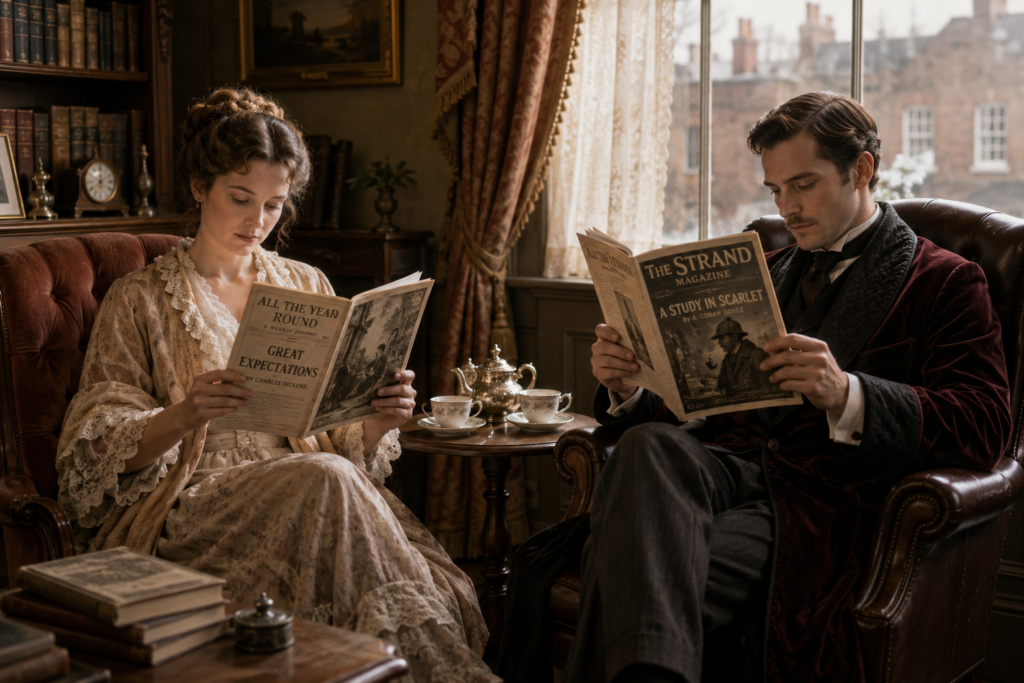

The Mystery Behind Carolyn Keene:
Who Really Created Nancy Drew?
Millions of readers know the name Carolyn Keene.
For nearly a century, that name has appeared on the covers of Nancy Drew mysteries, introducing generations of readers to hidden clues, daring adventures, secret passages, and one of the most beloved detectives in literary history.
Yet there is one remarkable detail many readers never discover.
Carolyn Keene never existed.
The name that became synonymous with Nancy Drew was not the name of a single author but a carefully constructed literary identity shared by multiple writers over many decades. Behind that famous pseudonym stood a fascinating network of publishers, editors, and authors whose combined efforts created one of the most successful mystery series ever written.
The story of Carolyn Keene is, in many ways, a mystery worthy of Nancy Drew herself.
The Birth of Nancy Drew
To understand Carolyn Keene, we must begin with the man who envisioned Nancy Drew long before she appeared on bookstore shelves.
Edward Stratemeyer was already one of the most successful creators of children’s literature in America. Through the Stratemeyer Syndicate, he developed popular series such as The Hardy Boys, Tom Swift, and The Bobbsey Twins. His approach to publishing was revolutionary.
Rather than writing every book himself, Stratemeyer developed concepts, characters, and detailed story outlines. He then hired talented writers to transform those outlines into complete novels.
The system allowed the Syndicate to produce books quickly while maintaining a consistent style and identity across entire series.
By the late 1920s, Stratemeyer recognized an opportunity. Young readers had embraced adventurous male heroes such as Frank and Joe Hardy, but there was room for a female detective who could lead exciting adventures of her own.
Nancy Drew was born from that idea.
She would be intelligent, courageous, independent, and resourceful. Most importantly, she would solve mysteries that adults could not.
The result was a character who would become one of the most enduring figures in children’s literature.
Why Carolyn Keene Was Created
Modern readers often assume that an author’s name belongs to a specific individual.
The publishing world of the early twentieth century sometimes worked differently.
The Stratemeyer Syndicate believed readers were buying a series rather than following individual writers. To maintain consistency, books were published under shared pseudonyms known as “house names.”
The Hardy Boys were attributed to Franklin W. Dixon.
Nancy Drew was attributed to Carolyn Keene.
These names created the illusion of a single author even though multiple writers contributed to the books over time.
The arrangement allowed the Syndicate to continue producing stories without readers needing to learn new author names or worry about changes behind the scenes.
For decades, readers accepted Carolyn Keene as a real person.
Only later would the true story emerge.
The Woman Behind the First Nancy Drew Mysteries
While several writers would eventually contribute to the Nancy Drew series, one individual stands above the rest when discussing the origins of the character.
Her name was Mildred Wirt Benson.
A journalist, writer, and adventurer, Benson was hired to write the first Nancy Drew manuscripts. Working from Stratemeyer Syndicate outlines, she transformed ideas into fully realized stories and gave Nancy the personality that readers would come to love.
The original Nancy Drew was remarkably bold for her era.
She drove automobiles.
She confronted criminals.
She investigated dangerous situations without waiting for others to rescue her.
She was intelligent, capable, and confident.
Many of these qualities reflected Benson herself.
Unlike the conventional expectations often placed upon women during the early twentieth century, Benson pursued an adventurous life. She became one of the first female graduates of the University of Iowa School of Journalism and later worked as a reporter covering major events around the world.
Readers often describe the original Nancy Drew as fearless.
The same description could easily be applied to Benson.
How Much of Nancy Drew Came From Mildred Wirt Benson?
This question has fascinated literary historians for decades.
The Stratemeyer Syndicate created the concept of Nancy Drew and supplied detailed outlines for the stories. In that sense, Nancy was never the creation of a single individual.
Yet concepts alone do not create literary icons.
Characters become memorable because of the way they speak, think, and behave.
Many scholars believe Benson’s greatest contribution was the voice she gave Nancy.
The original Nancy Drew was energetic, determined, and remarkably independent. She was not content to remain on the sidelines while others solved problems. She actively pursued answers and frequently placed herself in challenging situations to uncover the truth.
Readers responded immediately.
The first Nancy Drew books became enormously successful, and much of that success can be traced to the vivid personality Benson brought to the page.
The Original Nancy Drew
Modern readers are sometimes surprised when they encounter the earliest Nancy Drew stories.
The Nancy of the 1930 editions often feels more daring than the character many people remember from later versions.
She is direct.
She is confident.
She occasionally bends rules when necessary.
Most importantly, she possesses an unwavering belief in her ability to solve problems.
As the series evolved over the decades, some stories were revised and updated to reflect changing cultural expectations. Language was modernized, scenes were altered, and certain character traits were softened.
Yet the spirit of the original Nancy remains one of the reasons those early books continue to attract readers today.
Related Novels







More Writers Join the Mystery
Although Mildred Wirt Benson played a crucial role in shaping Nancy Drew, she was not the only writer behind the Carolyn Keene name.
Over the years, numerous authors contributed to the series.
Some wrote only a handful of books.
Others spent years helping expand Nancy’s adventures.
The identity of Carolyn Keene gradually became larger than any single individual. The pseudonym evolved into a collaborative literary project spanning generations of writers.
Few readers knew which author had written a particular story.
That uncertainty was intentional.
The focus remained on Nancy herself.
Why Nancy Drew Endured
Many fictional detectives achieve temporary popularity before fading from public memory.
Nancy Drew proved different.
Part of her appeal comes from the mysteries themselves. Readers enjoy the clues, puzzles, hidden passages, suspicious characters, and dramatic revelations.
But the deeper reason for her success lies in the character.
Nancy represents qualities readers admire.
Curiosity.
Courage.
Intelligence.
Persistence.
She refuses to accept easy answers.
She follows clues wherever they lead.
She remains determined even when others doubt her.
These qualities continue to resonate with readers nearly a century after her first appearance.
The Legacy of Carolyn Keene
The story of Carolyn Keene reminds us that literature is sometimes more complicated than it appears.
The name on the cover may suggest a single author, but behind that name stood an entire publishing enterprise, a collection of talented writers, and a vision that transformed children’s mystery fiction.
Yet among all those contributors, Mildred Wirt Benson remains especially important.
Her writing helped define Nancy Drew’s personality and establish the qualities that made the character unforgettable. Without Benson’s influence, Nancy might never have become the fearless young detective who inspired generations of readers.
Carolyn Keene may never have existed, but the stories published under that name certainly did.
And through those stories, Nancy Drew became far more than a fictional detective. She became a literary icon whose adventures continue to spark curiosity, encourage courage, and remind readers that every mystery can be solved by someone willing to follow the clues.
The greatest mystery surrounding Carolyn Keene was never hidden inside a Nancy Drew novel.
It was hidden on the cover all along.
The Business That Changed Children’s Publishing
The Stratemeyer Syndicate was more than a successful publishing company. In many ways, it was one of the most innovative literary enterprises of the twentieth century.
Long before modern media franchises dominated popular culture, the Syndicate had developed a system that allowed readers to return again and again to the same beloved characters. Young readers who enjoyed one Nancy Drew mystery knew another adventure would eventually follow. The same was true for readers of The Hardy Boys, Tom Swift, and other Syndicate series.
Today, the idea of multiple writers contributing to a shared fictional world feels familiar. Readers accept that major franchises may involve numerous authors, editors, and creative teams. In the early twentieth century, however, this approach was remarkably forward-thinking.
The Syndicate understood something important about storytelling.
Readers often become attached to characters rather than authors.
Nancy Drew was not merely the heroine of a single novel. She became a trusted companion who could guide readers through one adventure after another. The Carolyn Keene name helped create that consistency, allowing generations of readers to feel they were returning to a familiar world each time they opened a new book.
The result was one of the most successful publishing models in literary history.
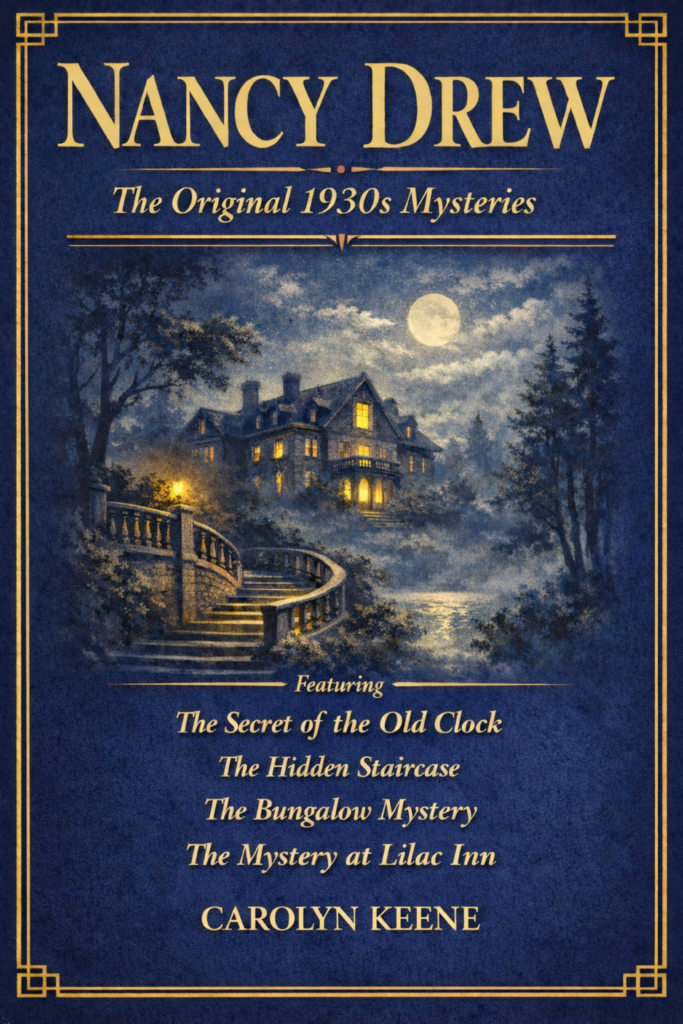
The Four Original Nancy Drew Mysteries
For many readers, the earliest Nancy Drew books remain the most beloved.
Published in 1930, the first four novels introduced the character and established many of the qualities that would define the series for decades to come.
The Secret of the Old Clock
Nancy’s first adventure remains one of her most enduring.
The novel introduces readers to a young detective whose intelligence, determination, and sense of justice immediately set her apart. Faced with a mystery involving a missing inheritance, Nancy refuses to accept easy answers and pursues the truth wherever the clues lead.
It is the perfect introduction to both the character and the world she inhabits.
The Hidden Staircase
The second novel expands the atmosphere of mystery and suspense.
Strange occurrences, unexplained events, and hidden secrets create one of the most memorable settings in the early series. The story captures the sense of excitement and discovery that would become a hallmark of Nancy Drew adventures.
The Bungalow Mystery
By her third outing, Nancy’s adventures had become even more ambitious.
Danger, deception, and unexpected twists place her in situations that require both courage and quick thinking. The novel demonstrates that Nancy is not simply curious—she is willing to take risks in pursuit of the truth.
The Mystery at Lilac Inn
The fourth book further develops Nancy’s skills as an investigator.
Filled with suspicious incidents, hidden motives, and intriguing clues, the story showcases the growing confidence and resourcefulness that helped make Nancy one of literature’s most admired young detectives.
Together, these four novels established the foundation upon which an entire literary legacy would be built.
Related Authors
Why Readers Still Love Nancy Drew
Nearly a century has passed since Nancy Drew first appeared, yet readers continue to discover and enjoy her adventures.
Part of the appeal lies in the mysteries themselves. Hidden clues, secret passages, suspicious characters, and unexpected revelations remain as entertaining today as they were in 1930.
But the deeper reason for Nancy’s enduring popularity is the character herself.
She Takes Action
Nancy does not wait for others to solve problems.
When something seems wrong, she investigates. When questions arise, she searches for answers. Her willingness to act gives readers someone to admire and root for.
She Is Courageous
Nancy often finds herself facing danger, uncertainty, and opposition.
What makes her compelling is not the absence of fear but her determination to continue despite obstacles. She demonstrates a kind of everyday courage that remains inspiring to readers of all ages.
She Believes the Truth Can Be Found
At the heart of every Nancy Drew mystery lies a simple but powerful idea: the truth matters.
No matter how complicated a situation becomes, Nancy refuses to give up. She trusts that careful observation, persistence, and clear thinking will eventually reveal the answer.
That optimism continues to resonate.
She Encourages Curiosity
Perhaps most importantly, Nancy inspires readers to ask questions.
She notices details others overlook. She challenges assumptions. She remains curious about the world around her.
These qualities transform reading into an active experience. Readers do not simply watch Nancy solve mysteries—they solve them alongside her.
A Legacy That Continues
Few readers opening a Nancy Drew mystery realized that Carolyn Keene was not a real person. Yet perhaps that is part of the story’s enduring fascination.
Behind the famous name stood a publishing visionary, a remarkable group of writers, and above all, the extraordinary contribution of Mildred Wirt Benson, whose adventurous spirit helped shape one of literature’s most beloved detectives.
The Carolyn Keene name became larger than any one individual because it came to represent something timeless: the excitement of discovery, the thrill of solving a mystery, and the belief that curiosity and courage can overcome almost any obstacle.
Nearly a century after Nancy Drew first followed a trail of clues, readers continue to join her adventures for the same reason they always have.
There is a mystery to solve.
And Nancy Drew never stops searching for the answer.
Articles

Whodunit Better

Why Jane Austen Remains So Popular

Have the Jane Austen Movies Replaced the Books?

Jane Austen vs the Brontë Sisters

Why I Hate Shakespeare

Classic Literature Quiz (Part 1): How Well Do You Know the Classics?
Why did Mark Twain not like James Fenimore Cooper?

What Classic Horror Was Really Trying to Tell Us