
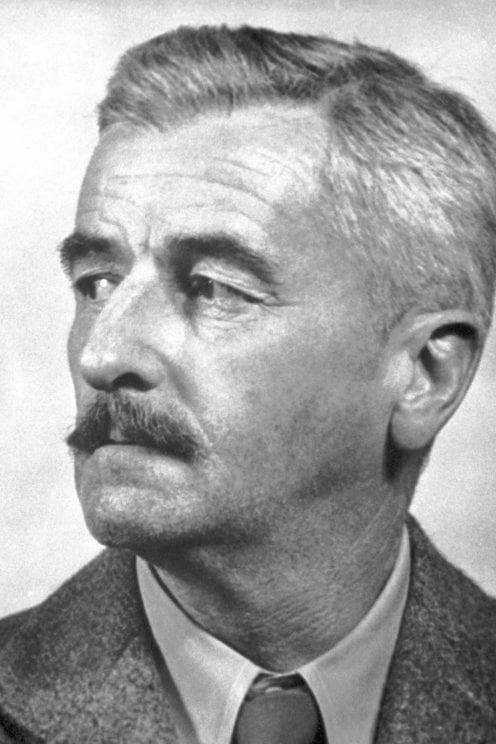
William Faulkner:
Capturing the Soul of the American South
Few writers are as closely associated with a particular place as William Faulkner.
For many readers, Faulkner is the voice of the American South—a writer who captured its landscapes, traditions, families, contradictions, and struggles with extraordinary depth and insight. His novels explore memory, identity, family, loss, social change, and the enduring influence of the past. More than half a century after his death, readers continue to discover his work because the questions he explored remain profoundly relevant.
Faulkner’s reputation can sometimes seem intimidating. He is frequently described as one of America’s greatest novelists, a Nobel Prize winner whose works are studied in universities throughout the world. Yet beneath that reputation lies something surprisingly accessible.
At their heart, Faulkner’s stories are about people.
They are about families struggling to hold themselves together.
People haunted by memory.
Individuals trying to understand who they are and where they belong.
Men and women wrestling with love, regret, responsibility, and change.
These concerns are as familiar today as they were when Faulkner first put pen to paper.
Understanding Faulkner begins with understanding the world that shaped him.
The South That Shaped Faulkner
William Faulkner was born in Mississippi in 1897, and the American South remained the defining influence on his fiction throughout his life.
The South he inherited was still living in the long shadow of the American Civil War. Entire communities were shaped by memories of the conflict, by changing economic realities, and by questions of identity and tradition. The region was caught between past and future, holding tightly to old values while confronting a rapidly changing world.
Faulkner recognised that these tensions created powerful stories.
Rather than writing about grand political events, he focused on ordinary lives affected by extraordinary historical forces. Families struggled to maintain their status. Communities wrestled with change. Individuals attempted to reconcile personal desires with social expectations.
The result was fiction that felt deeply rooted in a specific place while also speaking to universal human experiences.
Readers do not need to know Mississippi to understand Faulkner’s characters.
The emotions they experience are familiar everywhere.
Love.
Pride.
Regret.
Hope.
Fear.
Loss.
The details may belong to the American South, but the emotional truths belong to all of us.
The Past Never Truly Disappears
One of the most powerful ideas running through Faulkner’s work is that the past never truly leaves us.
Most people imagine time as something straightforward.
The past is behind us.
The present is happening now.
The future lies ahead.
Faulkner saw things differently.
For his characters, the past remains alive. Memories continue to influence present decisions. Old wounds shape new relationships. Family histories affect future generations.
In many of his novels, characters find themselves trapped between what has happened and what might still be possible.
This theme resonates because it reflects a reality many readers recognise in their own lives.
Families carry stories from one generation to the next.
Childhood experiences continue to shape adulthood.
Moments of joy and regret remain vivid long after they occur.
Faulkner understood that people rarely leave the past behind entirely.
Instead, they learn to live with it.
This insight gives his work an emotional depth that continues to move readers today.
Families Under Pressure
If there is one subject that appears repeatedly throughout Faulkner’s fiction, it is family.
His novels are filled with parents and children, brothers and sisters, relatives connected by loyalty, expectation, obligation, affection, and conflict.
Faulkner understood that families are often the source of our greatest joys and deepest wounds.
They provide identity and belonging.
They can also create pressure, disappointment, misunderstanding, and heartbreak.
Many of his most memorable characters struggle not only against external challenges but against the expectations and burdens inherited from previous generations.
Through these family stories, Faulkner explores questions that remain universal.
How much do we owe to our family history?
Can we escape the mistakes of previous generations?
What responsibilities do we carry toward those we love?
How do we find our own identity while remaining connected to our roots?
These questions help explain why readers continue to find Faulkner’s work emotionally powerful.
The setting may belong to another era.
The relationships remain recognisable.
Related Novels







Time as a Character
Many great novels tell stories that unfold over time.
Faulkner often did something more unusual.
He made time itself feel like a character.
His novels are frequently concerned with the way people experience time rather than simply the order in which events occur. Memories intrude upon the present. Old experiences shape current decisions. Characters revisit moments that continue to define their lives long after they have passed.
This gives many of Faulkner’s stories a haunting quality.
The past is never completely gone.
It lingers.
It influences.
It shapes.
For Faulkner’s characters, time is rarely a straight line leading neatly from one event to the next. Instead, it resembles the way memory actually works. Certain moments remain vivid. Old regrets resurface unexpectedly. Important experiences continue to affect how people see themselves and others.
Readers often recognise this aspect of Faulkner’s work because it reflects real life.
Most people carry pieces of the past with them.
Faulkner simply explored that reality more honestly and more deeply than many other writers.
Why Readers Find Faulkner Challenging—And Rewarding
Few major authors possess a reputation quite like William Faulkner’s.
Many readers encounter his name long before they encounter his books.
They often hear that his novels are difficult.
Complex.
Demanding.
There is some truth to this.
Faulkner does not always take the easiest path from one idea to the next. He expects readers to pay attention. He trusts them to make connections and discover meaning rather than explaining everything directly.
Yet the challenge is often misunderstood.
The difficulty of Faulkner’s work is not there to exclude readers.
It exists because he was attempting to capture experiences that are often difficult to describe.
Memory.
Confusion.
Grief.
Love.
Regret.
Identity.
Human beings do not always think in neat, orderly patterns.
Faulkner understood this.
As a result, his novels often feel closer to the way people actually experience life.
Readers who give themselves permission to slow down frequently discover something remarkable.
Beneath the reputation lies emotional honesty, unforgettable characters, and some of the most powerful writing in American literature.
The reward is not simply understanding the story.
It is feeling it.
The Sound and the Fury
No discussion of William Faulkner would be complete without mentioning The Sound and the Fury.
Widely regarded as one of the most influential American novels ever written, it remains the book most closely associated with Faulkner’s literary legacy.
At its heart, the novel tells the story of the Compson family, a once-prominent Southern family struggling with decline, disappointment, memory, and loss.
Yet describing the plot only hints at what makes the novel remarkable.
What readers remember is not simply what happens.
They remember the emotions.
The longing for a past that cannot be recovered.
The pain of watching a family fall apart.
The struggle to find meaning in a changing world.
The feeling that time moves relentlessly forward regardless of our wishes.
The novel explores some of the most universal experiences imaginable.
Love.
Family.
Identity.
Regret.
The desire to hold on to what matters.
These themes continue to resonate because they are not limited to one family or one era.
They belong to all of us.
More than ninety years after its publication, The Sound and the Fury remains one of the most moving and unforgettable explorations of family and memory ever written.
Related Authors
Why Faulkner Still Matters
The world has changed dramatically since Faulkner began writing.
The social realities of the American South have evolved.
Technology has transformed everyday life.
Entire generations have come and gone.
Yet readers continue to discover Faulkner.
Why?
Because the questions he explored remain relevant.
People still struggle with family expectations.
They still wrestle with personal identity.
They still carry memories they cannot forget.
They still experience regret, longing, hope, and uncertainty.
They still wonder how the past influences the present.
Faulkner’s settings may belong to a particular region and period, but his emotional concerns remain universal.
This ability to speak across generations is one of the defining qualities of great literature.
The details change.
Human nature does not.
Where to Start with Faulkner
For many readers, William Faulkner can feel intimidating.
The best approach is simply to begin.
Readers interested in family, memory, loss, and the emotional complexities of human relationships will find much to admire in The Sound and the Fury.
Its reputation is considerable, but its enduring appeal comes from something much simpler.
It tells a deeply human story.
A story about people trying to understand themselves, their families, and the world around them.
Like many great works of literature, it rewards patience and reflection.
The experience may not always be easy.
It is often unforgettable.
Conclusion
William Faulkner remains one of the most important voices in American literature because he understood something fundamental about the human experience.
People are shaped by memory.
Families influence who we become.
The past continues to affect the present.
Time changes everything, yet certain emotions remain constant.
Through his vivid portrayal of the American South, Faulkner explored themes that extend far beyond any particular region or era. His stories continue to resonate because they capture experiences that readers everywhere recognise in their own lives.
Whether exploring family relationships, personal identity, the burden of history, or the relentless passage of time, Faulkner created works that challenge, move, and reward readers in equal measure.
More than a chronicler of the American South, he was an explorer of the human heart.
That is why his work continues to endure.
And that is why readers continue to return to it.
Articles

Have the Jane Austen Movies Replaced the Books?

Why did Mark Twain not like James Fenimore Cooper?

Jane Austen vs the Brontë Sisters

Whodunit Better

Why Jane Austen Remains So Popular

When Novels Were Released Like a TV Series

What Classic Horror Was Really Trying to Tell Us

Why I Hate Shakespeare