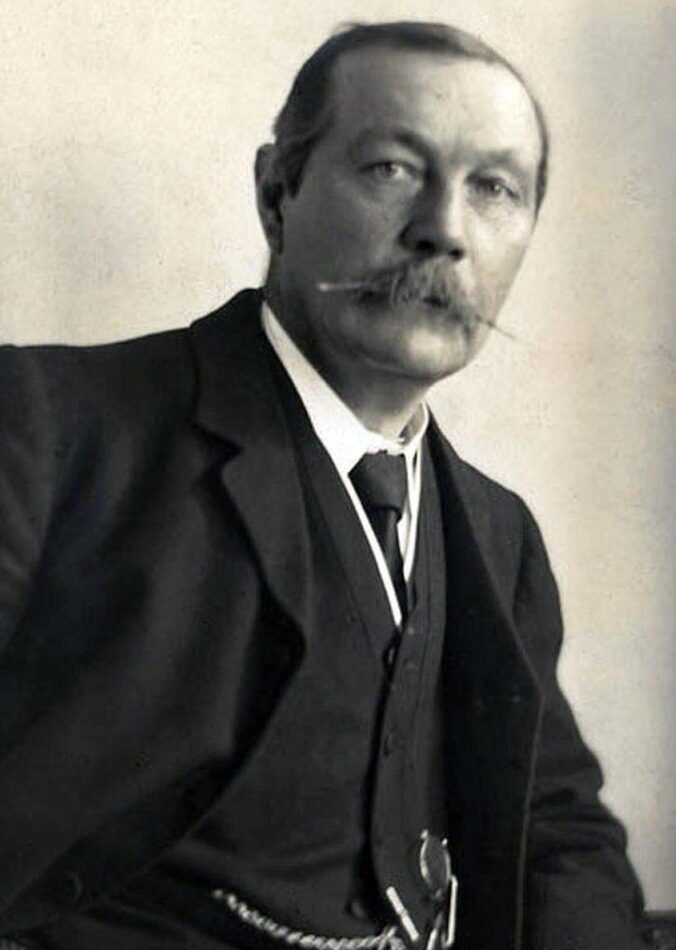
Arthur Conan Doyle:
The Man Who Could Not Escape Sherlock Holmes
Most writers dream of creating a character who will be remembered long after they are gone.
Sir Arthur Conan Doyle achieved that dream. Then he spent much of the rest of his life trying to escape it.
Today, Doyle is remembered around the world as the creator of Sherlock Holmes, the brilliant consulting detective of Baker Street. Holmes is one of the most recognizable fictional characters ever created, a figure whose influence extends far beyond literature into film, television, theatre, and popular culture. More than a century after his first appearance, readers continue to discover his adventures, and new adaptations continue to introduce him to fresh audiences.
Yet the relationship between Arthur Conan Doyle and Sherlock Holmes was far more complicated than many readers realize.
For much of his career, Doyle grew increasingly frustrated by the detective’s popularity. He wanted to be known for historical novels, adventure stories, serious literature, and public service. Instead, readers wanted more Sherlock Holmes. No matter what he wrote, no matter how ambitious his other projects became, the detective remained the work that defined him.
In many ways, Arthur Conan Doyle spent decades battling the shadow of his own greatest creation.
The Young Doctor with Literary Ambitions
Arthur Ignatius Conan Doyle was born in Edinburgh, Scotland, in 1859. Long before Sherlock Holmes entered his imagination, Doyle developed a passion for history, storytelling, and adventure.
After studying medicine at the University of Edinburgh, he attempted to establish himself as a doctor. Like many young physicians, however, he often found himself waiting for patients who never arrived.
To fill the quiet hours, he wrote.
Writing initially served as a practical way to earn additional income, but Doyle quickly realized that he possessed genuine literary talent. He published short stories and experimented with different forms of fiction while continuing his medical career.
Importantly, Doyle never viewed himself primarily as a detective writer.
His literary ambitions were much broader.
He admired historical fiction. He dreamed of writing great adventure stories. He hoped to create works that would earn serious literary respect. Detective fiction was only one of many interests competing for his attention.
Then Sherlock Holmes arrived.
The Detective Who Changed Everything
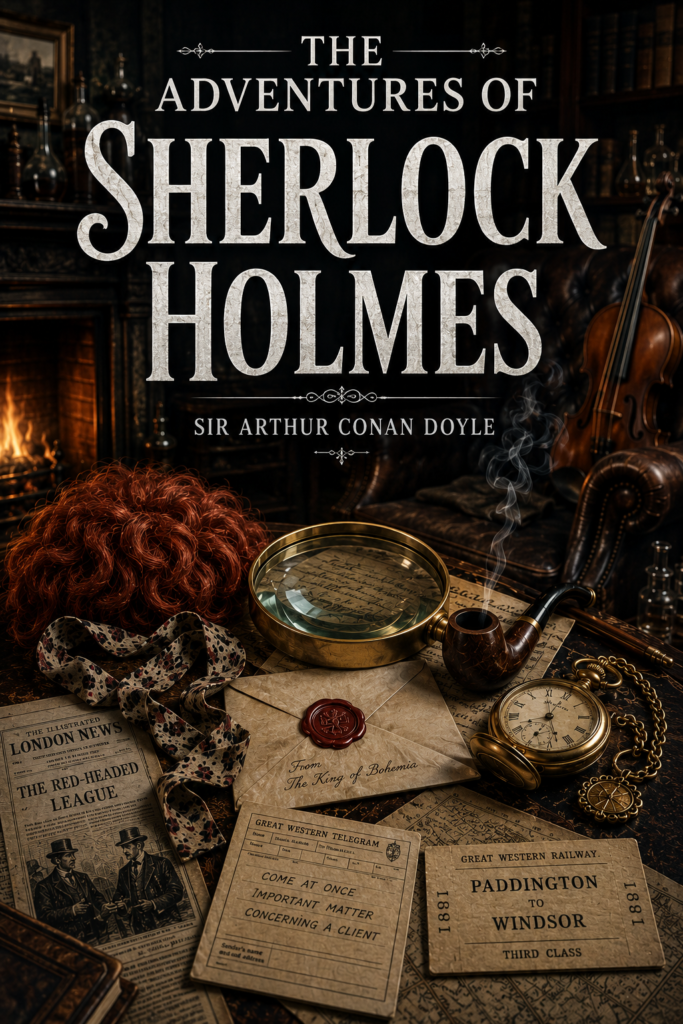
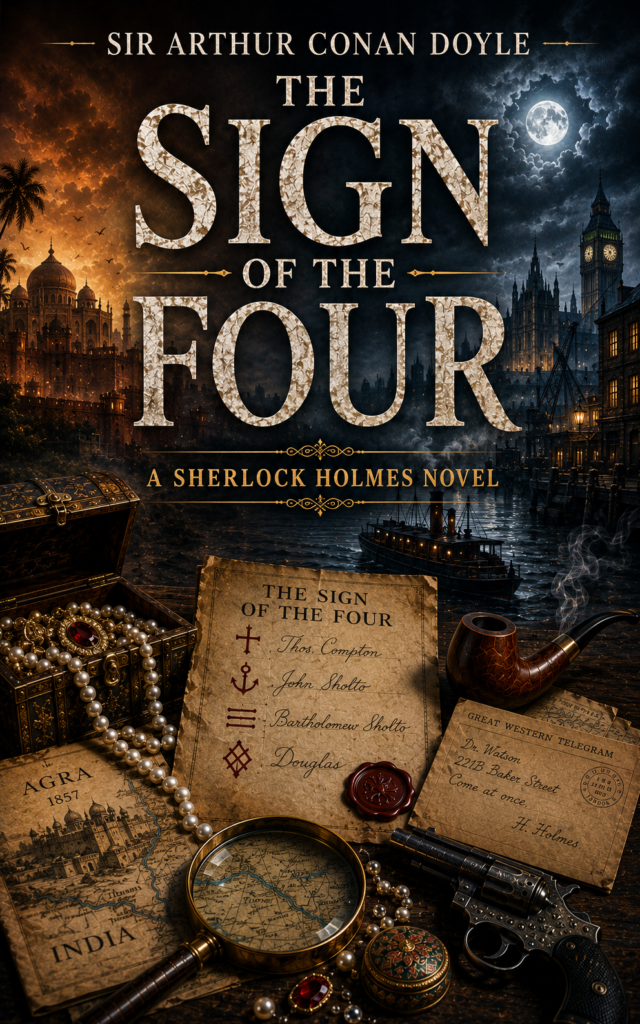
In 1887 Doyle published A Study in Scarlet, introducing Sherlock Holmes and Dr John Watson to readers for the first time.
The novel attracted attention but did not immediately transform Doyle’s career.
That transformation occurred several years later when Holmes began appearing in short stories published in The Strand Magazine. The format proved ideal. Readers could enjoy a complete mystery in a single sitting while gradually becoming familiar with Holmes’s personality, methods, and world.
The response was extraordinary.
Readers eagerly awaited each new adventure. Circulation increased. Holmes became one of the most popular fictional characters in Britain.
For most authors, such success would have been cause for celebration.
For Doyle, however, it created an unexpected problem.
The more successful Holmes became, the more difficult it became for readers to see Doyle as anything else.
A Prison Built from Success
Doyle never disliked Sherlock Holmes himself.
What frustrated him was the way the detective overshadowed everything else he wrote.
While readers enthusiastically consumed Holmes stories, Doyle was investing enormous effort in historical novels that he considered far more important. Works such as Micah Clarke and The White Company reflected years of research and represented the kind of writing he hoped would secure his literary reputation.
Yet whenever he published something new, readers asked the same question:
“When will Sherlock Holmes return?”
Doyle wanted recognition as a versatile author capable of succeeding across multiple genres. Instead, he found himself increasingly identified with a single fictional detective.
The situation became deeply frustrating.
Imagine spending years creating ambitious historical novels only to discover that readers care far more about a detective solving mysteries from an apartment in Baker Street.
That was the reality Doyle faced.
Related Novels
The Books Doyle Wanted You to Read
One of the most interesting aspects of Doyle’s career is the gap between what readers loved and what he valued most highly.
Doyle often regarded his historical fiction as superior to his detective stories.
He admired The White Company so much that he reportedly considered it his finest achievement. Set during the Hundred Years’ War, the novel reflected his fascination with history and adventure. Unlike the Holmes stories, it represented the kind of serious literary work he hoped would define his legacy.
He also wrote:
- Sir Nigel
- Micah Clarke
- The Refugees
- The Exploits of Brigadier Gerard
- The Lost World
Many of these books enjoyed considerable success.
Yet none escaped comparison with Sherlock Holmes.
No matter how ambitious the project, the detective remained the standard against which everything else was measured.
The Day Doyle Killed Sherlock Holmes
Eventually, Doyle reached a decision.
If Sherlock Holmes was preventing him from pursuing other literary interests, perhaps Holmes had to go.
In 1893 he published “The Final Problem.”
The story ends with Holmes and his greatest enemy, Professor Moriarty, locked in a deadly struggle above Switzerland’s Reichenbach Falls. Both appear to plunge to their deaths.
Doyle believed he had solved the problem.
Sherlock Holmes was gone.
He could now devote himself to the kinds of books he truly wanted to write.
What happened next became one of the most famous episodes in literary history.
Public Outrage
Readers reacted with disbelief and anger.
The response shocked even Doyle.
Newspapers covered the story. Letters poured in. Some readers reportedly wore black armbands in mourning. Others condemned Doyle for destroying a character they loved.
Today it may seem strange that the death of a fictional detective could provoke such emotion.
At the time, however, Sherlock Holmes had become something more than a literary character. Readers felt a personal connection to him. They followed his adventures with enthusiasm and regarded him almost as a real person.
The intensity of the reaction revealed something important.
Sherlock Holmes no longer belonged entirely to Arthur Conan Doyle.
He belonged, in some sense, to the public.
The Return of Baker Street
For several years Doyle resisted pressure to revive the detective.
He continued writing historical fiction and other works, hoping to establish a reputation independent of Holmes.
Yet the demand never disappeared.
Eventually, practicality and public enthusiasm proved stronger than his determination.
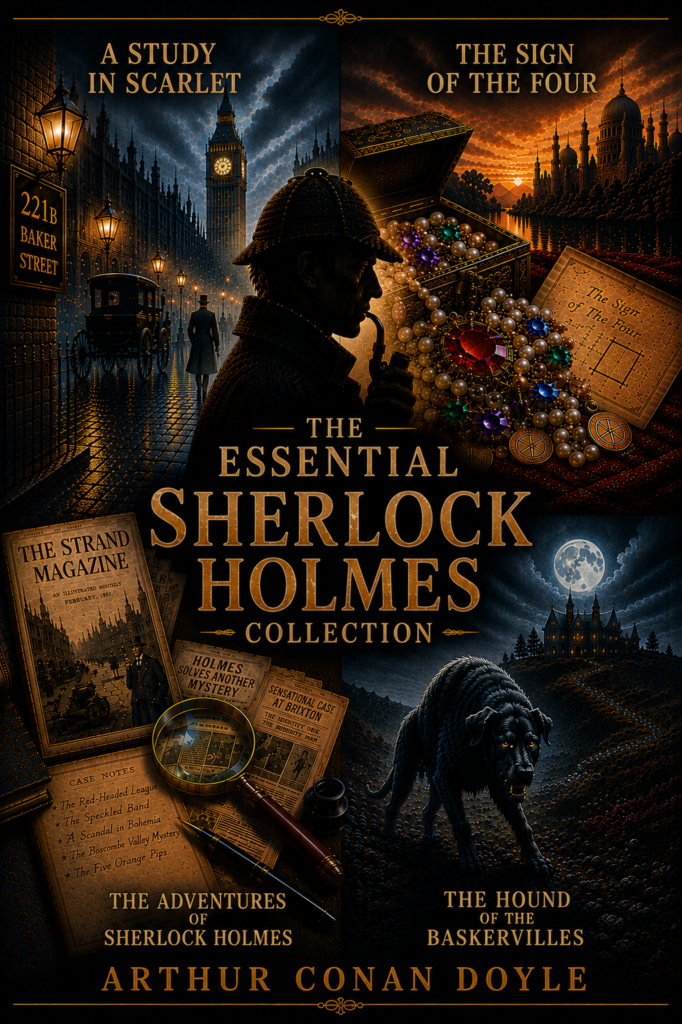
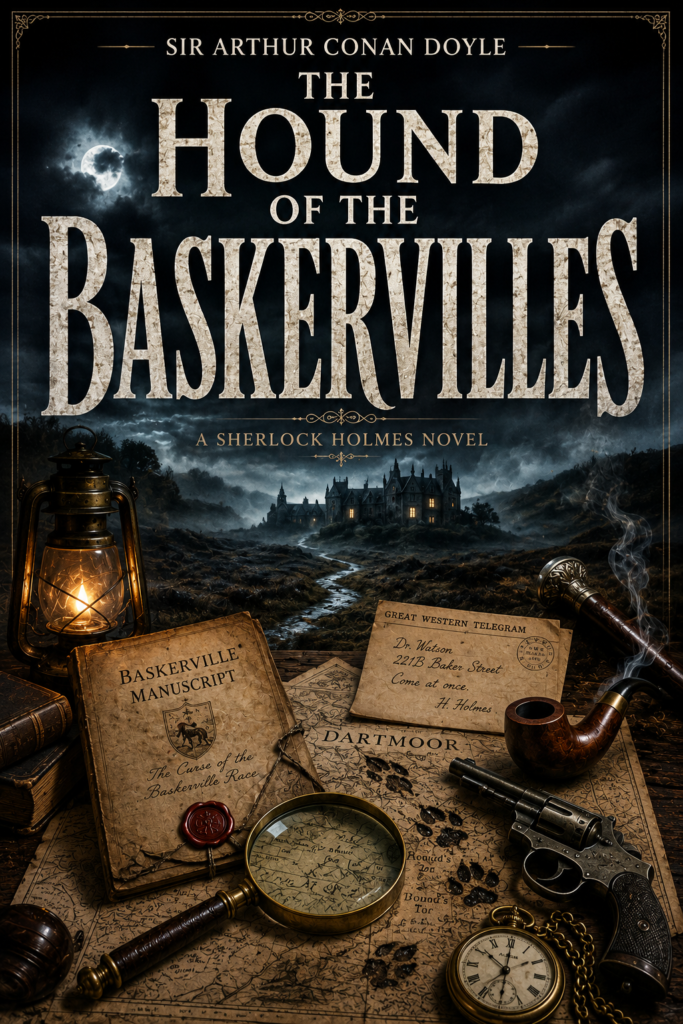
Holmes continued on in The Hound of the Baskervilles which was set before his apparent death.
The detective’s resurrection delighted readers and ensured that new adventures would continue for years to come.
Ironically, Doyle’s attempt to escape Sherlock Holmes only made the character more famous.
The story of Holmes’s death and return became part of the legend itself.
Related Authors

Beyond Sherlock Holmes
It would be unfair to view Doyle’s career solely through the lens of Sherlock Holmes.
He accomplished a remarkable amount outside detective fiction.
His Professor Challenger stories helped shape early science fiction. His historical novels attracted devoted readers. He served as a war correspondent, wrote extensively on public affairs, and became involved in campaigns concerning miscarriages of justice.
In later life he developed a strong interest in spiritualism, travelling widely to promote beliefs that many contemporaries regarded as controversial.
These activities demonstrate the breadth of Doyle’s interests and ambitions.
He was never content to remain confined within a single role.
That desire for variety helps explain why Holmes’s dominance sometimes frustrated him so deeply.
The Irony of Literary Immortality
There is a certain irony at the heart of Arthur Conan Doyle’s story.
He spent years trying to convince readers that he was more than the creator of Sherlock Holmes.
He was right.
He wrote successful historical novels, influential adventure stories, pioneering science fiction, and important works of non-fiction. He lived an active and fascinating life that extended far beyond Baker Street.
Yet it was Sherlock Holmes who secured his place in history.
Readers may debate Doyle’s finest novel. They may disagree about his most important contribution outside detective fiction. They may never read The White Company or Micah Clarke.
But they remember The Adventures of Sherlock Holmes.
The detective Doyle sometimes viewed as a distraction became the achievement that guaranteed his immortality.
Why Arthur Conan Doyle Still Matters
More than a century after his death, Arthur Conan Doyle remains one of the most influential authors in modern literature.
His creation helped define detective fiction and established many conventions that continue to shape mysteries today. Holmes became the model for countless investigators who followed, while Watson provided the blueprint for generations of companions and narrators.
At the same time, Doyle’s career offers a fascinating lesson about artistic success.
Writers often dream of creating something that captures the public imagination.
Few stop to consider what happens when that creation becomes so successful that it overshadows everything else they do.
Arthur Conan Doyle achieved what most authors can only imagine. He created a character who outlived his era, crossed cultural boundaries, and became part of the world’s shared imagination.
The price of that success was spending much of his life in the shadow of Sherlock Holmes.
It is a remarkable irony.
The man who could not escape Sherlock Holmes is remembered today because he never truly did.
Articles
Why did Mark Twain not like James Fenimore Cooper?

What Classic Horror Was Really Trying to Tell Us

Classic Literature Quiz (Part 1): How Well Do You Know the Classics?

Why Jane Austen Remains So Popular

Jane Austen vs the Brontë Sisters

Why I Hate Shakespeare

Whodunit Better
When Novels Were Released Like a TV Series