The Brothers Grimm:
Preserving the Magic of Folklore for Future Generations
Long before fairy tales filled bookshelves, appeared in animated films, or became beloved bedtime stories, they lived in the memories of ordinary people.
They were told beside fireplaces during long winters. Shared between parents and children. Passed from one generation to the next by storytellers who had never written a single word down.
For centuries, these stories travelled from village to village and family to family. They changed with each retelling. New details appeared. Old details disappeared. Some stories survived for generations. Others vanished completely.
Many of the fairy tales we know today came dangerously close to being lost forever.
Had it not been for the work of two brothers in nineteenth-century Germany, some of the world’s most famous stories might never have reached modern readers.
Snow White.
Hansel and Gretel.
Rapunzel.
Rumpelstiltskin.
The Frog Prince.
Today these tales are recognized around the world, but their survival was never guaranteed.
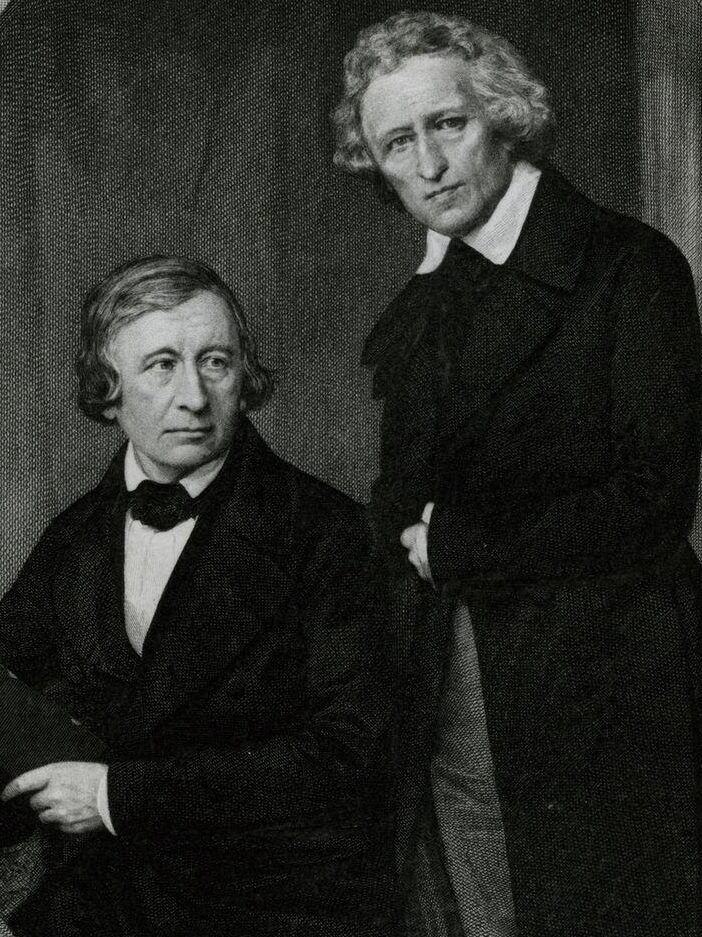
The story of Jacob and Wilhelm Grimm is not simply the story of two authors. It is the story of two men who devoted themselves to preserving a disappearing world of folklore, tradition, imagination, and storytelling for future generations.
The Brothers Behind the Fairy Tales
Jacob Grimm was born in 1785.
Wilhelm Grimm followed a year later in 1786.
The brothers grew up in Hanau, in what is now Germany, during a period of significant political and social change across Europe. Their childhood was marked by both opportunity and hardship. Following the death of their father, the family faced financial difficulties, yet both brothers remained determined to pursue education and scholarship.
From an early age, the brothers shared a close intellectual bond.
They studied law at the University of Marburg, where they developed a deep interest in history, language, and the cultural traditions of the German people.
At first glance, neither brother seemed destined to become associated with fairy tales.
They were scholars rather than storytellers.
Researchers rather than entertainers.
Yet it was precisely their scholarly interests that would eventually lead them toward folklore.
The brothers became fascinated by the idea that stories, songs, and traditions could reveal something important about the history and identity of a people. While many educated Europeans focused their attention on kings, wars, and political events, the Grimms became interested in ordinary voices and everyday traditions.
They believed that the stories passed down through generations contained valuable cultural knowledge worth preserving.
This conviction would shape the rest of their lives.
Related Novels
A World of Stories Passed from Voice to Voice
Today, stories can be stored almost indefinitely.
Books can be printed in enormous numbers.
Digital copies can be shared around the world in seconds.
In the early nineteenth century, things were very different.
Many stories existed only because people remembered them.
A grandmother told a tale to her children.
Those children told it to their own families.
Each generation became responsible for carrying the story forward.
This process, known as oral tradition, allowed stories to survive for centuries without being formally recorded.
Yet it also created risk.
If communities changed, if traditions faded, or if storytellers disappeared, entire collections of stories could vanish with them.
The Grimms recognized this danger.
As Europe modernized, they worried that many traditional tales would be forgotten. Local customs were changing. Rural communities were evolving. Old traditions were increasingly threatened by the rapid transformations occurring across society.
To the brothers, folklore represented something precious.
These stories were not merely entertainment.
They were cultural treasures.
They reflected the fears, hopes, values, and imagination of countless generations.
If they disappeared, an important part of human heritage would disappear with them.
Why the Brothers Grimm Began Collecting Folklore
Motivated by this concern, Jacob and Wilhelm began gathering traditional stories from a variety of sources.
Contrary to popular belief, they did not spend their lives wandering forests searching for old storytellers.
Instead, they collected tales from friends, acquaintances, scholars, and families who preserved traditional stories within their communities.
Many contributors were educated women who remembered stories passed down through generations. Others shared local legends and folk traditions that had circulated for decades.
The brothers carefully recorded these tales, comparing different versions and preserving details that might otherwise have been lost.
Their goal was not simply to create a book.
They hoped to preserve a cultural inheritance.
In 1812, they published the first volume of Children’s and Household Tales.
A second volume followed in 1815.
What began as a scholarly project would eventually become one of the most influential collections of stories ever assembled.
The brothers could hardly have imagined the impact their work would have on future generations.
From Folklore to Fairy Tales
One of the most common misconceptions about the Brothers Grimm is that they invented the stories associated with their name.
In reality, many of these tales existed long before Jacob and Wilhelm encountered them.
The brothers did not create Snow White.
They did not invent Hansel and Gretel.
They were not the original authors of Rapunzel or Rumpelstiltskin.
Instead, they acted as collectors, editors, and preservers.
Their contribution was no less important because of it.
By gathering stories that had previously existed only in oral tradition, the brothers transformed fragile cultural memories into permanent literary records.
Stories that might have disappeared became available to readers throughout Germany and eventually around the world.
As new editions appeared, the Grimms continued refining the collection. Some stories were revised. Language was adjusted. Certain details were modified to appeal to broader audiences.
Yet the heart of the tales remained intact.
The wonder.
The danger.
The imagination.
The timeless themes that had allowed these stories to survive for generations before they were ever written down.
The Surprising Truth About the Original Fairy Tales
Modern readers are often surprised when they encounter the earliest versions of Grimm’s fairy tales.
Many people know these stories through illustrated children’s books, animated films, or simplified retellings. Over time, the tales became closely associated with childhood.
The original stories, however, were often more complex.
The forests were darker.
The dangers felt more real.
The consequences of poor choices were more severe.
Yet these elements were never included simply to frighten readers.
Folklore developed as a way of passing on knowledge, values, warnings, and wisdom. Stories taught listeners about courage, honesty, perseverance, kindness, and the importance of making wise decisions.
The dangers found in fairy tales reflected real concerns faced by ordinary people. Hunger, poverty, uncertainty, and hardship were common realities for many communities. Through storytelling, these challenges were transformed into memorable narratives that could entertain while also teaching important lessons.
This combination of wonder and wisdom helps explain why the tales have endured for so long.
They speak not only to the imagination but also to the human experience.
The Fairy Tales That Conquered the World
Among the hundreds of stories collected by the Brothers Grimm, a handful achieved extraordinary fame.
These tales crossed borders, languages, and cultures to become some of the most recognizable stories ever told.
Snow White
At its heart, Snow White is a story about innocence, jealousy, resilience, and hope.
Generations of readers have been captivated by its memorable characters and timeless themes. Despite countless adaptations, the story’s emotional power remains remarkably intact.
Hansel and Gretel
Few stories capture childhood vulnerability and courage as effectively as Hansel and Gretel.
Faced with danger and uncertainty, the children must rely upon intelligence, bravery, and determination to survive.
The tale continues to resonate because it reminds readers that courage often emerges during life’s most difficult moments.
Rapunzel
The image of a young woman trapped within a tower has become one of the most enduring symbols in fairy tale literature.
Yet Rapunzel is ultimately a story about hope, freedom, and the belief that difficult circumstances can be overcome.
Rumpelstiltskin
This unusual tale explores promises, bargains, and the power of knowledge.
Its central mystery continues to fascinate readers, proving that some of the simplest stories can also be among the most memorable.
The Frog Prince
Beneath its magical surface lies a lesson about appearances, character, and transformation.
Like many Grimm tales, it encourages readers to look beyond first impressions and discover deeper truths.
Together, these stories helped establish a shared cultural vocabulary that continues to influence literature, film, and popular storytelling around the world.
More Than Fairy Tales: The Grimm Brothers as Scholars
Although they are remembered primarily for their fairy tale collection, Jacob and Wilhelm Grimm were respected scholars whose work extended far beyond folklore.
Both brothers devoted much of their lives to the study of language, history, and culture.
They conducted extensive research into German linguistics and contributed significantly to the understanding of language development. Their work helped establish foundations for modern linguistic scholarship, and Jacob Grimm’s research into sound shifts became so influential that it is still known today as “Grimm’s Law.”
The brothers also worked on an ambitious German dictionary project that sought to document the history and development of words throughout the language.
This scholarly work reflected the same motivation that inspired their folklore collection.
Whether studying language or recording fairy tales, the Grimms believed that preserving cultural heritage mattered.
They understood that stories, words, and traditions form part of a people’s identity.
Without preservation, valuable knowledge can disappear.
Related Authors

How the Brothers Grimm Changed Storytelling Forever
The influence of the Brothers Grimm extends far beyond the pages of their original collection.
By preserving traditional tales, they helped shape the future of storytelling itself.
Their work inspired generations of authors, folklorists, and scholars. The fairy tales they recorded influenced fantasy literature, children’s books, theatre, film, and countless retellings.
Writers who created magical worlds often drew upon themes and imagery found within folklore. Enchanted forests, magical creatures, curses, quests, and transformations all owe something to the traditions the Grimms helped preserve.
Their influence can be found in modern fantasy novels, family films, fairy tale adaptations, and stories told around the world.
Perhaps most remarkably, many people encounter Grimm-inspired stories without even realizing it.
The ideas have become woven into the fabric of modern storytelling.
Why Families Still Read Grimm’s Fairy Tales Today
In an age of digital entertainment, instant communication, and endless distractions, the enduring popularity of Grimm’s fairy tales might seem surprising.
Yet families continue to share these stories for many of the same reasons they always have.
They spark imagination.
They encourage curiosity.
They create opportunities for shared experiences between generations.
A child listening to Hansel and Gretel today experiences the same sense of wonder that children felt generations ago. Parents and grandparents can revisit stories from their own childhood while introducing them to a new generation.
The tales also offer something increasingly valuable: timeless storytelling.
Rather than relying upon trends or technology, they speak to universal experiences.
Hope.
Fear.
Kindness.
Courage.
Perseverance.
These themes remain relevant regardless of when or where a reader lives.
The stories endure because they continue to reflect truths about human nature and the challenges people face throughout life.
A Legacy Preserved for Future Generations
The Brothers Grimm did more than collect fairy tales.
They preserved a world of stories that might otherwise have disappeared.
At a time when oral traditions faced increasing pressure from social change and modernization, Jacob and Wilhelm Grimm recognized the value of preserving cultural memory. Through patience, scholarship, and dedication, they transformed fragile traditions into a lasting literary legacy.
Today, readers around the world continue to discover enchanted forests, magical creatures, brave heroes, clever children, wicked witches, and unforgettable adventures through the stories they preserved.
More than two centuries after the publication of Children’s and Household Tales, the Brothers Grimm remain among the most influential figures in the history of storytelling.
Their greatest achievement was not simply creating a famous book.
It was ensuring that generations of readers would continue to experience the wonder, imagination, wisdom, and magic contained within stories that might otherwise have been lost forever.
Every time a child hears the tale of Snow White, follows Hansel and Gretel into the forest, climbs Rapunzel’s tower, or wonders about the secret of Rumpelstiltskin’s name, the legacy of the Brothers Grimm lives on.
And through those stories, the magic of folklore continues its journey into the future.
Articles
When Novels Were Released Like a TV Series

Jane Austen vs the Brontë Sisters

Why Jane Austen Remains So Popular

Why I Hate Shakespeare

Classic Literature Quiz (Part 1): How Well Do You Know the Classics?
Whodunit Better

Have the Jane Austen Movies Replaced the Books?

What Classic Horror Was Really Trying to Tell Us