Lewis Carroll:
The Author Who Invited Us Down the Rabbit Hole
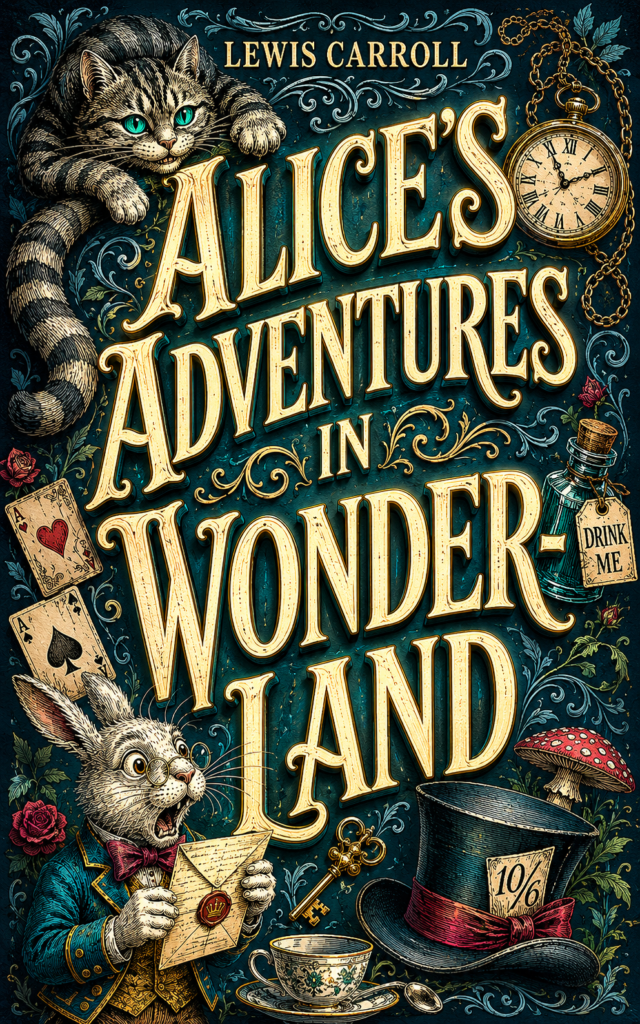
Few books begin with a rabbit, a pocket watch, and a simple moment of curiosity.
Fewer still continue to enchant readers more than 150 years after they were first published.
Yet Alice’s Adventures in Wonderland remains one of the most beloved stories ever written. Its characters have become part of popular culture. Its phrases are quoted around the world. Its strange and imaginative world continues to inspire readers, artists, filmmakers, and dreamers of every age.
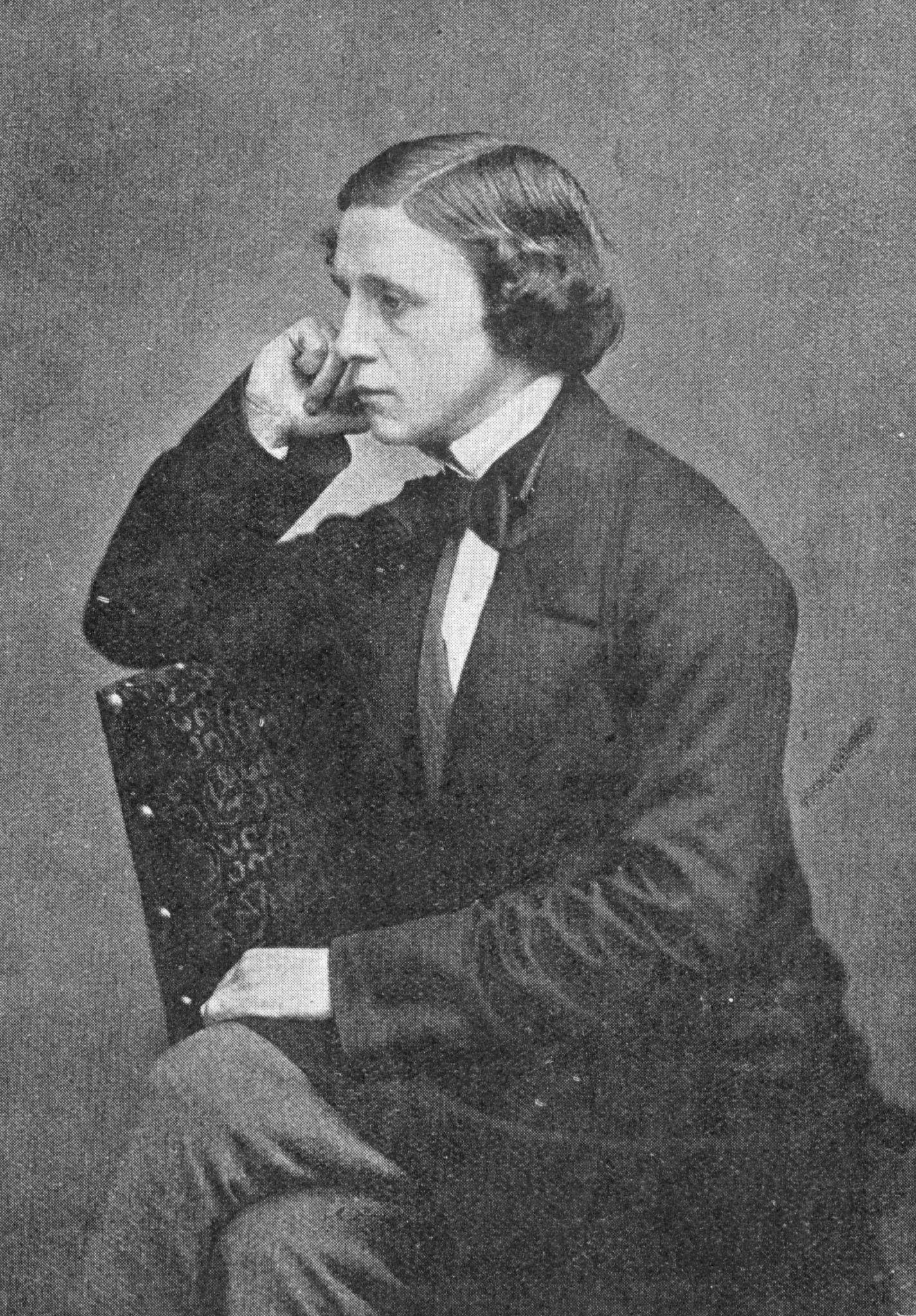
At the heart of this remarkable legacy stands a quiet Oxford scholar named Charles Lutwidge Dodgson, better known by the pen name Lewis Carroll.
He was a mathematician, lecturer, photographer, and writer.
Yet his greatest achievement was something far more extraordinary.
He invited generations of readers to follow their curiosity down the rabbit hole.
The Man Behind Lewis Carroll
Lewis Carroll was born Charles Lutwidge Dodgson in 1832 in Cheshire, England.
The future author grew up in a large family and demonstrated intellectual curiosity from an early age. He loved puzzles, wordplay, storytelling, and games of logic—interests that would later shape his most famous work.
After studying at Oxford University, Dodgson remained there as a lecturer in mathematics. By all accounts, he lived a relatively quiet and disciplined life. He spent much of his time teaching, writing, studying, and pursuing his interests in photography and literature.
Nothing about his daily routine suggested that he would become one of the most influential authors in the history of children’s literature.
Yet beneath the surface lay an extraordinary imagination.
The same mind that enjoyed mathematics and logical puzzles also delighted in language, absurdity, and creative invention. These seemingly opposite interests would eventually combine to create a literary world unlike anything readers had encountered before.
The Boat Trip That Created Wonderland
Many great books emerge from years of planning.
Wonderland began with a story told to entertain children.
On a summer day in 1862, Dodgson joined a boating trip along the River Thames with three young sisters: Lorina, Alice, and Edith Liddell.
To pass the time, he began telling them a story.
The tale featured a curious girl named Alice who followed a White Rabbit into a strange underground world filled with extraordinary characters and impossible events.
The children were captivated.
Most importantly, Alice Liddell wanted more.
She asked Dodgson to write the story down.
Fortunately for readers everywhere, he agreed.
What began as an improvised tale on a river would eventually become one of the most beloved works in literary history.
From Alice’s Adventures Underground to Wonderland
Dodgson spent considerable time expanding and refining the story.
The original manuscript, titled Alice’s Adventures Under Ground, was illustrated by the author himself and presented as a gift to Alice Liddell.
Soon afterward, he developed the story into a larger work intended for publication.
The result was Alice’s Adventures in Wonderland, published in 1865.
The book featured illustrations by Sir John Tenniel, whose iconic artwork helped shape how generations of readers imagined Wonderland.
The response was enthusiastic.
Readers recognized immediately that they had encountered something unusual.
Wonderland did not resemble the moral lessons and instructional stories that dominated much of children’s literature at the time.
It was playful.
Imaginative.
Unexpected.
Wonderfully strange.
The book quickly established itself as a classic.
Related Novels
Why Wonderland Feels Different
More than a century and a half later, Wonderland remains remarkably difficult to classify.
It is a fantasy.
A dream.
A comedy.
A satire.
A children’s story.
A literary puzzle.
In truth, it is all of these things at once.
One reason for its enduring appeal is that Carroll refused to follow conventional rules.
The Power of Nonsense
In Wonderland, language behaves in unexpected ways.
Words mean more than one thing.
Conversations follow strange paths.
Questions often lead to even more questions.
What appears nonsensical on the surface often contains surprising logic underneath.
This playful treatment of language invites readers to think differently about the world around them.
Logic Turned Upside Down
Carroll’s background in mathematics and logic influenced many aspects of Wonderland.
The story is filled with riddles, paradoxes, and situations that challenge ordinary assumptions.
Readers quickly discover that common sense does not always apply.
The result is both entertaining and thought-provoking.
Wonderland encourages readers to question the rules they normally accept without hesitation.
Imagination Without Limits
Perhaps most importantly, Wonderland demonstrates the extraordinary possibilities of imagination.
Animals talk.
Cards come to life.
Cats disappear.
Time behaves strangely.
The impossible becomes ordinary.
Readers are invited to accept the unexpected and embrace the joy of exploring a world where anything might happen.
Alice: One of Literature’s Most Curious Heroes
Many famous fictional heroes are defined by courage, strength, intelligence, or determination.
Alice is defined by curiosity.
Everything that happens in Wonderland begins because she wants to know more.
She follows the White Rabbit because she wonders where he is going.
She explores strange places because she wants to understand them.
She asks questions even when nobody provides sensible answers.
This curiosity makes Alice one of literature’s most relatable characters.
Readers see the world through her eyes.
They share her confusion, surprise, amusement, and fascination.
Most importantly, they share her desire to keep exploring.
Alice reminds us that curiosity is not a weakness.
It is often the beginning of discovery.
How Lewis Carroll Changed Children’s Literature
Before the publication of Alice’s Adventures in Wonderland, many books written for children focused heavily on instruction.
Stories often existed primarily to teach lessons.
Characters were expected to model proper behaviour.
Entertainment frequently took a secondary role.
Carroll helped change that.
Wonderland demonstrated that children’s literature could celebrate imagination for its own sake.
A story could delight readers without constantly lecturing them.
It could encourage creativity, curiosity, and wonder.
This shift had a profound impact on future generations of writers.
Many of the most beloved children’s books published afterward owe something to the path Carroll helped create.
By trusting young readers to enjoy imagination, he expanded the possibilities of children’s literature.
The Enduring Magic of Wonderland
Few fictional worlds have enjoyed the cultural influence of Wonderland.
The story has inspired countless adaptations, illustrations, stage productions, films, television series, and artistic interpretations.
Its characters remain instantly recognizable.
The White Rabbit.
The Cheshire Cat.
The Mad Hatter.
The Queen of Hearts.
Even readers who have never opened the book often recognize these figures.
This extraordinary longevity speaks to the universal appeal of Carroll’s creation.
Wonderland continues to inspire because it captures something fundamental about human imagination.
The desire to explore.
The joy of asking questions.
The excitement of discovering the unexpected.
Why Readers Still Follow the White Rabbit
More than 150 years after its publication, readers continue to return to Wonderland.
Some revisit it because they remember it from childhood.
Others discover it for the first time as adults.
Many parents and grandparents share the story with younger generations.
What keeps drawing readers back?
Part of the answer is wonder.
Wonderland reminds us that the world can still surprise us.
It encourages us to remain curious.
To ask questions.
To imagine possibilities beyond the obvious.
In a world that often values certainty and efficiency, Wonderland celebrates curiosity, creativity, and exploration.
Its message remains remarkably relevant.
The most interesting journeys often begin with a question.
A Legacy of Curiosity and Imagination
Lewis Carroll created more than a children’s story.
He created an invitation.
An invitation to wonder.
An invitation to imagine.
An invitation to question the ordinary and explore the extraordinary.
Through Alice, readers learn that curiosity can lead to unexpected adventures. Through Wonderland, they discover that imagination has the power to transform the familiar into something magical.
More than a century and a half after a young girl first followed a White Rabbit into an impossible world, readers continue to make the same journey.
They return because Wonderland offers something timeless.
The belief that questions can be as valuable as answers.
That imagination can reveal new ways of seeing the world.
And that sometimes the most remarkable adventures begin simply by wondering what might happen if we followed our curiosity a little further.
For generations of readers, Lewis Carroll has been waiting at the entrance to the rabbit hole, inviting them to take that first step.
And the wonder of Wonderland continues to reward those who do.
Related Authors

Wonderland, Logic, and Nonsense
To many first-time readers, Wonderland appears completely chaotic.
Animals talk.
Time behaves strangely.
Conversations wander in impossible directions.
The rules of ordinary life seem to have vanished.
Yet one of the great surprises of Alice’s Adventures in Wonderland is that much of its nonsense is built upon logic.
Lewis Carroll spent much of his professional life teaching mathematics at Oxford. He enjoyed puzzles, paradoxes, wordplay, and intellectual challenges. These interests found their way into Wonderland, often disguised beneath humour and absurdity.
Characters frequently follow unusual forms of reasoning. Questions lead to unexpected conclusions. Familiar ideas are turned upside down and examined from entirely new perspectives.
The result is a world that feels both strange and strangely convincing.
Readers laugh because the logic appears ridiculous.
Then they realize it makes a peculiar kind of sense.
This combination of imagination and intellectual playfulness helps explain why Wonderland remains rewarding long after childhood. Young readers enjoy the adventure and humour, while older readers often discover new layers of meaning hidden beneath the surface.
Why Alice Appeals to Both Children and Adults
Many beloved children’s books remain closely tied to the age at which readers first encounter them.
Wonderland is different.
Children and adults often experience the story in completely different ways, yet both find something to enjoy.
Young readers are captivated by the adventure. They encounter curious creatures, magical transformations, unexpected surprises, and a heroine who continues exploring despite confusion and uncertainty.
Adults often notice different qualities.
The clever language.
The satire.
The observations about society.
The questions about identity, logic, and growing up.
Each return visit to Wonderland reveals something new.
This ability to speak to readers at different stages of life has helped the book endure across generations. A child may fall in love with Wonderland’s imagination, only to revisit the story years later and discover ideas that previously went unnoticed.
Few books accomplish this so successfully.
The Cultural Legacy of Wonderland
Some stories become popular.
A very small number become part of culture itself.
Wonderland belongs to the second category.
Many people who have never read Alice’s Adventures in Wonderland still recognize its characters and imagery. The White Rabbit, the Cheshire Cat, the Mad Hatter, and the Queen of Hearts have become familiar figures throughout the world.
Even everyday language bears traces of Carroll’s influence.
To “go down the rabbit hole” now means embarking on a journey of discovery that leads deeper and deeper into a subject.
A “Cheshire Cat grin” remains instantly recognizable.
References to Wonderland appear in literature, film, art, music, and popular culture with remarkable frequency.
This enduring presence demonstrates the extraordinary reach of Carroll’s imagination. Few fictional worlds have become so deeply woven into the cultural imagination.
More than a century and a half after its creation, Wonderland continues to inspire new interpretations while remaining unmistakably itself.
Why Curiosity Matters
At its heart, Wonderland is not really about rabbits, tea parties, queens, or talking cats.
It is about curiosity.
Every important event in the story begins because Alice wants to know more.
She asks questions.
She investigates.
She explores.
She refuses to stop wondering.
This curiosity drives the entire adventure.
In many ways, Lewis Carroll’s greatest gift to readers was his celebration of this quality. Wonderland suggests that curiosity is not something to be outgrown. It is a source of discovery, imagination, learning, and wonder.
The story reminds us that questions can open doors.
They can reveal new perspectives.
They can transform ordinary experiences into extraordinary adventures.
That message remains just as powerful today as it was when Alice first followed the White Rabbit.
Perhaps that is why readers continue to accompany her on the journey.
Wonderland invites us to see the world through curious eyes and to remember that the desire to explore, question, and imagine is one of the most valuable qualities we possess.
Articles
Why did Mark Twain not like James Fenimore Cooper?
Why Jane Austen Remains So Popular
Have the Jane Austen Movies Replaced the Books?

Jane Austen vs the Brontë Sisters
When Novels Were Released Like a TV Series

What Classic Horror Was Really Trying to Tell Us

Why I Hate Shakespeare
Whodunit Better